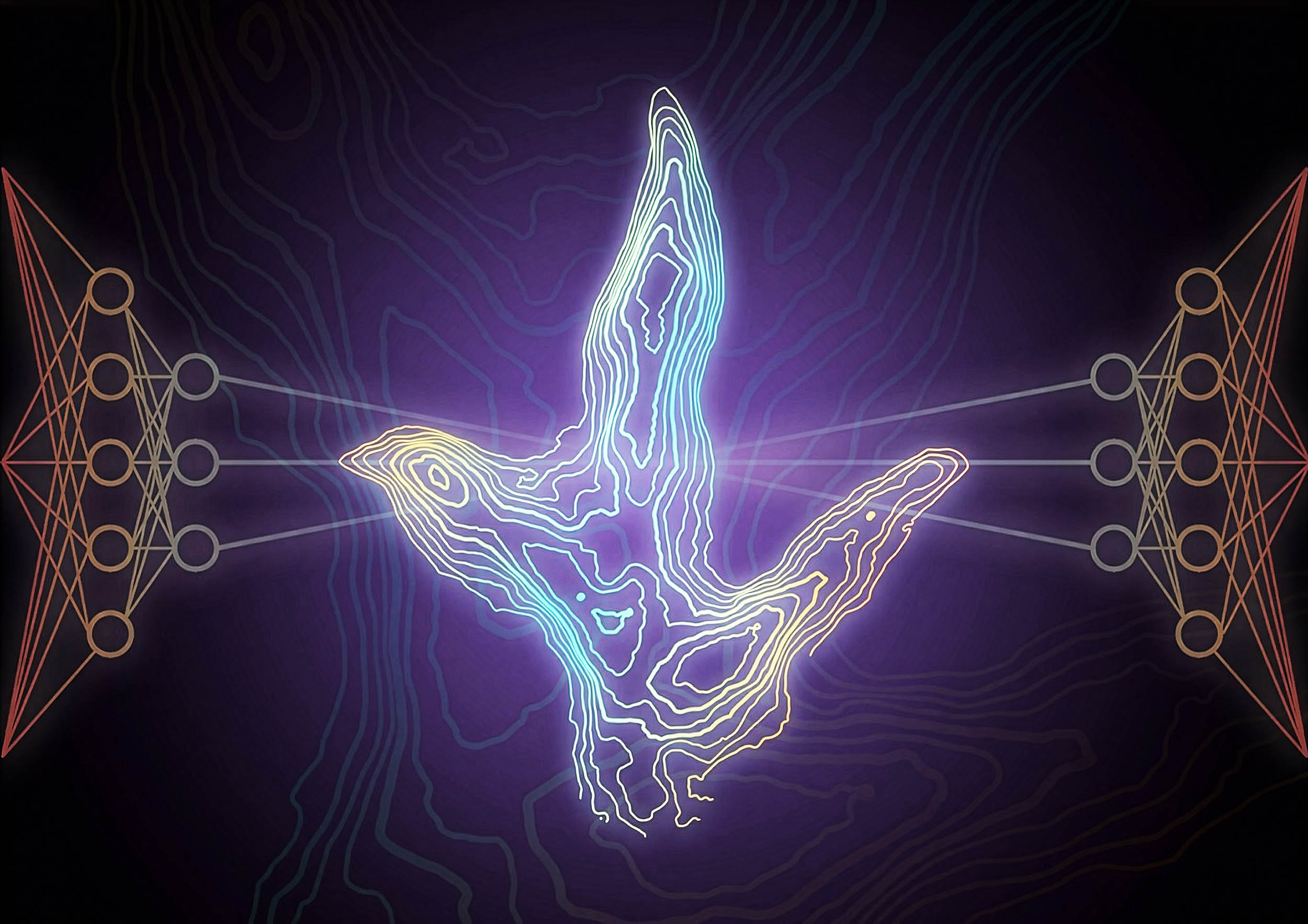
For over a hundred years, dinosaur footprints have offered researchers both remarkable insights and challenges. These traces are among the clearest evidence of ancient animals traversing their environments, yet they are often difficult to interpret.
A footprint is more than just a “stamp” left behind; it encapsulates the soft mud compressing, the sliding of toes, the collapsing edges, and subsequent erosion that can alter its shape significantly.

Because of this complexity, even experts may disagree about whether a particular track belonged to a predatory dinosaur, a herbivore, or something intermediate.
A recent study indicates that artificial intelligence may provide clarity amidst this confusion.
The researchers developed a tool called DinoTracker, a mobile application that allows users to upload a photo or sketch of a dinosaur footprint and receive instant insights regarding the type of dinosaur it may have come from.
Footprints do not fossilize in uniform ways. Two animals sharing the same foot structure can leave very different impressions based on factors like sediment type, moisture levels, their speed, and how much the ground yields under their weight.
Moreover, a footprint can change its appearance after being made: sediment can compact, edges can erode, and weathering can obscure or distort details.
Due to these variables, traditional research on footprints often relies heavily on expert analysis and careful comparisons to established examples.
Many earlier computer-based methods depended on researchers compiling datasets manually. In these datasets, footprints were assigned to specific dinosaurs, a process that might introduce bias or reinforce preconceived notions.
AI Was Trained to Recognize Variation
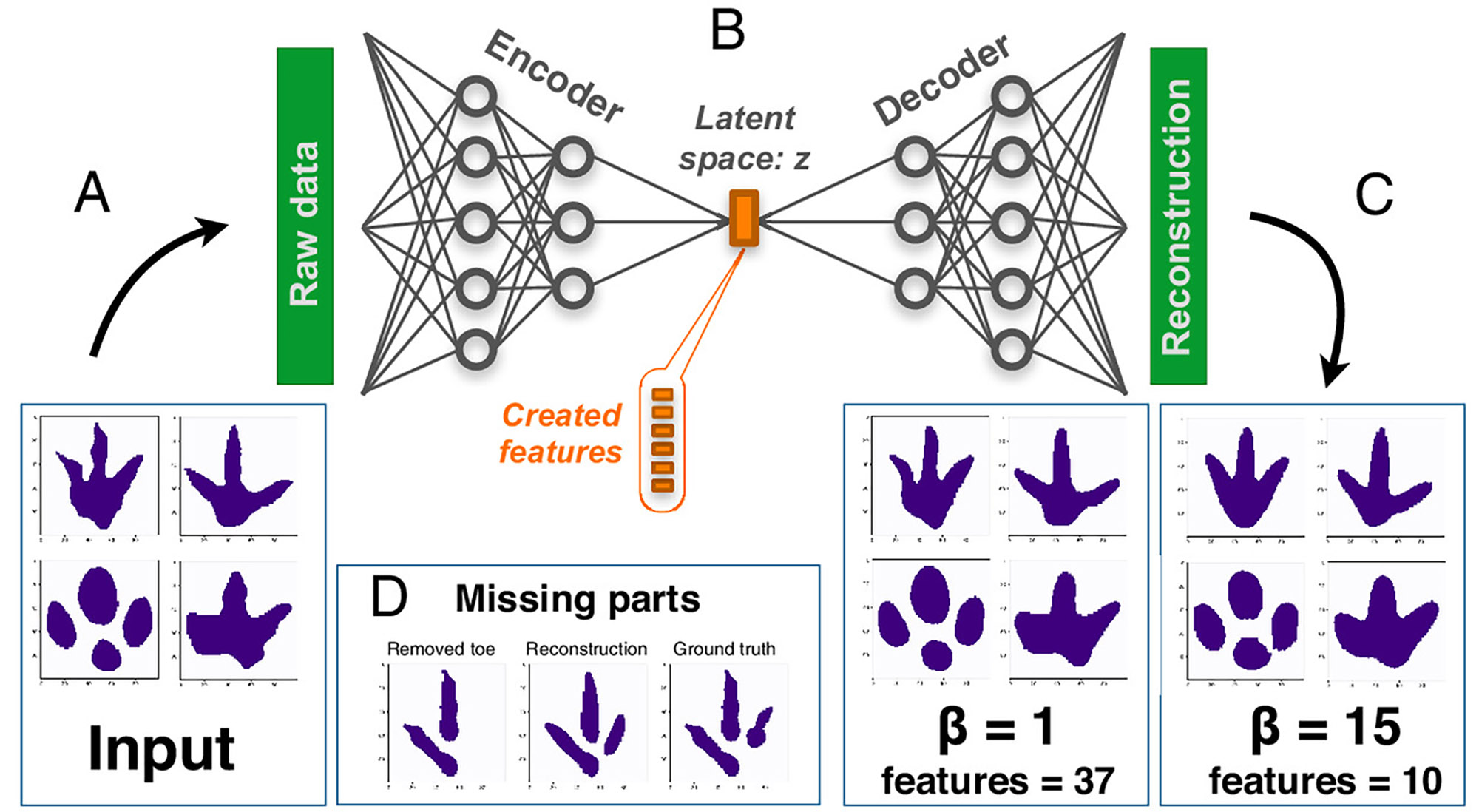
The DinoTracker team, comprising researchers from the Helmholtz Research Center in Berlin along with colleagues from the University of Edinburgh, approached the problem differently. They trained their algorithms to appreciate the natural variations in footprints rather than forcing them into rigid categories.
The AI was trained using nearly 2,000 authentic fossil footprints alongside millions of simulated versions designed to replicate natural variations.
These simulations reflected factors like compression, edge displacement, and other distortions that can cause similar footprints to appear different at distinct locations.
Through this training, the system identified key characteristics that help differentiate footprints, even when they aren’t perfectly preserved.
The research highlighted traits such as the degree to which the toes spread, the positioning of the heel, the size of the contact area, and how weight is distributed as the foot strikes the ground.
When AI Aligns with Experts
After the training phase, the model was evaluated by having it predict which dinosaur likely made a given footprint by comparing it to existing fossil tracks.
The study found that the algorithm achieved around 90 percent agreement with classifications made by human experts, even in contentious cases.
This doesn’t mean that the AI is “correct” in an absolute sense; the ambiguity of footprints often requires paleontologists to deal with the best-supported interpretations rather than concrete certainties.
However, a tool that performs at this level can serve as a reliable second opinion and indicate which tracks warrant further investigation.
Among the most intriguing discoveries came from footprints over 200 million years old. The AI identified several tracks that exhibited notably bird-like characteristics, resembling those associated with both extinct and modern birds.
The researchers propose two possibilities: either birds could have emerged tens of millions of years earlier than previously thought, or some early dinosaurs may have coincidentally developed feet that closely resembled those of birds.
While this finding doesn’t conclusively resolve the debate, it reinforces the notion that footprints might hold overlooked clues.
Reexamining Scotland’s Tracks
The AI also revisited enigmatic footprints from the Isle of Skye in Scotland. These tracks date back roughly 170 million years and were made on the muddy shore of a lagoon, making it challenging to definitively categorize them within a specific dinosaur group.
Researchers propose that the AI suggests these footprints could belong to some of the earliest relatives of duck-billed dinosaurs.
If this interpretation is validated, it could reshape the scientific community’s understanding of when and where this lineage began to spread.
Applying AI to Real Tracks
DinoTracker is not merely an experimental tool; it’s intended for widespread use. Footprints are one of the most frequently encountered types of dinosaur evidence in the field, and a user-friendly application could benefit both scientists and the general public.
In research environments, it can assist in rapidly screening large numbers of tracks and identifying patterns across various sites. In educational settings, it makes footprints more interactive rather than just informational.
For fieldwork, it provides a swift way to test hypotheses on location, especially in scenarios where interpretation typically hinges on the experience of available personnel.
“This study represents a significant advancement for paleontology and offers an objective, data-driven approach to classifying dinosaur footprints,” said paleontologist Steve Brusatte from the University of Edinburgh.
“It opens the door to exciting new opportunities for understanding how these remarkable creatures lived and moved, as well as when major groups like birds began to evolve.”
Transforming Confusion into Insight
It’s unlikely that research on dinosaur footprints will be completely resolved by an app. Tracks can be messy, and the past doesn’t come with labels. Nevertheless, this study highlights an important insight: a tool that converts variation into useful information rather than noise.
If DinoTracker can reliably recognize the real-world distortions of footprints and still associate them with potential trackmakers, it could accelerate research, broaden participation, and ground contentious debates in solid evidence.
Moreover, it may achieve something deeper: it makes the distant past feel more accessible. A footprint represents a moment of interaction between a creature and the earth beneath it.
By enhancing our ability to interpret these moments, we edge closer to understanding how dinosaurs lived, moved, and evolved.
Image credit: Tone Blakesley
The full study was published in the journal PNAS.
—–
Enjoyed this article? Subscribe to our newsletter for engaging pieces, exclusive content, and the latest news.
Explore more on EarthSnap, a free app developed by Eric Ralls and Earth.com.
—–