
Exploring the Latest Food Trend: Fibremaxxing
Food and diet fads often share a close connection, with trends emerging continuously in the wellness landscape.
Currently, the focus on protein has led to a phenomenon dubbed ‘proteinmaxxing’. Rooted in popular diets like Atkins and Paleo, this trend places proteins—especially lean meats, fish, and eggs—at the forefront while largely dismissing carbohydrates and relegating plant-based foods to a secondary role.
Eating significant amounts of protein each day can be daunting, time-consuming, and expensive. This is where protein powders come in. A by-product of large-scale cheese production, whey is a high-protein, low-fat, and affordable option that can easily be mixed into various foods, including yogurt, chocolate, snack bars, porridge, bread, cereals, and smoothies.
The latest evolution of this protein craze might be linked to wearable technology, especially Continuous Glucose Monitors (CGMs), initially designed to assist diabetes patients in tracking their blood glucose levels without finger pricks.
Now, CGMs are embraced by various wellness apps and are reshaped as tools for weight loss or control. By stabilizing blood sugar levels and achieving a metabolic state known as ketosis (or keto), the body shifts to burning fat for weight loss, making a protein-rich diet essential for reaching ketosis.
While protein is a vital nutrient necessary for our overall health, especially as we age, excessive consumption may lead to adverse effects, including insufficient fiber intake.
That brings me to my initial skepticism regarding a new diet trend known as fibremaxxing.
Have you seen the Netflix documentary Hack Your Health: The Secrets Of Your Gut, released in 2024? A major contributor was APC Microbiome, a research institution based at UCC, emphasizing the importance of fiber and fermented foods for enhancing gut health and, subsequently, overall well-being.
Could it be that fibremaxxing is worth considering?
To investigate further, I spoke with Dr. Jens Walter, a professor of microbiome science at APC Microbiome. He is a co-author of the study that reveals the significance of fiber in a diet called the NiMe Diet (Non-industrialized Microbiome Restore diet), which fosters the growth of beneficial gut bacteria.
“The NiMe diet is not strictly vegetarian but leans heavily towards plant-based foods,” remarks Dr. Walter. “It is founded on two principles: firstly, how non-industrialized human populations eat, which correlates with lower chronic disease rates; and secondly, how the Western diet can contribute to chronic health issues.”
The “Western Diet” that Dr. Walter refers to is often criticized for its health implications. His research delves into diet-microbiome interactions, focusing on how our gut microbiomes react to different foods, producing beneficial or harmful bacteria. The NiMe Diet aims to support the beneficial varieties.
“The NiMe diet is rich in plant-based foods, as that’s how non-industrialized populations typically eat, providing nourishment for the microbiome. We discourage staples found in industrialized foods, such as wheat and red meat, and we are cautious about high-fat dairy.”
These foods can trigger an inflammatory response in the gut, potentially leading to chronic diseases.
“Our focus is on promoting whole foods while avoiding ultra-processed options, as they disturb the microbiome,” explains Dr. Walter. “While I don’t claim this is the only healthy diet, a whole, plant-forward, and fiber-rich approach offers substantial benefits, which is why we emphasize it.”
Interestingly, Dr. Walter suggests he doesn’t fully align with some colleagues regarding the necessity of fermented foods.
“While I don’t criticize their importance, there is a lack of strong nutritional research backing the health benefits of fermented foods. In our NiMe human trial, we saw remarkable health improvements without including fermented items, in terms of lowering cholesterol and glucose levels and reducing inflammation.”
“This doesn’t imply that they are unnecessary, but dietary fiber is much more essential for health.”
In the contest between fiber and fermentation, it appears fiber has the upper hand.
Current guidelines from the Food Safety Authority of Ireland (FSAI) recommend at least 25g of fiber per day. However, the NiMe diet advocates for an average intake of 40g. Is consuming 40g even realistic?
“The rationale for exceeding recommended guidelines with the NiMe diet is rooted in the dietary patterns of non-industrialized populations, which naturally include higher fiber consumption. A pivotal study published in The Lancet in 2019 suggests that surpassing these recommendations brings additional health benefits, particularly in preventing chronic disease.”
Nonetheless, Dr. Walter concedes that reaching 40g of fiber daily is a considerable challenge.
“I advise people to eat as much fiber as they can,” he says. “If you are committed enough to adopt the NiMe diet levels, you’ll see additional benefits. Research indicates that increased fiber intake correlates with improved health, so even an extra 5-10g per day can be advantageous. I personally find it difficult to reach these numbers, so I encourage everyone to aim for as much as possible.”
“My interest lies in prevention. Living in modern society predisposes us to chronic conditions like type 2 diabetes, increasingly considered a health emergency in several countries. I’m healthy now and strive to maintain that future health. Evidence shows that adhering to a nutritious diet can extend healthy life expectancy by a decade, much like the NiMe diet.”
It seems that fibremaxxing aligns well with scientific evidence.
“Pursuing fibermaxxing through whole foods is undeniably beneficial; it’s hard to overdo it. Dietary guidelines suggest that 50-70% of your plate should consist of vegetables, so with whole foods, you can include as much fiber as you wish,” states Dr. Walter.
“However, I do have reservations about fibermaxxing solely through supplements, as the evidence supporting their efficacy is far less compelling. Our own human trials examined both NiMe and fiber supplements; while these supplements may offer some benefits, I remain cautious about relying on them exclusively. Pursuing fibermaxxing through whole, plant-based foods is indeed a positive nutrition trend.”
Considering that fiber from whole foods (and not supplements) lays the groundwork for good health, is the type of fiber we consume significant?
“Recent interest has shifted in the nutrition field from focusing solely on soluble and insoluble fiber to types like viscous vs. non-viscous and fermentable vs. non-fermentable fibers,” explains Dr. Walter.
“Viscosity matters because it transforms gut contents into a denser form, slowing down the absorption of sugar and other nutrients, regulating your glycemic response. Fermentable fibers are crucial as they nourish gut microbes, generating beneficial metabolites.”
Foods rich in viscous fiber include psyllium husks, legumes, asparagus, Brussels sprouts, oats, and flax seeds. Beans serve as ideal sources for fermentable fibers.
Dr. Walter emphasizes taking a holistic view of our diets, encouraging as diverse a selection of whole foods and plants as possible to maximize fiber intake.
“I recommend focusing on a variety of foods, particularly plant-based options that are lower in refined carbohydrates. While sweet potatoes are great fiber sources, relying solely on them wouldn’t be ideal. It’s beneficial to incorporate other vegetables like broccoli, kale, salads, and seeds to create diversity.”
While fiber is essential, protein also has a role in our diets, yet it should come from high-quality sources, such as lean meats and whole foods, rather than protein supplements.
“The NiMe diet doesn’t oppose animal protein. The non-industrialized populations we studied generally consume significant amounts of plant-based foods but do eat meat when available.”
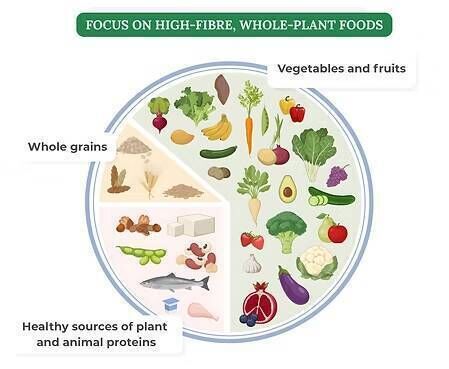
Beans, peas, and lentils are fantastic sources of both fiber and protein, along with a variety of vitamins and micronutrients. Nuts, seeds, and soy products like tofu are also excellent for the NiMe plate, along with fresh fish, lean poultry, and low-fat dairy.
This emerging trend appears to reflect sound nutritional principles.
The NiMe Plate suggests that approximately 70% of each meal should consist of fiber-rich fruits and vegetables, 25% lean and low-fat protein, and 5-10% whole grains.
Dr. Walter assures that fibermaxxing poses no health risks; rather, research supports that exceeding current guidelines in favor of the NiMe’s 40g daily goal will not only maintain health but also lower the risk of chronic disease in later life.
Ultimately, the key is choosing whole foods over processed powders and supplements, prioritizing a wide variety of vegetables, and maximizing fiber intake for optimal health benefits.
It’s that simple!