Astronauts Return from Space Station After Eight Months
CAPE CANAVERAL, Fla. (AP) — Four astronauts have successfully returned to Earth from the International Space Station (ISS) after a mission that lasted eight months. Their journey back was particularly significant as they were sent to replace a colleague who fell ill.
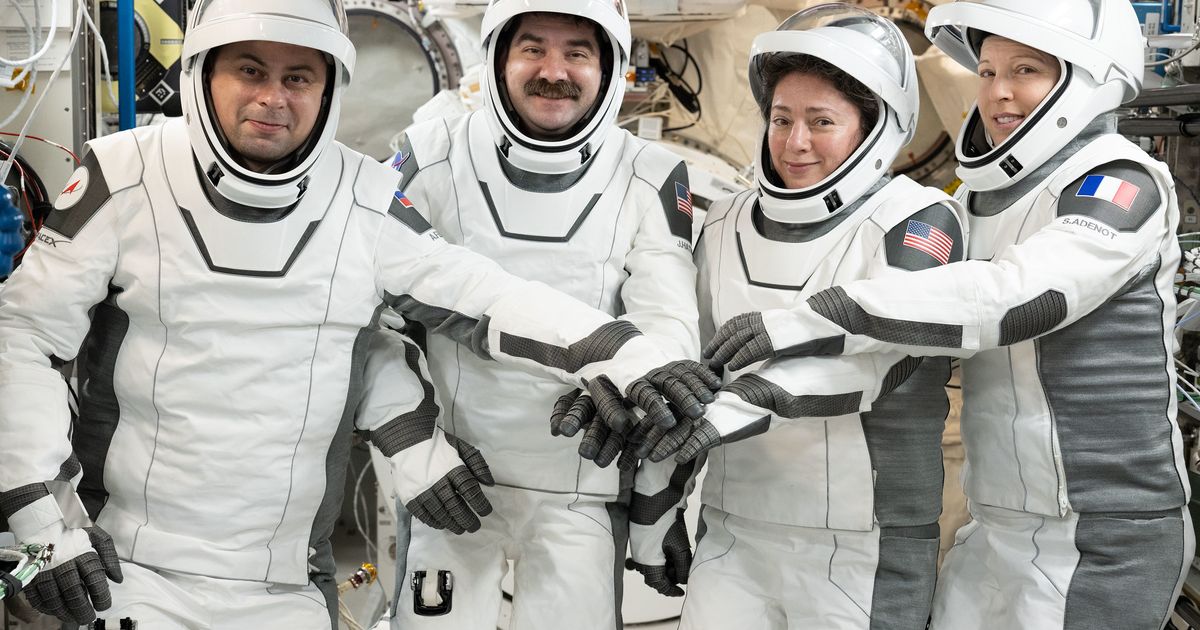
The crew, consisting of NASA’s Jessica Meir and Jack Hathaway, France’s Sophie Adenot, and Russia’s Andrey Fedyaev, splashed down in the Pacific Ocean off the coast of Los Angeles, courtesy of SpaceX.
The group departed the ISS on Wednesday, eager to reunite with their families after a lengthy separation. Their replacements had arrived three weeks late due to capsule repairs, which delayed their homecoming. The astronauts expressed excitement about experiencing life on Earth again—feeling the breeze, taking showers, and, in Adenot’s case, getting back to water sports.
“It’s a lot of mixed, swirling emotions for all of us,” Meir stated while still in orbit, emphasizing that they would miss the “extraordinary views of our home planet.”
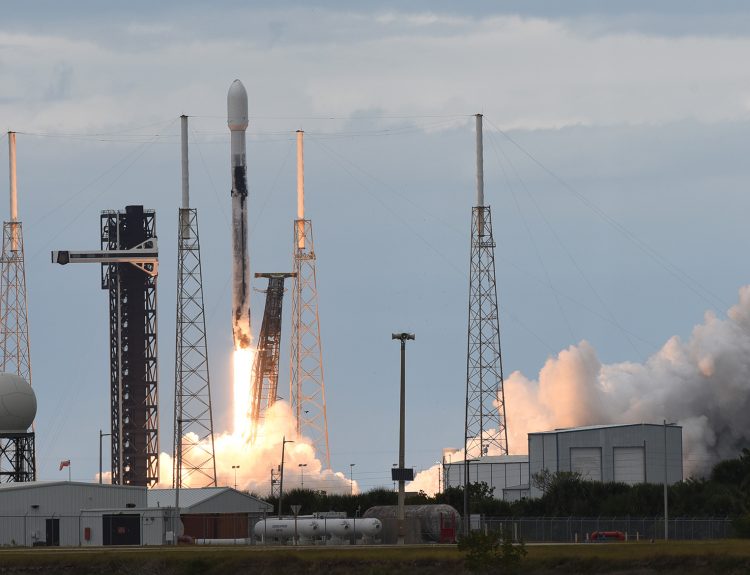
Meir and her crew initially launched in February to take over from four station occupants who had to return early when NASA’s Mike Fincke became ill—a historic medical evacuation after 65 years of human spaceflight.
During their mission, the crew witnessed significant events, including the Artemis II astronauts’ lunar mission and enjoyed celebrations for the United States’ 250th birthday, with Meir playing the piccolo with the Boston Pops.
Throughout their time on the ISS, Meir participated in four spacewalks, while Adenot completed three. They balanced work with leisure, hosting dance parties and cooking demonstrations, complete with aprons and chef hats.
Notably, Hathaway maintained his bushy naval aviator-style mustache throughout the mission, which became a part of his identity in space. He joked about whether he’d keep his mustache now that his mission was over, saying, “It’s kind of become a little bit of my brand up here.”
Currently, seven astronauts remain aboard the space station, representing the U.S., Russia, and Canada. Since its inception in 2000, the ISS has welcomed 298 visitors from 26 countries.
The Associated Press’ health and science coverage receives funding from the AP Fund for Journalism and other private foundations, with AP responsible for all content. For further details on their partnerships and funded coverage areas, visit AP.org.