Mealtime, particularly dinner, often leads to confusion regarding healthy eating. Carbohydrates are frequently viewed as unhealthy, fruits are grouped with sugary snacks, and many individuals are left pondering whether a serving of pasta is comforting or detrimental. According to nutrition expert Carolin Kotke, much of the anxiety surrounding dinner choices stems from misconceptions rather than scientific evidence.
Kotke challenges a common belief in the dieting community: the notion that specific foods become unhealthy once evening arrives. Instead, she posits that the crucial question is not whether to avoid options like pasta or bananas, but rather what type of evening meal best nurtures the body. Research provides clarity on this matter, revealing that the healthiest dinner is one that emphasizes balance and is consumed mindfully, rather than excessively loading up on calorie-dense foods at the end of the day.
This perspective simplifies dinner guidelines, making them more practical than many might think. While it’s true that the body metabolizes food differently at night compared to during the day, this doesn’t imply that carbohydrates should be entirely avoided after sunset. Rather, it highlights the necessity of crafting an evening meal with thoughtful consideration rather than fear.
The Healthiest Dinner Starts With Balance, Not Elimination
Significant findings from a 2022 study conducted by researchers at the University of Lübeck offer insights into this topic. The study posed a straightforward question: what physiological changes occur when the same meal is consumed in the morning versus the evening? In one experiment, 24 healthy young men were served identical 850-calorie meals at 8:45 a.m. and 6:00 p.m. under two conditions—one with a standard carbohydrate content and another with increased carbohydrates. Their glucose, insulin, and appetite responses were then monitored.
The researchers discovered that glucose and insulin levels spiked more significantly after the evening meal compared to the morning meal. They concluded that the timing of consumption affects the body’s metabolic response. Evening meals appear to challenge the body’s ability to effectively manage carbohydrate-rich foods. The study noted an “adverse metabolic constellation at the end of the day,” particularly after consuming carbs.
This distinction is crucial. The research does not label pasta, rice, bread, or potatoes as unhealthy dinner options; instead, it indicates that consuming heavier, carbohydrate-dense meals in the evening can be metabolically more demanding than in the morning. Thus, when considering the healthiest evening meal, the answer is not to eliminate carbs but to focus on a dinner that incorporates balance, moderation, and appropriate portion sizes instead of overwhelming the body with refined or excessive calories.
Why Dinner Feels Harder to Manage at Night
The findings from the Lübeck study further elucidate why dining in the evening can prove more challenging than breakfast or lunch. In a separate trial involving 84 healthy young adults, researchers found a stronger hedonic drive to eat during the evening hours. In plain terms, people are more susceptible to the allure of satisfying foods later in the day.

This is not merely a question of biological hunger. Levels of post-meal ghrelin, leptin, and overall feelings of hunger and fullness did not vary significantly between the two mealtimes. Instead, it seems that the brain finds food more appealing in the evening.
This offers insight into why healthy dinner choices are seldom made when individuals are tired, starving, and searching for a reward. Instead, the evidence supports a more composed approach: a meal that is satisfying without being excessive, substantial without devolving into a post-dinner calorie overload.
Carolin Kotke Pushes Back on the Dinner Myths
Carolin Kotke’s guidance aligns with these research findings as she challenges entrenched misconceptions about dinner. She disputes the idea that certain foods become inherently unhealthy in the evening. Rather than asserting that bananas or pasta are uniquely advantageous for dinner, she emphasizes that common prohibitions against certain foods are often exaggerated. The research is more effective at showcasing how the body responds differently throughout the day than at categorizing individual foods as good or bad.
This perspective provides a more constructive approach than the simplistic “no carbs at night” mantra. This phrase implies that all carbohydrates behave in the same manner and revolves solely around whether they make it to the plate. The Lübeck study does not support this blanket statement. It compared regular-carbohydrate meals to those with higher carbohydrate content, demonstrating that evening tolerance for higher-carb meals is lower. This still allows for a healthy dinner incorporating carbohydrates without allowing them to dominate.
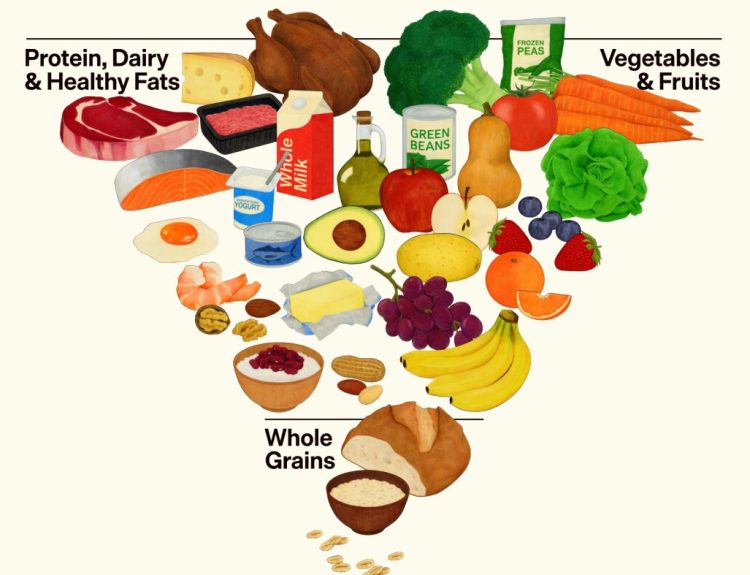
So what does this healthy evening meal look like in practice? An ideal dinner steers clear of extremes. It embraces diversity, allowing for foods like pasta, grains, legumes, fruits, and vegetables while avoiding oversized, calorie-laden plates that may be hard for the body to manage later in the day.
What Research Says About Timing and the Best Evening Meal
Animal studies support the broader argument about timing. A notable 2009 study published in Obesity found that mice fed a high-fat diet during their natural rest period (the light phase) gained significantly more weight than those given the same diet during their active phase (the dark phase). Both groups had similar calorie intakes and activity levels; timing was the pivotal factor.
While these findings don’t directly translate to human dinner recommendations, they underscore the reality that metabolism is not indifferent to time. A 2015 review in Obesity Reviews further explored the relationship between the circadian system and metabolism, suggesting that disruptions to one’s internal timing—through shift work, travel, or irregular eating habits—can contribute to metabolic changes associated with obesity.
When considering all the evidence, it becomes clear that healthy dining advice is less alarming than popular myths portray. The healthiest evening meal is not necessarily the lightest or lowest in carbs; rather, it is a balanced dinner enjoyed at a sensible time, with controlled portions, and one that avoids turning the evening meal into the day’s most disordered eating experience.
This approach may lack the catchiness of a strict rule, but it is far more in line with the evidence. The best dinner respects timing, avoids excess, and moves beyond outdated ideals about foods deemed forbidden after dark.
Carolin Kotke is a holistic nutritionist specializing in alkaline and nutrient-optimized diets. On her
social media channels, she educates people about a healthy and mindful lifestyle.