Discover the landscape of AI marketing tools in 2026, including their types, advantages, workflows, and tips for selecting the ideal tech stack for your team.

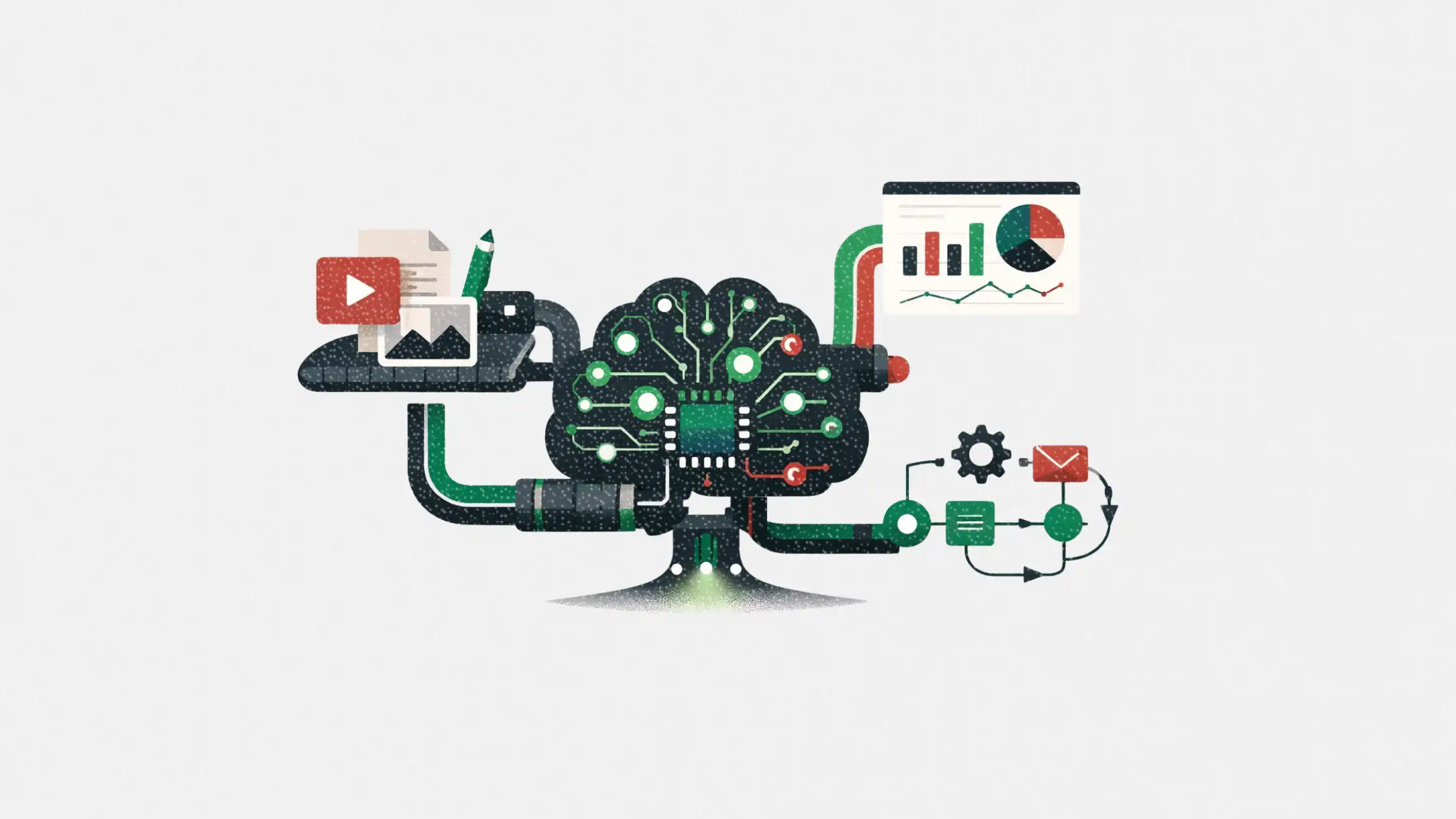
AI marketing tools have evolved from being optional to essential assets for modern marketing teams. They serve as the backbone for content creation, campaign management, and scale decision-making.
The environment is rapidly transforming; novel tools emerge every week, categories overlap, and marketers must navigate a chaotic array of platforms that promise efficiency, personalization, and enhanced performance.
This article delves deeply into the nature of AI marketing tools, identifying various categories that define the landscape, highlighting the must-know tools in 2026, and providing guidance on creating a strategy that harnesses AI as a powerful advantage instead of merely a productivity booster.
Short on time?
Here’s a quick overview:
AI marketing tools are software applications that utilize artificial intelligence, machine learning, or generative AI to automate, optimize, and enhance marketing functions.
In contrast to conventional marketing technologies, which often rely on extensive manual configuration and rule-based automation, AI-driven tools can examine data, generate content, and make predictions with minimal human oversight.
Key features typically include:
- Automation: minimizing repetitive tasks such as campaign setup and reporting.
- Personalization: customizing content and experiences on a large scale.
- Prediction: anticipating results, such as customer churn or conversion probabilities.
- Content Generation: creating text, images, and even video content.
The adoption of AI marketing tools is already significant. Around 88% of marketers are utilizing AI tools, with 76% leveraging them for content creation and copywriting.
1. Speed and Scale
AI eliminates one of marketing’s primary bottlenecks: the speed of content production.
From blog articles to ad variations, teams can now generate and iterate content at unprecedented speeds, allowing them to test ideas more rapidly.
93% of marketers report that AI accelerates content generation, making quick turnarounds a baseline expectation rather than an unusual advantage.
2. Performance and ROI
AI tools enhance targeting, segmentation, and optimization through predictive analytics.
Rather than merely reacting to performance metrics, marketers can now anticipate them, resulting in measurable improvements, as seen with AI increasing marketing ROI by 5–15% in various scenarios.
3. Competitive Advantage
AI adoption is no longer a test phase; it has become a strategic necessity.
75% of marketers affirm that AI provides them with a competitive edge, especially in personalization, campaign optimization, and decision-making speed.
AI marketing tools: real-world success and case studies
Explore how various companies are leveraging AI marketing tools through real-world case studies that demonstrate successful applications in a competitive landscape.

This foundational understanding is crucial for every marketer. While each category of tools can operate independently, their true value emerges through synergy.
Different Types of AI Marketing Tools
Uncover various categories of AI marketing tools, how to use them effectively, and how businesses are achieving success with these tools.
1. AI Content Creation Tools
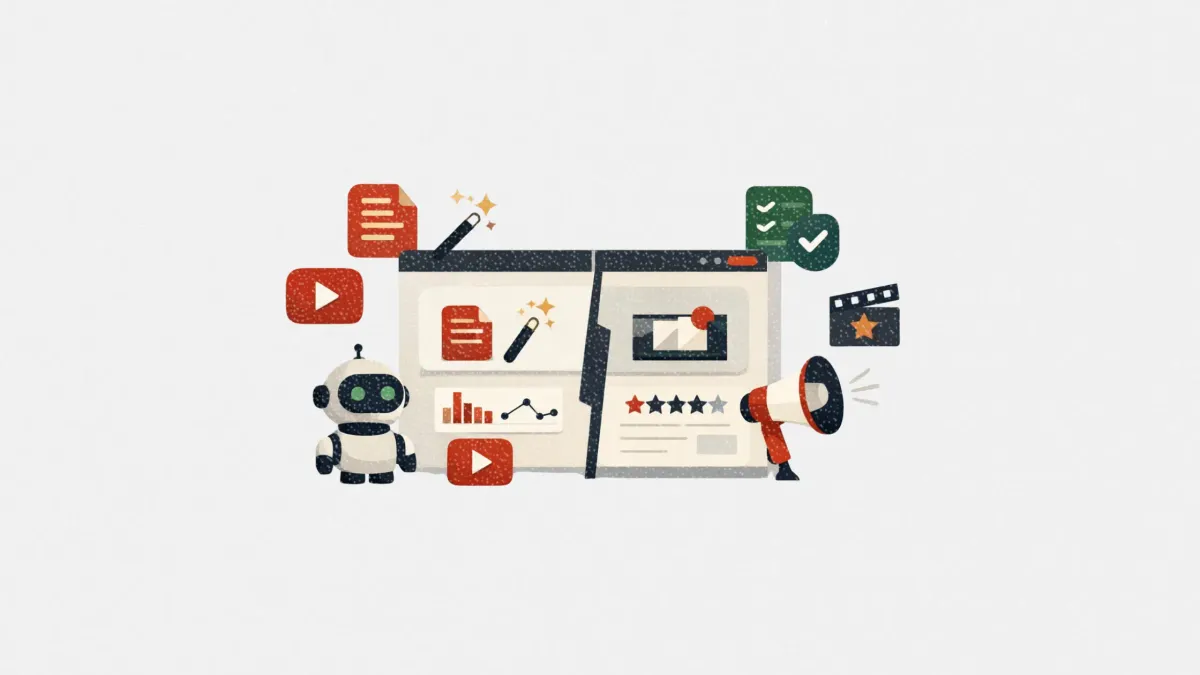
These tools concentrate on generating and scaling creative outputs:
- Copywriting applications like ChatGPT and Jasper.
- Image and video tools such as Midjourney and Runway.
- SEO platforms that optimize structure and keywords.
Top 11 AI Marketing Content Creation Tools Reviewed
Explore in-depth evaluations and comparisons of the best AI content creation tools available in 2026.
2. AI SEO Tools
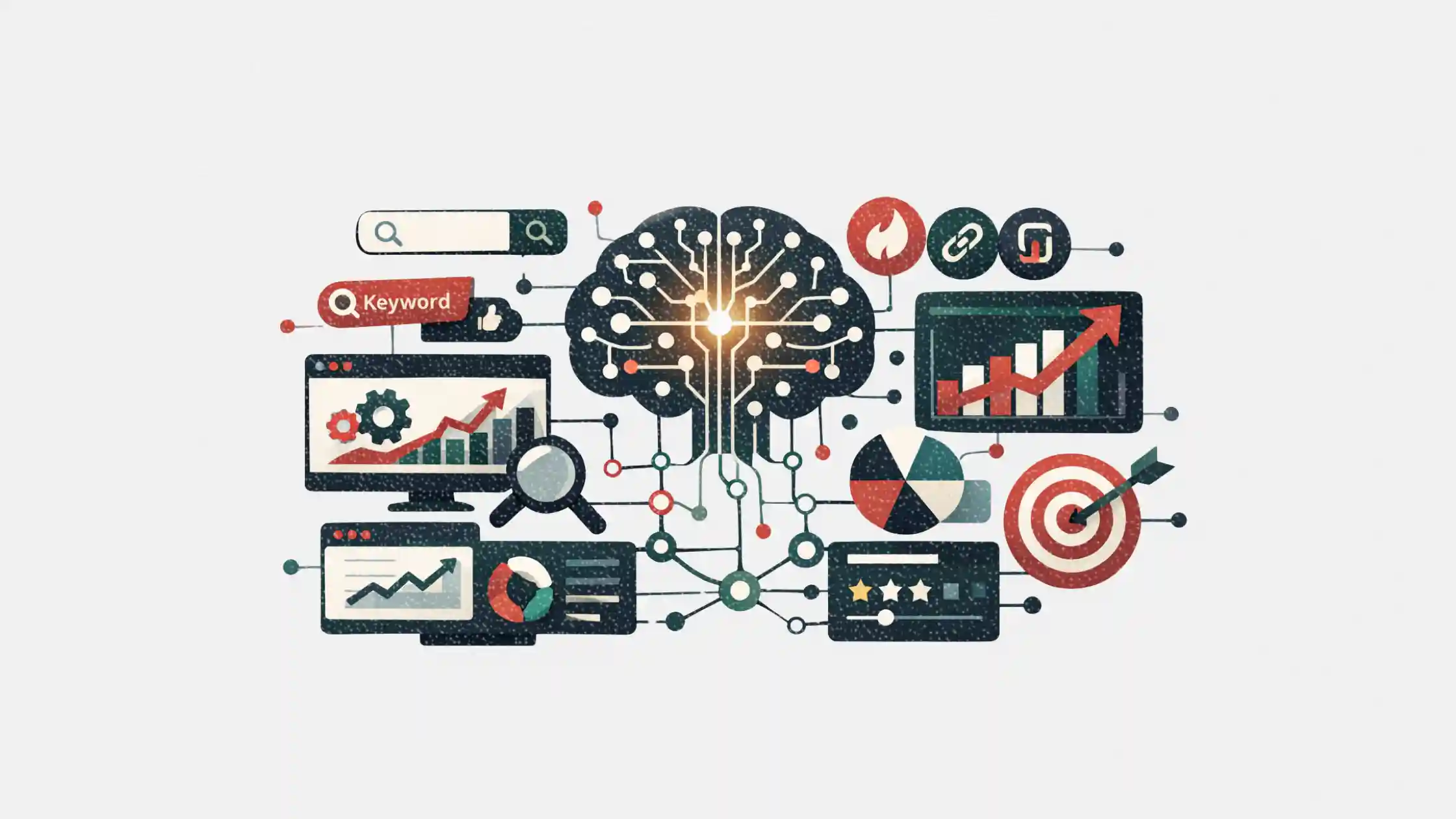
These tools focus on enhancing search visibility and optimizing content performance:
- Keyword research and clustering capabilities.
- Content optimization and performance scoring.
- Search Engine Results Page (SERP) analysis and competitive insights.
Best AI SEO Tools: Comprehensive Reviews
Learn about outstanding AI SEO tools through detailed reviews and comparisons, including their features, advantages, and drawbacks to enhance your strategy.
3. AI Social Media Tools
Developed for distribution and audience engagement:
- Content scheduling and caption generation.
- Trend analysis and social listening capabilities.
- Repurposing content across various formats.
Top 10 AI Marketing Tools for Social Media
Discover the leading AI tools tailored for effective social media management and learn how to compare their features, pricing, and user experiences.
4. AI Photo and Video Editing Tools
These tools aim to produce and refine visual content quickly without cumbersome workflows:
- AI-driven image editing, generation, and enhancement tools.
- Video editing, clipping, and scene creation capabilities.
- Automated resizing and formatting for various platforms.
Reviews of 14 AI Marketing Photo and Video Editing Tools
Explore the best AI-powered tools that simplify photo and video editing, democratizing professional content creation.

5. AI Email Marketing Tools
Concentrated on lifecycle management and customer retention:
- Personalized email content generation.
- Subject line optimization features.
- Send-time predictions.
Top 12 AI Marketing Tools for Email Marketing
Analyze the best AI tools for email marketing through reviews and comparisons, focusing on their features and pricing to determine the best fit for your needs.
6. AI Analytics and Data Tools
These tools transform raw data into actionable insights:
- Predictive analytics features.
- Customer segmentation functions.
- Attribution modeling capabilities.
12 Essential AI Marketing Tools for Analytics and Reporting
Discover top AI marketing tools that help optimize your campaigns with data-driven insights and automation functionalities.
7. AI Chatbots and Conversational Marketing Tools
Utilized for real-time customer interactions:
- Automation for customer support.
- Lead qualification processes.
- Conversational AI to enhance user experiences.
Best AI Chatbots of 2025
Explore leading AI chatbots designed for customer service, content generation, and improving business processes.

8. AI Marketing Automation Tools
Functioning as the orchestration layer:
- Workflow automation features.
- Integration with CRM systems.
- Management of lifecycle marketing.
Understanding Marketing Automation and its Functionality in 2025
Discover how marketing automation tools can help streamline follow-ups, score leads, and personalize campaigns without requiring manual intervention.
When selecting AI tools, the focus should be less on features and more on which solutions fit your team’s needs.
Consider the following:
- Budget: Ensure the tools align with your expected return on investment.
- Team Size: Avoid overcomplicating your stack based on the number of users.
- Use Case: Consider whether the primary focus is on content, analytics, automation, or a combination of these.
- Integration: Often, compatibility and interoperability can prove to be the biggest challenges.
Notably, 62% of teams face difficulties integrating data across platforms, making seamless interoperability paramount over any single feature.
AI Marketing Workflows
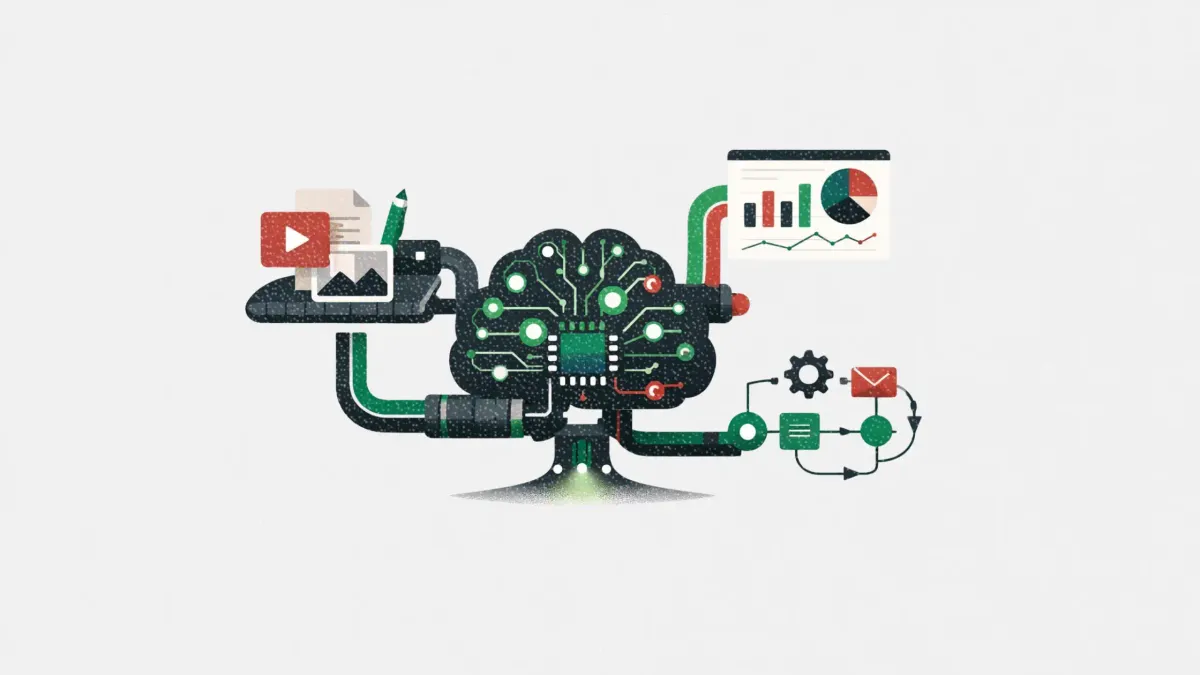
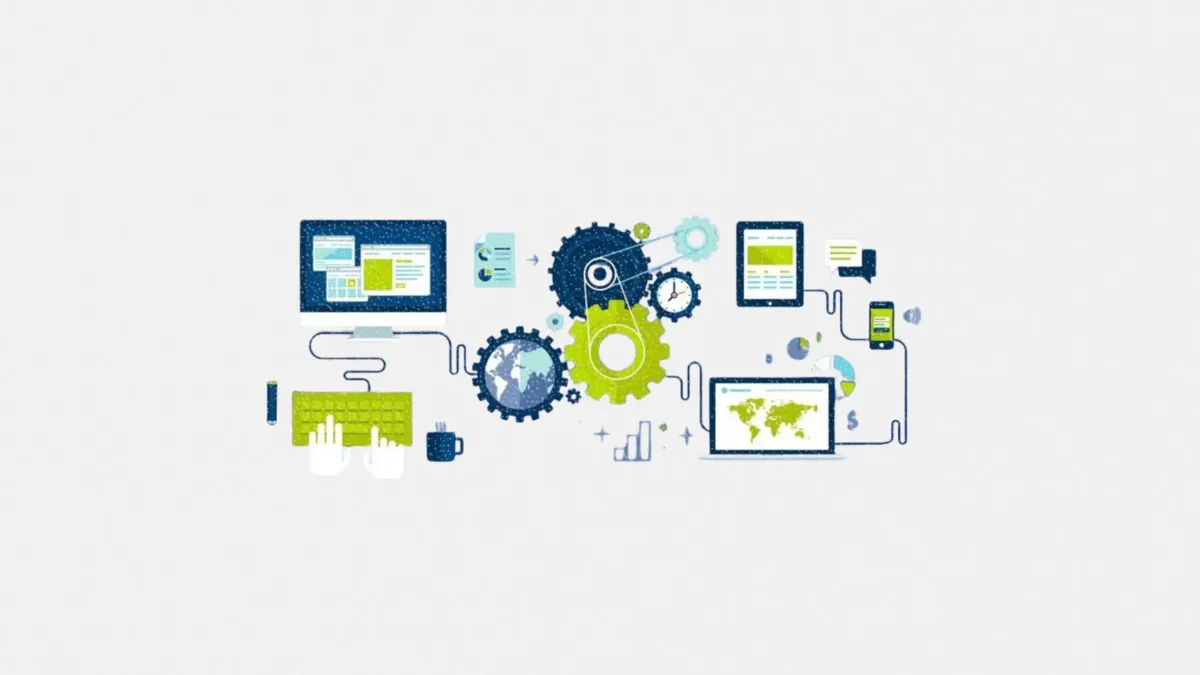
The real potential of AI emerges when tools are connected to workflows rather than employed in isolation.
A typical workflow may encompass:
- Keyword Research: An AI SEO tool identifies opportunities.
- Content Creation: Generative AI drafts and designs assets.
- Distribution: Social media AI tools schedule and adapt content for publication.
- Optimization: Analytics AI tools refine and enhance performance metrics.
This transition from isolated tools to a comprehensive workflow is where AI has the potential to create substantial business value.
Best Practices for Implementing AI Marketing Tools
Learn how to effectively integrate AI marketing tools into your overall strategy while avoiding common pitfalls for optimal outcomes.
AI is not merely accelerating marketing processes; it is also transforming team dynamics.
Smaller teams can now produce, test, and optimize content at a scale that previously required larger organizations. Content, campaigns, and experiments can now run simultaneously rather than sequentially.
Furthermore, personalization is evolving from manual segmentation to real-time adaptation, as AI fine-tunes messaging and timing on-the-fly—making outputs not only more frequent but also more relevant.
Ultimately, the true benefit lies not in reduced costs but in enhanced leverage. Teams can dedicate less time to production and enhance their focus on strategic decisions that drive significant impact.
AI Marketing Tools: Real-World Success and Case Studies
Learn about practical applications of AI in marketing through practical examples and success stories from various companies.

Challenges and Limitations
Most teams are merely beginning to grasp the full potential of AI. A significant hurdle is the availability of data. AI requires interconnected systems, yet many stacks remain fragmented. When tools are unable to share data effectively, automation and predictive capabilities become compromised.
Additionally, there exists a capability gap. Although AI adoption is on the rise, meaningful integration into existing workflows remains limited. Many teams rely on only the basic capabilities, such as content generation, without reconsidering workflows. A further risk is over-reliance, as inadequate oversight may lead to generic AI outputs, ultimately diluting brand differentiation.
In practice, achieving success with AI is more about how tools are governed and integrated rather than the tools themselves.
Trends in AI Media, Orchestration, and Ad Spend for 2026
Mediaocean’s latest report highlights marketers’ increased focus on digital video, AI-driven advertising, and system unification.
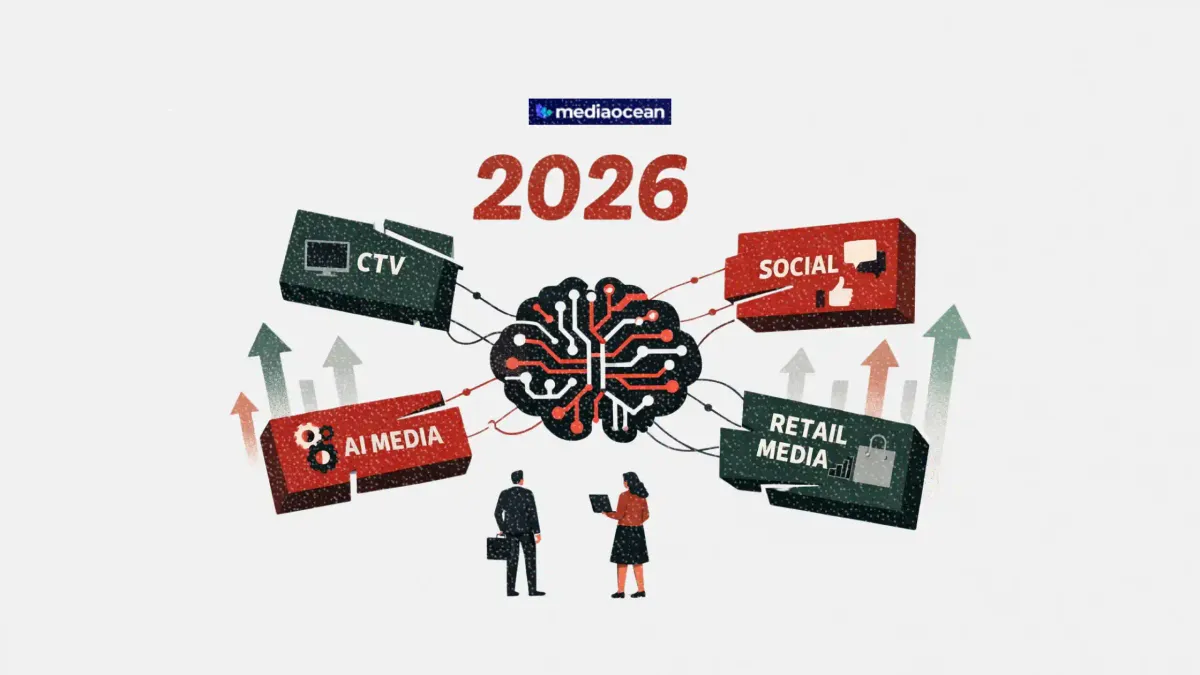
The next transformation will shift from tools to agents.
Rather than managing dashboards and manual optimizations, marketers will set objectives while AI systems execute and adapt efforts in real-time. This transitions AI from being an assistant to an operational driver. Concurrently, marketing is also transitioning to a fully multimodal approach, where text, images, and videos are developed and assessed together, minimizing the separation between conceptualization and execution.
Personalization will deepen, evolving from group-based targeting to individualized real-time experiences. While this opens new avenues, it also raises concerns regarding data management and control. The dynamics of discovery are also shifting; as AI-driven searches develop, aspects like public relations and brand authority will gain prominence, blurring the lines between SEO, content creation, and marketing communications.
The Future of Marketing: AI Transformations in 2026
Explore predictions on automation, personalization, decision-making, and ethical challenges impacting AI marketing in 2026.
What Marketers Should Know
If there’s one key takeaway, it’s this: AI is not merely an upgraded tool; it represents a transformation in workflows.
To remain competitive, organizations should recognize that AI marketing tools profoundly alter how marketing functions, ranging from content creation to campaign optimization. However, the real advantage comes not from the mere use of AI but from its effective application.
Teams that approach AI as foundational infrastructure rather than a simple shortcut will likely experience accelerated growth, quicker adaptation, and superior performance compared to their competitors in the foreseeable future.
Schedule a discovery call today.
Schedule a discovery call (for brands & publishers) – ContentGrow
Thanks for booking the call with ContentGrow. We specialize in scalable and tailored content creation services for B2B brands and publishers worldwide. Let’s discuss your content needs and find out if ContentGrow is the right fit for you! IMPORTANT: To confirm, provide your details for meeting.