The ongoing conflict in the Middle East has significantly impacted global dynamics, particularly regarding energy security and air travel. Recent developments in Dubai showcase the serious tensions as military operations escalate, with airspace closures and missile threats contributing to an atmosphere of uncertainty.
UAE briefly closes airspace
The UAE shut down its airspace early Tuesday as its military reported it was “responding to missile and drone threats from Iran.” The closure was soon lifted, the state-run WAM news agency quoted the UAE’s General Civil Aviation Authority as saying.
Authorities said “the situation stabilized,” allowing flights to resume.
Shortly after, authorities sent a missile warning alert to people in Dubai. The sound of explosions could be heard in Dubai as the military worked to intercept the incoming fire.
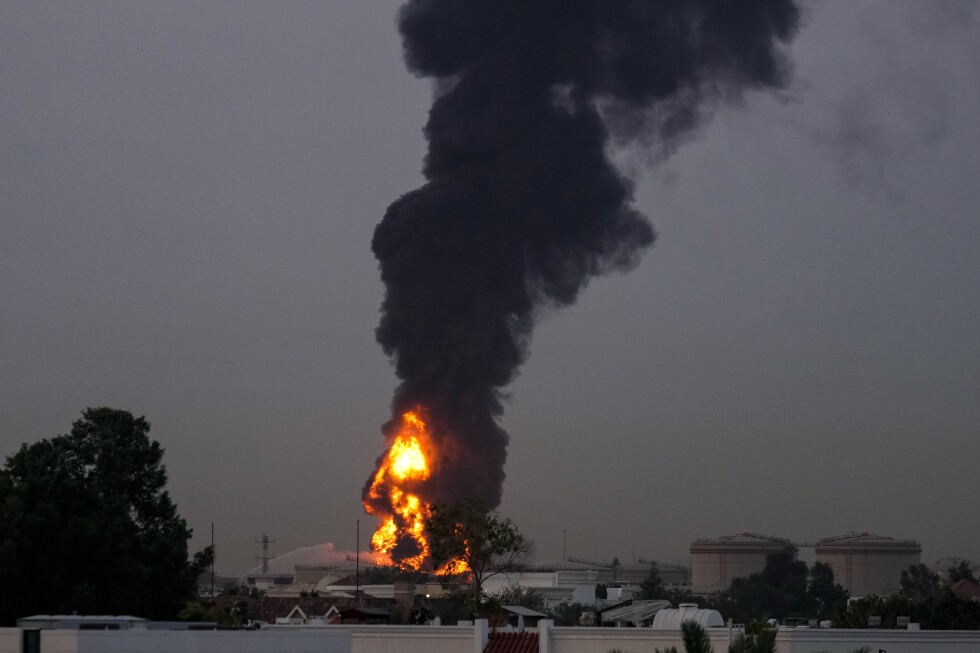
The state-run WAM news agency reported that a drone attack reignited a fire in an oil tank farm in Fujairah, a UAE emirate that has frequently been targeted on the nation’s east coast near the Gulf of Oman. Fortunately, no injuries were reported following the blast.
This sudden airspace closure highlights the balancing act Emirati authorities face in maintaining the operations of long-haul carriers, Emirates and Etihad, amidst ongoing Iranian attacks. On Monday, an Iranian drone struck a fuel tank at Dubai International Airport, which is known as the busiest airport in the world for international travel.
Israel launches new attacks on Tehran, steps up strikes on Beirut
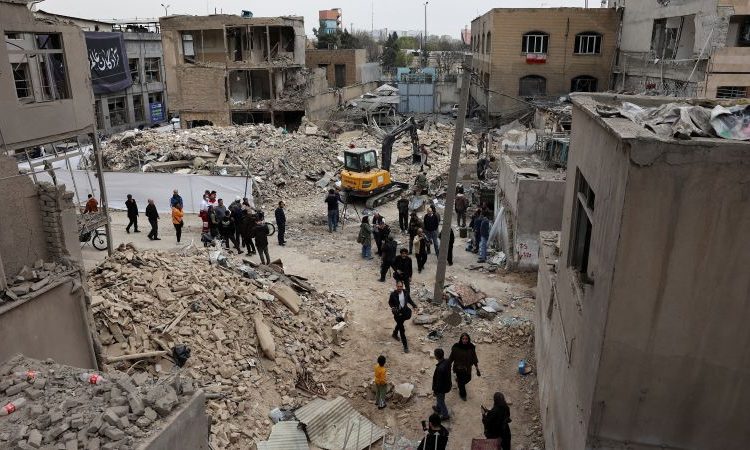
The Israeli military announced new attacks across Tehran early Tuesday, targeting Hezbollah militants in Lebanon as well. Following the U.S.-Israeli attacks on Iran, Hezbollah has retaliated by firing rockets into northern Israel.
These strikes have displaced over 1 million Lebanese, accounting for roughly 20% of the population, according to the Lebanese government, which reports approximately 850 fatalities attributed to the conflict. Some Israeli forces have entered southern Lebanon, raising fears of a possible large-scale invasion.
Israel also reported two Iranian salvos fired towards Tel Aviv and the region south of the Sea of Galilee; thankfully, no injuries were reported from these attacks.
The Iranian Red Crescent has reported over 1,300 fatalities in Iran since the conflict escalated. The Israeli military claims to have conducted about 7,600 strikes on Iran, reportedly neutralizing 85% of its air defenses and 70% of its missile launchers.
Within Israel, 12 individuals have lost their lives due to Iranian missile strikes, and at least 13 U.S. military personnel have been killed.
Trump seeks allies’ help to police the Strait of Hormuz
The virtual shutdown of the Strait of Hormuz is causing concerns for the global economy, leading to increased energy prices, exacerbating food shortages in vulnerable countries, and destabilizing fragile states. These issues complicate efforts by central banks aiming to reduce prices for consumers.
On Monday, President Trump mentioned that “numerous countries” have expressed their willingness to assist in policing the Strait of Hormuz. However, he noted some countries’ hesitation reflects a lack of reciprocity in existing defense agreements with the United States.
European leaders have criticized the U.S. and Israel for not providing clear objectives regarding their actions in the conflict. “The level of enthusiasm matters to me,” Trump emphasized, without disclosing specific nations involved, although he has previously appealed to China, France, Japan, South Korea, and Britain.
Brent crude prices saw a slight dip to $100.21 per barrel on Monday, yet they remain approximately 40% higher since the conflict escalated.
Officials are actively working to alleviate price pressures. Fatih Birol, head of the International Energy Agency, stated that the agency’s 32 member nations possess additional reserves totaling 1.4 billion barrels, in addition to the record 400 million barrels planned for release to address supply constraints.
Adm. Brad Cooper, the leading U.S. military commander in the Middle East, shared a video on X indicating that American forces are focusing on Iran’s threats to oil and natural gas shipping. In a meeting planned in Brussels, the EU’s foreign policy chief Kaja Kallas mentioned discussing the potential extension of a naval mission to secure ships in the Strait of Hormuz, but without further specifics.
Italian Foreign Minister Antonio Tajani expressed that while Italy supports enhancing anti-piracy and defensive missions in the Red Sea, they are not looking to expand operations in the Strait of Hormuz.
British Prime Minister Keir Starmer remarked that Britain is collaborating with allies on plans to reopen the strait, mentioning the possibility of deploying mine-hunting drones currently located in the region, but firmly stated that Britain would avoid becoming entangled in the broader conflict.
Japan and Australia announced they have not received requests for help in protecting the strait and currently have no plans to intervene.
In the UAE capital, an Iranian missile struck a vehicle, resulting in one fatality, according to the Abu Dhabi media office. Additionally, drone strikes on Monday led to fires at two UAE oil facilities, located in Abu Dhabi and Fujairah.
Key Takeaways
- The UAE temporarily closed its airspace due to missile threats from Iran.
- Israel escalated attacks on Tehran and Hezbollah as tensions rise.
- Over 1 million Lebanese have been displaced amid ongoing violence.
- Trump seeks international support to enhance security in the Strait of Hormuz.
- Brent crude oil prices remain high, driving economic concerns globally.
- Iranian missile strikes have resulted in fatalities in both Israel and the UAE.
FAQ
What led to the UAE closing its airspace?
The UAE’s airspace was closed as a precautionary measure in response to missile and drone threats from Iran.
How has Israel responded to Iranian actions?
Israel has launched extensive military strikes across Tehran and increased its attacks on Hezbollah in Lebanon.
What impact are the ongoing conflicts having on global oil prices?
The conflicts have significantly increased oil prices, contributing to economic instability and concerns about energy security.
Have international allies committed to helping secure the Strait of Hormuz?
While President Trump indicated some countries expressed willingness to assist, no specific commitments have been made.
What are the consequences of the ongoing violence in Lebanon?
The violence has resulted in significant displacement and loss of life, affecting approximately 20% of Lebanon’s population.