In today’s rapidly advancing digital landscape, it may seem like new AI tools are emerging almost every day, and you’re not mistaken. The latest innovations in AI are increasingly designed to streamline everyday tasks, including website creation.
One noteworthy example is a feature known as Web to Design, developed by the AI design platform MagicPath. Rather than starting from a blank slate, this tool enables users to simply paste the URL of a website they admire. It then transforms that page into an editable design, allowing for extensive modifications.
Article continues below
Here’s what transpires when you enter a website into this AI design tool — and whether it genuinely serves a purpose or is merely a flashy gimmick.
Exploring the Web to Design Feature
The idea is straightforward yet transformative for those looking to build a site without predetermined templates.
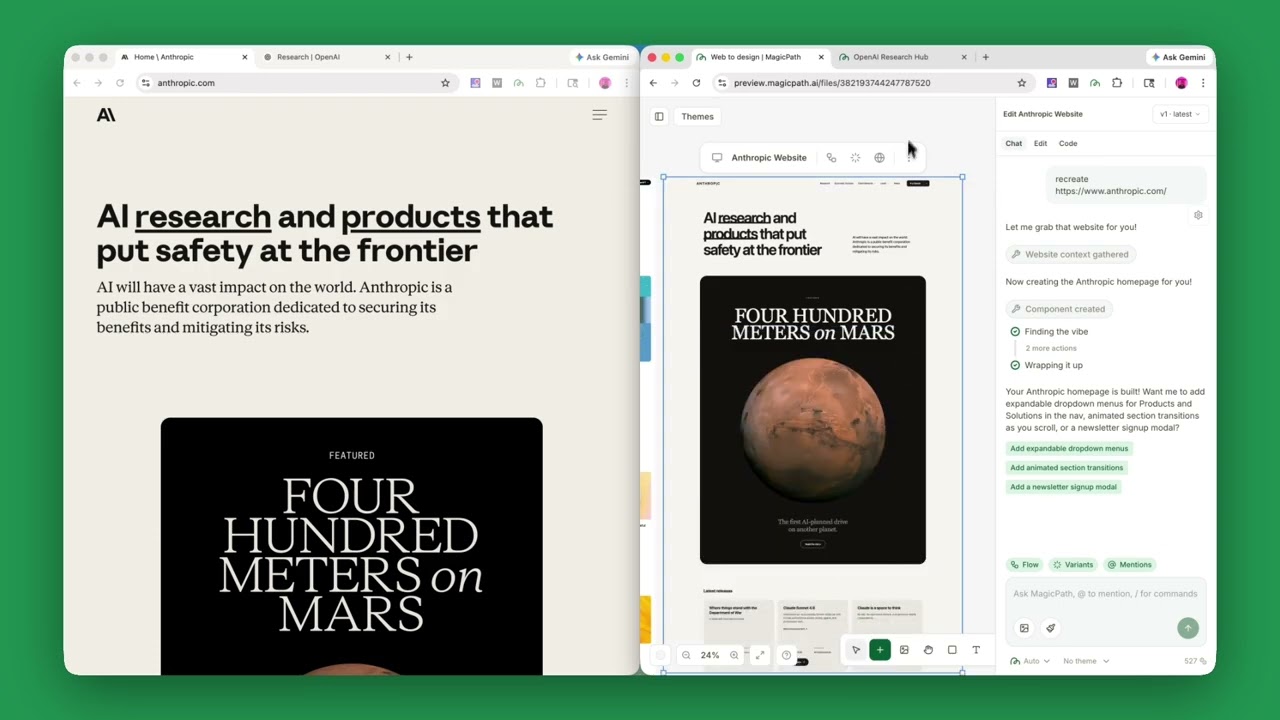
Rather than beginning with a blank canvas, MagicPath allows you to import a live website directly into its design editor. The tool then reconstructs the page’s framework, making it accessible for editing text, layout, and design elements.
The fundamental workflow is as follows:
- Paste a website URL into MagicPath
- The AI scans and reconstructs the page
- The design manifests as an editable layout
- You can alter sections, rewrite text, or rearrange elements
In essence, a completed website becomes the foundation of your design process rather than the final product, distinguishing it from tools like Figma or Webflow that typically require building layouts incrementally.
My Experience with the Tool

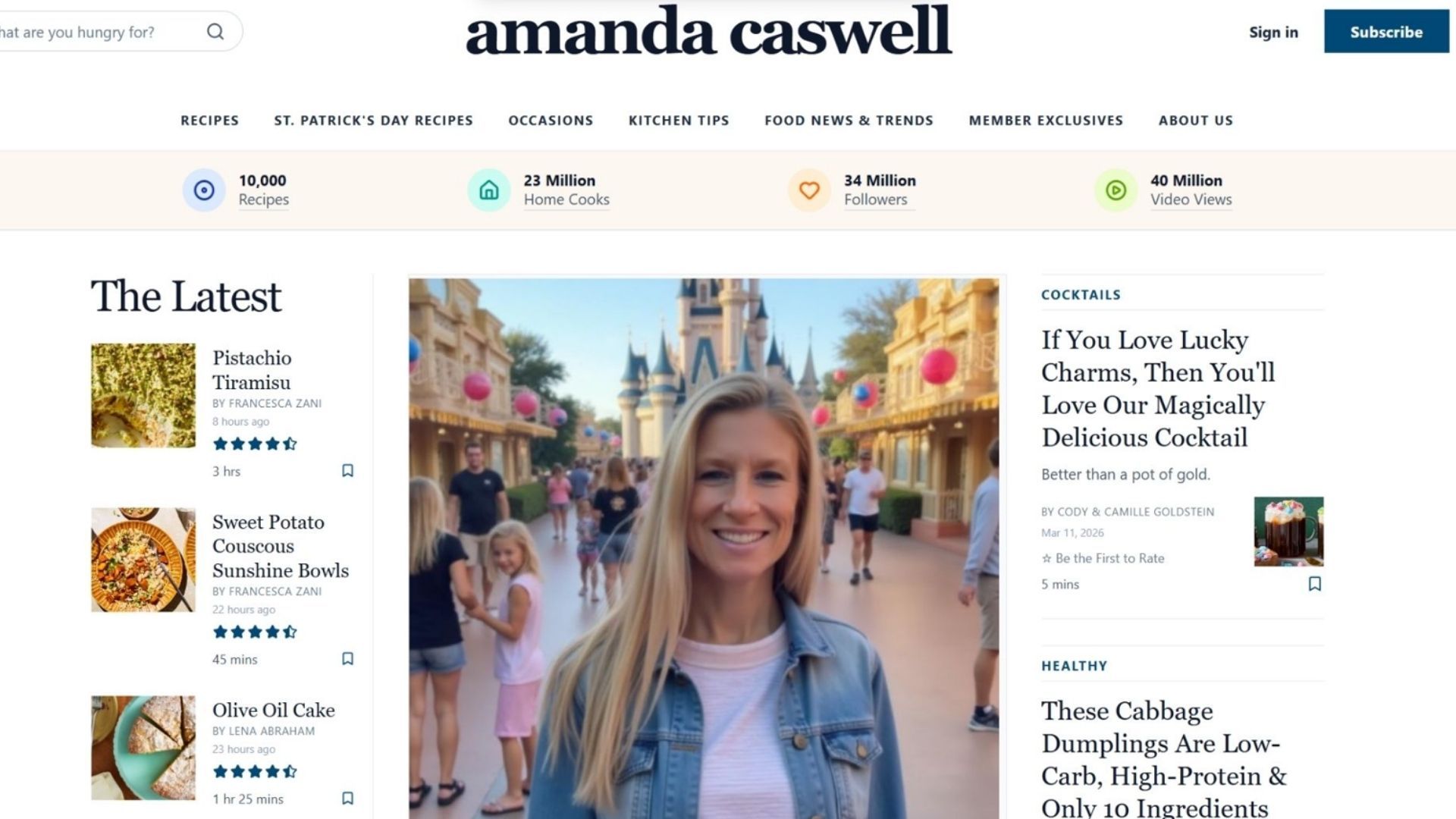
One of my favorite websites for inspiration regarding colors, themes, and overall design is Delish.com.
To test the capabilities of MagicPath, I decided to paste the URL of Delish into the tool and see how it performed.
Within moments, the page materialized within the editor as a fully structured layout. The AI had reconstructed key sections of the site, such as the hero area, navigation bar, text blocks, and images, allowing for direct editing within the design canvas. It was truly astonishing!
I also experimented with Walmart.com, Netflix.com, and YouTube. Each time, I received a completely new rendering ready for customization. Since I was testing the free tier, I couldn’t fully create a site, but for just $14 a month, anyone can.
What was remarkable was that instead of merely producing a static screenshot, the page functioned as a live template. I could click on text fields to rewrite content, rearrange sections, and swap out elements without the need to start from scratch. It effectively converted the original website into a launchpad for creative experimentation.
One aspect that stood out was the speed of the process. Traditionally, recreating a layout you admire entails manually rebuilding headers, spacing, and sections piece by piece. With this tool, the structure was already established, making it simple to begin making adjustments promptly.
However, it wasn’t perfect. Some elements required minor adjustments, and the layout still demanded editing to personalize it effectively. Nonetheless, as a rapid method to generate a usable design foundation, the experience was surprisingly smooth.
The outcome felt less like replicating a page and more like importing a design blueprint that one can adapt and reshape.
Reasons for Interest

What makes this feature intriguing is its impact on the inspiration-to-prototype workflow. Designers and creators frequently find themselves in this situation:
You spot a website with a layout that captivates you and think, “I wish I could start from something like this.” Traditionally, this process typically involves painstakingly recreating sections, hunting for styles, and rebuilding layouts piece by piece.
MagicPath effectively converts that inspiration step into a functional starting point in mere seconds.
You can import a page and then customize it with your own branding, use AI to adjust the copy, rearrange sections, and even generate additional pages based on the design. This represents a major time-saving benefit for quick prototypes or landing page experiments.
Another Feature: Web Capture
MagicPath also incorporates a related functionality called Web Capture. Instead of bringing in an entire page, a Chrome extension allows you to snag individual components from websites, including navigational menus, hero sections, or pricing tables.
These elements can then be placed directly into your project, effectively creating a personalized library of design components sourced from the web.
While AI-generated content does not replace thoughtful design work, the feature can be particularly beneficial in a few select scenarios.
- Landing page experiments: Marketers can import a structural layout and quickly test different variations.
- Rapid prototypes: Startup founders or product teams can develop rough concepts without spending hours on layout recreation.
- Design inspiration: It bridges the gap between saying, “I like this site” and having “something similar to experiment with.”
Final Thoughts
Tools like MagicPath signify a broader transformation towards AI-assisted creation rather than starting from a blank slate. While some might argue these tools could undermine the roles of graphic designers, they also empower those without design experience to create attractive websites.
Rather than beginning from nothing, this new wave of AI tools utilizes existing content, structures, or exemplars, allowing for creative transformation. We’ve observed a similar trend with tools like ChatGPT and Claude, where users provide existing documents, code, or drafts for enhancement instead of starting anew. Design tools are merely catching up to this contemporary workflow.

Follow Tom’s Guide on Google News and add us as a preferred source to stay updated with our latest news, analysis, and reviews in your feeds.