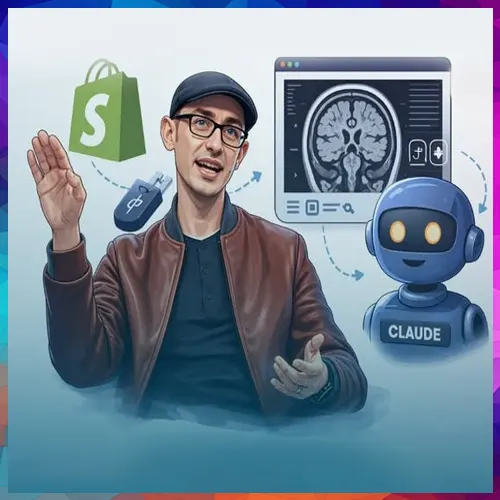
Tobi Lutke recently showcased how he used an AI assistant to develop a web-based viewer for his MRI scan files, reflecting the expanding influence of artificial intelligence in addressing routine technical and healthcare challenges.
Tobi Lutke, the chief executive of Shopify, recently discussed his experience with artificial intelligence in resolving a technical issue related to his annual MRI scan files. Instead of installing specialized software to access his medical data, Lutke opted for an AI-driven solution to create a quick alternative.
He explained that the MRI scan results were provided on a USB drive that required proprietary Windows software to open. As he was using a Mac, he decided to explore an AI option rather than seeking out compatible software.
Lutke shared that he utilized Claude, an artificial intelligence model from Anthropic, to create a simple web-based viewer for the scan files. By requesting the AI to generate an HTML-based interface, he successfully accessed the data without installing the required software.
In a post on X, Lutke expressed satisfaction with the AI-generated viewer, noting that it functioned effectively and appeared more appealing than the original software.
AI as a Practical Problem-Solving Tool
Lutke characterized this experience as a prime example of how individuals can seamlessly integrate AI tools into their routines for problem-solving. He suggested that with frequent experimentation, users begin to identify scenarios where AI can offer rapid solutions.
His insights have gained traction amid ongoing conversations regarding the expanding role of artificial intelligence in software development and various industries. Recent advancements in AI coding tools have sparked discussions about their potential to transform software engineering practices significantly.
The discussion intensified with new AI innovations from Anthropic, including updates aimed at enabling professionals to automate technical tasks and streamline workflows.
Increasing Adoption of AI in Healthcare
Concurrently, artificial intelligence is finding more applications in healthcare. Anthropic has also launched AI tools intended to assist clinicians, insurers, and patients with administrative tasks and accessing medical information.
Certain versions of Claude now allow users to securely review personal health data, including lab results and medical records, enabling them to better comprehend their health information prior to consulting with healthcare professionals.
Lutke’s example highlights how AI is advancing beyond technical fields, emerging as a viable solution for everyday challenges—ranging from coding tasks to understanding personal medical data.