By Zahra Bhatti, founder and CEO, Véa
We are currently experiencing a measurement revolution.
Wrist-worn wearables are being shipped in vast quantities, with IDC forecasting global shipments to reach 537.9 million units in 2024, including an impressive 136.5 million units shipped in just Q2 2025.
We can now monitor multiple aspects of our health, including steps, sleep quality, heart rate, heart rate variability, temperature, glucose levels, and recovery scores.
This unprecedented access to physiological insights into our bodies is remarkable.
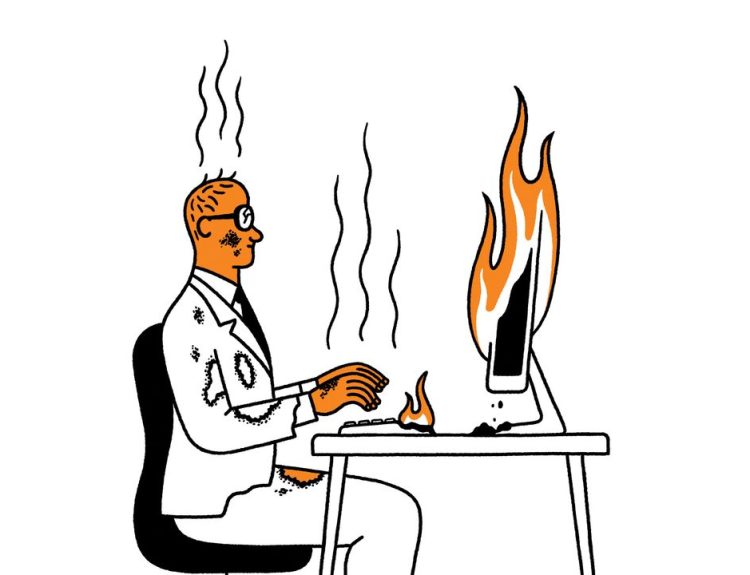
But why, despite this wealth of information, are women still experiencing burnout? Why are they so often overwhelmed and carrying an invisible cognitive load that isn’t reflected on any dashboard?
If the data-driven evolution in health technology was intended to empower women, why do many feel more surveilled than supported?
A number displayed on your wrist can inform you about what transpired in your body but rarely provides insights into why it occurred, its significance, or the next necessary steps.
This essential layer of understanding is emotional data—a domain where femtech is ideally suited to create solutions.
We Developed Dashboards, Not Interpretations.
Imagine this scenario.
It’s 6:47 a.m. You’ve been awake since 4 a.m. due to a teething toddler, made school lunches on autopilot, dealt with a meltdown at the school gates, and are now at your desk running on empty.
Your watch buzzes with notifications: Sleep score: 38. Stress: High. Recovery: Poor. As if you needed a reminder.
This issue is one that health tech has yet to acknowledge openly.
Wearables excel at detecting signals, but measurements without meaningful interpretation result only in awareness.
When your heart rate variability (HRV) drops and an alert pops up, it cannot indicate whether that decline resulted from an unresolved argument with your partner, the guilt of missing another bedtime, the mental burden of remembering the GP appointment, or the hormonal fluctuation you’re experiencing during your luteal phase.
The technology captures the signal but fails to grasp the broader narrative.
The data corroborates what women instinctively perceive.
While fitness trackers can boost step counts, a Lancet Digital Health umbrella review highlights that their impact on overall psychological well-being is minimal.
A systematic review conducted in 2024 went so far as to describe the evidence supporting wearables for enhancing mental health as “extremely limited.”
The sensors may function well, but the interpretations fall short. That breach between data and its meaning is precisely where women falter.
Women’s Mental Health Is a Systemic Issue, Not a Niche Concern.
Consider the weight of responsibilities that women juggle on a daily basis.
Depression affects women at a rate approximately 1.5 times higher than men, according to the World Health Organization.
The gender gap emerges during puberty and continues throughout the lifespan, influenced by a mixture of biological, psychological, and social elements that accumulate over time.
In the UK, recent data from the ONS indicates that 26.2% of women reported experiencing high anxiety, compared to 18.8% of men—a statistic that has remained statistically significant for over ten years.
Yet, a fundamental question remains largely unaddressed in wellness technology: where within the data does all this invisible labor reside?
Globally, women undertake 2.5 times more unpaid care and domestic work than men.
This translates into emotional, mental, and physical labor that rarely appears in economic statistics or health metrics.
Forty-five percent of working-age women are outside the labor force due to unpaid care duties, compared to just 5 percent of men.
For those who remain employed, the pressures can be overwhelming: CIPD research reveals that 67% of women aged 40 to 60 who experience menopause symptoms report a predominantly negative impact on their work, with 79% feeling less able to concentrate and one in six contemplating leaving their job altogether.
These statistics are interrelated.
They highlight the cumulative cognitive and emotional overload that builds over a lifetime—a growing debt of stress that no single intervention can resolve.
Nonetheless, much of the wellness technology landscape continues to focus on optimization metrics around output, recovery, physical activity, and productivity.
Women require more than just improved tracking; they need systems that alleviate the burden of self-interpretation.
When did we prioritize measuring a woman’s body over comprehending what she endures internally?
Emotions Are Not Soft Signals; They Are Vital Indicators.
Emotions are often seen as subjective, anecdotal, and too complex to quantify.
However, from a systems perspective, they serve as high-frequency signals regarding safety versus danger, capacity versus overwhelm, connection versus isolation, and alignment versus self-compromise.
They act as early warning signs, surfacing long ahead of clinical burnout, sleep disturbances, or even drops in productivity.
Physiological responses trail behind emotional experiences.
Your heart rate might spike after a confrontation. Sleep may suffer after a week of relentless tasks. Inflammation markers may not reflect the daily micro-stresses you encounter. Emotions certainly do.
They serve as the body’s primary responders, quicker than cortisol, more precise than HRV, and more truthful than any self-reported wellness score.
When emotional data is gathered consistently, patterns emerge that no wearable can identify alone: anxiety peaks following specific meetings, energy wanes during certain periods of the menstrual cycle, irritability increases after overwhelming interactions, and creative clarity arises after restful solitude or exercise.
This is not merely a novelty in mood tracking; it becomes behavioral pattern recognition—the diagnostic insight women need and deserve.
From Self-Optimization to Self-Understanding
We have developed outstanding tools for assessing the female body.
However, we have yet to establish the infrastructure needed to interpret the emotional burdens that women face daily, the invisible labor, the relational stresses, hormonal shifts, and especially the resulting cognitive overload.
These dynamics typically don’t appear in a recovery score; rather, they manifest unmistakably in emotional patterns.
Imagine: a wearable senses prolonged stress variability. An emotional check-in reveals relational tensions. Contextual factors indicate looming deadlines and insufficient recovery. The system doesn’t respond with another metric but offers a small, realistic intervention tailored to your life.
Transforming dashboards into proactive mental health frameworks is the golden opportunity for femtech to lead.
When emotions are approached as structured, longitudinal data rather than vague expressions, they can become a preventive signal.
They reveal when capacities are diminishing, when boundaries are being violated, and when resilience is on the rise. They highlight what no heart monitor could ever capture: the moment a woman stops prioritizing her needs and the ensuing patterns that unfold.
This transformation is already underway.
Platforms like Véa are constructing emotional operating systems that treat emotions as authentic health data. They translate micro-check-ins and identify patterns into contextually rich insights, alleviating the hidden burden of self-analysis rather than complicating it.
Not more optimization. Not additional self-surveillance. Instead, we strive for structured self-understanding that genuinely lightens the load.
In a world overflowing with metrics, the real competitive edge is no longer about amassing more data, but about deriving better meaning from it.
Emotions remain the most underutilized dataset in women’s health. Femtech possesses the infrastructure, the audience, and the moment to create that vital missing layer.
The critical question is whether this potential will be realized.