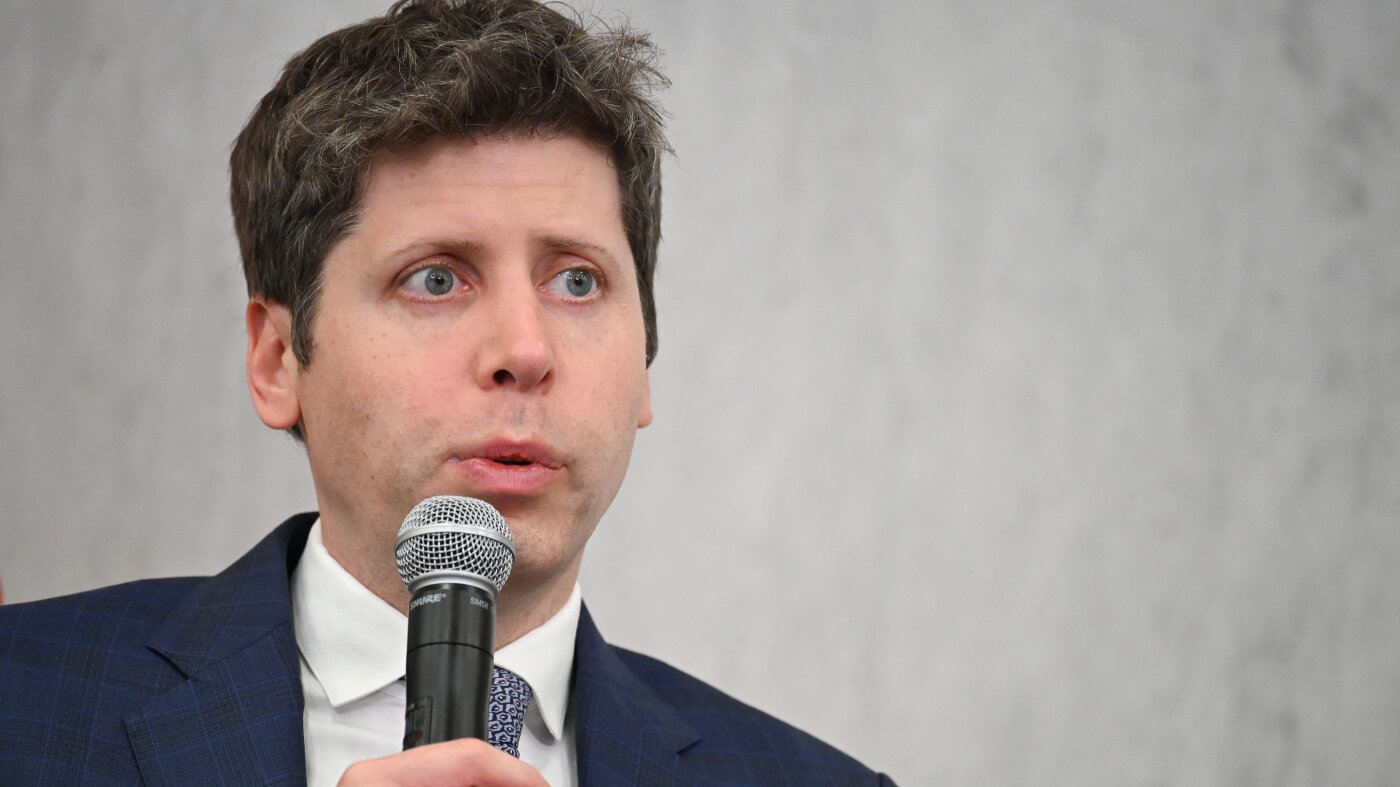

OpenAI CEO Sam Altman speaks in Washington, D.C., on July 22, 2025.
Mandel Ngan/AFP via Getty Images
hide caption
toggle caption
Mandel Ngan/AFP via Getty Images
In a significant move, a senior member of OpenAI’s robotics team has resigned due to concerns regarding the company’s recent agreement with the U.S. Department of Defense. Caitlin Kalinowski, who specialized in robotics and hardware, announced her resignation on social media, stating her decision was based on “principle” after OpenAI unveiled plans to provide AI systems for secure Defense Department operations.

This agreement forms part of a larger effort by the U.S. government to integrate advanced AI technologies into national security, a move that has stirred considerable debate within the technology sector regarding oversight and ethical applications.
In public posts discussing her resignation, Kalinowski expressed: “I resigned from OpenAI. I care deeply about the Robotics team and the work we’ve accomplished together. This was not an easy decision.” She emphasized that the policies governing certain AI applications were not adequately defined prior to OpenAI’s announcement with the Pentagon. “AI plays a critical role in national security,” she stated, “but unrestrained surveillance of Americans and autonomous weapons operating without human approval are issues that warrant thorough consideration.”
Kalinowski also clarified that her concerns were more about the decision-making process than particular individuals within the company, noting her “deep respect for Sam and the team, and I’m proud of what we built together,” referencing OpenAI CEO Sam Altman.
An OpenAI spokesperson responded by stating that the company believes the agreement with the Pentagon “creates a feasible route for responsible national security applications of AI, while firmly upholding our limits: no domestic surveillance and no autonomous weapons.” The spokesperson added that they understand “people have strong views on these matters, and we will continue to engage in discussions with employees, government officials, and communities around the globe.”
Kalinowski’s resignation coincides with increasing competition among leading AI developers vying to provide technology solutions to the U.S. government. Recently, federal agencies have turned to OpenAI and Google for AI systems amid rising tensions with competitor Anthropic over the military applications of its models.
Anthropic’s CEO publicly opposed using their software for purposes like mass domestic surveillance or autonomous weapons, a stance that has resulted in conflicts with defense officials, including Secretary of Defense Pete Hegseth, who argued that the department requires flexibility to utilize commercial AI tools in all “lawful” operations.
At OpenAI, Kalinowski played a crucial role in expanding the company’s robotics capabilities, which included recruitment efforts to support the organization’s growth in AI applications related to physical infrastructure and machinery.
Looking ahead, Kalinowski plans to remain active in the same field. “I’m taking a little time, but I remain focused on developing responsible physical AI,” she stated.