

In an era filled with fleeting food trends, the flexitarian diet has emerged as a noteworthy option, earning praise from various health professionals. This dietary approach is not strictly vegetarian nor fully meat-based. Instead, it harmoniously integrates both perspectives, making it a sustainable choice for long-term health. Let’s explore the benefits and proper way to follow this unique eating pattern that many gastroenterologists advocate.
What Exactly is a Flexitarian Diet?
The term flexitarian derives from the combination of “flexible” and “vegetarian.” It emphasizes a diet largely centered around plant-based foods while allowing for moderate consumption of animal products. The foundation of a flexitarian diet includes an array of vegetables, fruits, whole grains, legumes, nuts, and seeds, while meat, poultry, eggs, and fish are enjoyed occasionally rather than daily. Dr Kiran Shinde, a Consultant Gastroenterologist at Sahyadri Super Specialty Hospital in Pune, notes, “The flexitarian diet is not just a fad. From a gastroenterological standpoint, it closely aligns with recommendations for optimal gut health. It focuses primarily on plant-based foods while permitting moderate animal protein consumption.” This flexibility makes it easier for individuals to adhere to over time compared to stricter diets.
Why the Gut Microbiome Loves Plant-Rich Diets
The human gut hosts nearly 100 trillion microorganisms that rely heavily on dietary fiber for survival and growth. Plant foods are rich in prebiotic fiber, providing essential fuel for beneficial gut microbes. When these microbes digest fiber, they convert it into compounds known as short-chain fatty acids (SCFAs), which play a crucial role in protecting the intestinal lining and reducing inflammation. Dr Shinde explains, “A high-fiber diet, particularly one containing prebiotics from plant-based foods, can lead to the production of SCFAs that help tighten the gut lining and enhance bowel movements.” Research conducted by the National Institutes of Health (NIH) supports this, showing that high-fiber diets boost beneficial gut bacteria and improve metabolic health. In essence, plant foods aid gut bacteria in generating compounds that facilitate smooth digestion and minimize inflammation.
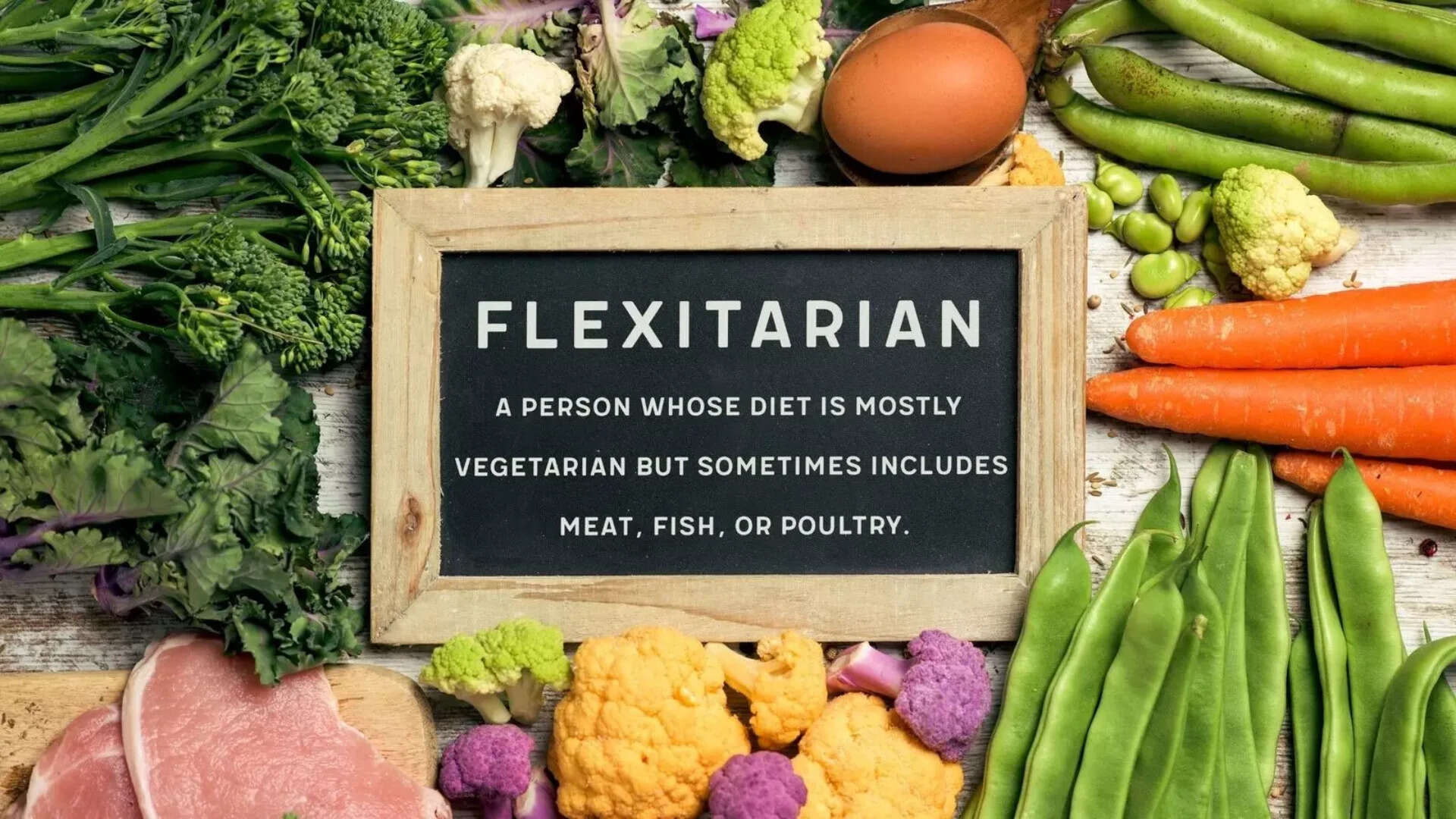
Gastroenterologists say it supports gut health because fiber from plant foods feeds beneficial gut bacteria. This process produces short-chain fatty acids that reduce inflammation and strengthen the intestinal lining.
The Digestive Benefits Doctors Often See in Patients
Gastroenterologists frequently observe a beneficial trend among patients who incorporate more plant-based foods and reduce their intake of processed meats; their symptoms tend to improve. Dr Manoj Bharucha, a Gastroenterologist and Bariatric Surgeon, notes this correlation: “Patients have reported significantly better digestive health after embracing a plant-forward approach.” He elaborates, saying, “A diet rich in diverse plant fibers nourishes the essential microorganisms in the gut, resulting in fewer inflammatory responses and enhanced digestion.” Many patients share experiences of reduced bloating and improved energy levels after transitioning to this plant-centered diet, which Dr Bharucha emphasizes is rooted in biological principles.
Fermented Foods and Gut-Friendly Drinks that Help Digestion
Flexitarian diets frequently include traditional fermented foods, which are naturally rich in probiotics. Items such as curd, buttermilk, and fermented dairy drinks contribute positively to gut flora. When combined with fiber-rich fruits, seeds, and whole grains, these foods can greatly enhance digestive health. Dr Shinde underscores their role: “Fermented products like curd and buttermilk can serve as healthy prebiotic and probiotic beverages that further support a balanced microbiome.” Many traditional Indian dietary staples align with the flexitarian approach, showcasing how these foods have been part of local diets for centuries.
Why Flexibility Makes the Diet Easier to Follow
One primary reason many diets fail is due to rigid restrictions. Banning entire food groups can make dining socially challenging and stressful. The flexitarian diet circumvents this risk, allowing for the enjoyment of occasional meat dishes during social events or family meals. Dr Bharucha highlights that this flexibility may lead to improved long-term health outcomes: “The flexitarian lifestyle is centered on sustainability, allowing individuals to maintain healthier eating habits over time.” This adaptability enables people to uphold nutritious habits for years, rather than just a few weeks.
The Right Way to Follow a Flexitarian Diet
Experts caution that flexibility should not be mistaken for poor food choices. The quality of plant foods is equally vital as their quantity. Dr Bharucha emphasizes the importance of minimizing ultra-processed foods, even if they are vegetarian: “A flexitarian mindset shouldn’t serve as a justification for indiscriminate food choices,” he advises. “Prioritize whole, minimally processed plant foods, obtain sufficient protein from legumes and quality animal sources when consumed, and view the gut as a sophisticated system that rewards consistency and variety rather than restriction.”
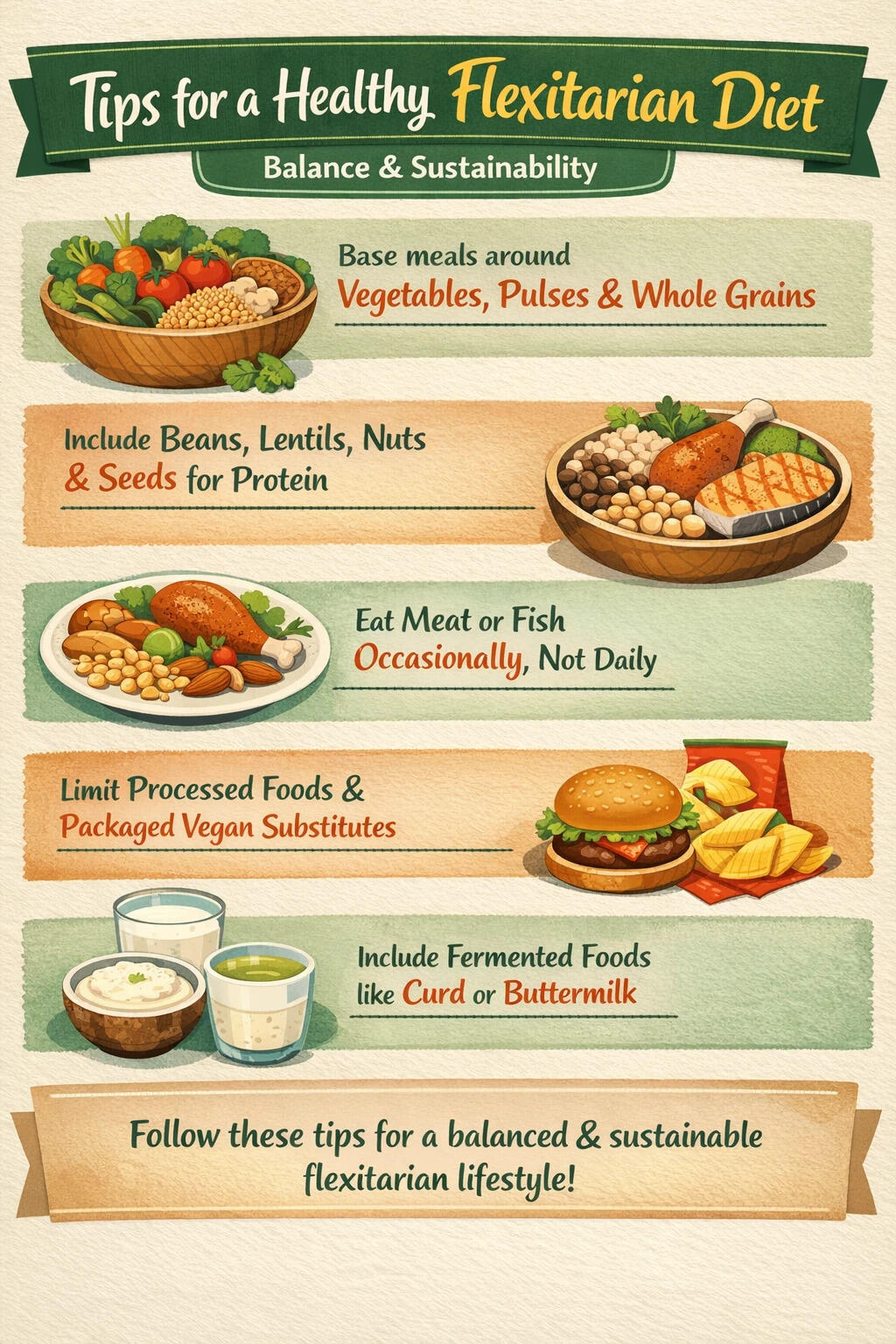
Doctors also note improvements in digestion, energy levels, and bowel regularity among patients who adopt plant-rich diets. However, experts stress that the diet should focus on whole foods rather than processed vegetarian alternatives.
In Practical Terms, This Means:
- Base meals around vegetables, pulses, and whole grains
- Include beans, lentils, nuts, and seeds for protein
- Eat meat or fish occasionally, not daily
- Limit processed foods and packaged vegan substitutes
- Incorporate fermented foods such as curd or buttermilk
When these guidelines are followed, the diet becomes both balanced and sustainable.
Not a Passing Trend, But a Science-Based Lifestyle
The flexitarian diet continues to gain traction as it balances the benefits of plant-based eating with the allowance for occasional animal products. Dr Shinde aptly summarizes the medical outlook: “When practiced correctly, the flexitarian diet can significantly benefit digestive health, the heart, and metabolism, making it a scientifically sound lifestyle rather than a transient food trend.” Amidst extreme diets and conflicting health advice, the flexitarian approach offers simplicity and a focus on balance, variety, and consistency—key principles that contribute to lasting digestive well-being.
Medical experts consulted
This article includes expert inputs shared with TOI Health by:
Dr Kiran Shinde, Consultant Gastroenterologist at Sahyadri Super Speciality Hospital in Pune.
Dr Manoj Bharucha, Gastroenterologist and Bariatric Surgeon.
Inputs were used to clarify how the flexitarian diet supports gut health, shedding light on its benefits and the optimal way to follow this plant-forward eating pattern for enhanced digestion and overall wellness.