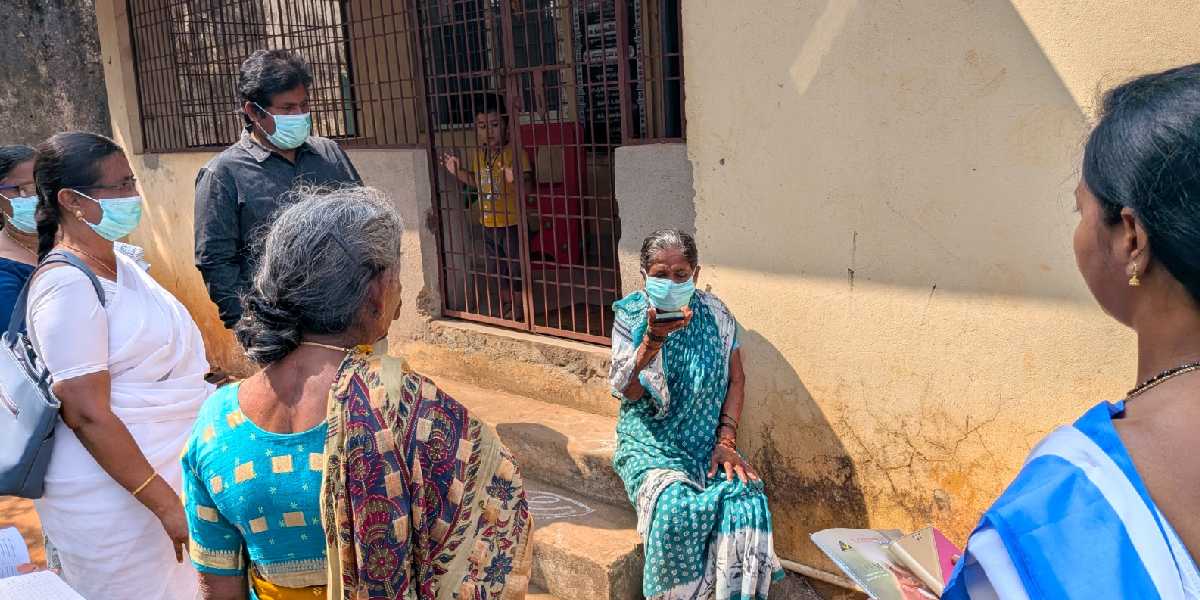
Officials indicate that the pilot program aims to evaluate accuracy, technological feasibility, and scalability before deciding on broader implementation.

Published Mar 08, 2026 | 5:43 PM ⚊ Updated Mar 08, 2026 | 5:43 PM

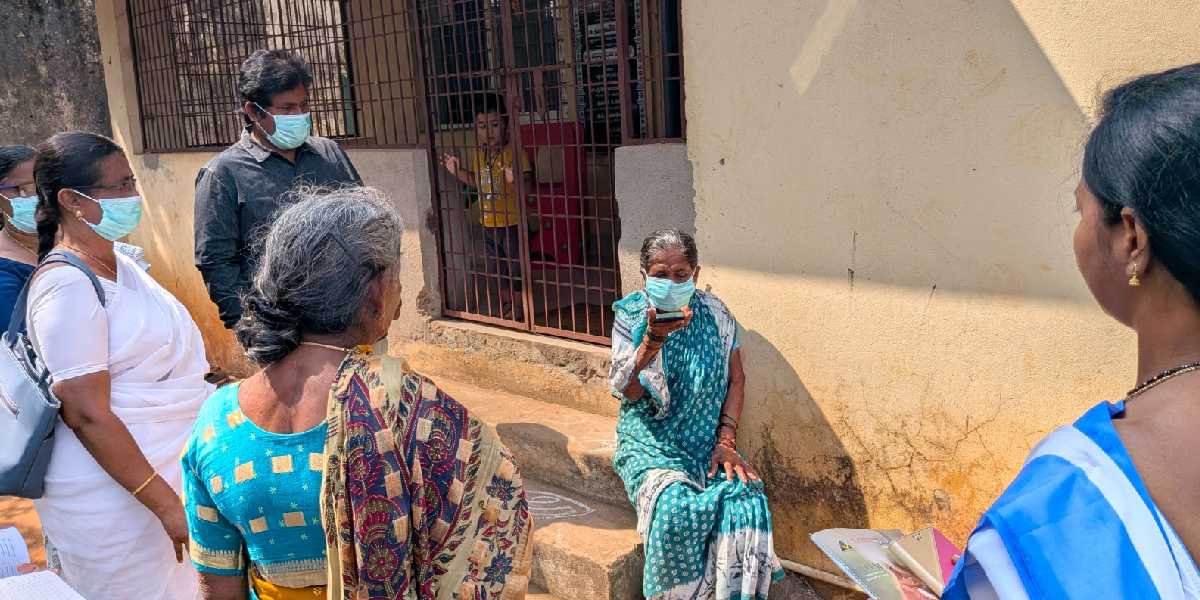
Cough screening for TB patient. (Supplied)
Synopsis:
Andhra Pradesh is piloting AI-powered diagnostic tools across 18 government hospitals to enhance early disease detection. Innovations include cough-based TB screening, smartphone cataract imaging, and non-invasive anemia testing. Officials state that expedited, portable diagnostics can enhance primary healthcare, reduce delays, and broaden accessibility, with outcomes guiding their integration into the state’s public health system.
A woman is seen sitting on the steps outside a Primary Health Centre in Chagallu, coughing into a mobile phone as health workers observe closely. This phone isn’t capturing calls; it’s analyzing her cough’s sound using an AI tool designed to detect patterns indicative of tuberculosis.
Such scenes are emerging in various government hospitals and health centers across Andhra Pradesh, where the state has initiated a pilot program featuring a suite of AI-powered diagnostic tools aimed at enhancing disease detection in primary healthcare settings.
The state health department is exploring various portable diagnostic technologies, such as cough-based TB screening, smartphone-assisted cataract detection, and non-invasive blood tests for anemia, which can help healthcare providers and frontline workers identify diseases more quickly and accurately.
According to the Andhra Pradesh Health Department, the pilot initiative involves 18 innovators deploying about 40 AI-equipped devices across numerous government hospitals and health facilities to conduct screenings and confirmatory tests for various diseases.
“These innovations are set to enable doctors to confirm diseases more swiftly and afford patients improved treatment,” said the department in a statement, emphasizing that quicker diagnoses can substantially elevate the quality of care in public hospitals.
Currently, the program is being executed in hospitals and health centers such as those in Visakhapatnam, Anantapur, Guntur, Kakinada GGH, Vijayawada Government Medical College, Parvathipuram, and the Tenali district hospital, among others.
Also Read: This 22-year-old Bengaluru student googled ‘fix for irregular periods’, suffered a stroke
Screening Diseases at the First Point of Care
The demonstration at Chagallu PHC exemplifies how AI tools are becoming part of routine community screening. The mobile application records the sounds of a cough and analyzes them using machine learning algorithms to detect patterns that could signal tuberculosis.
Health department officials noted that the technology enables frontline workers to conduct rapid TB screenings in community settings without the immediate need for laboratory diagnostics.
“AI tools are assisting in identifying suspected TB cases right at the first point of contact, empowering health workers to refer high-risk patients for confirmatory tests at an earlier stage,” the department stated.
Delays in testing and reporting often hinder tuberculosis detection, especially in rural regions where diagnostic resources are scarce. AI-assisted cough screening aims to bridge this gap by quickly identifying potential cases and connecting them to further investigations.
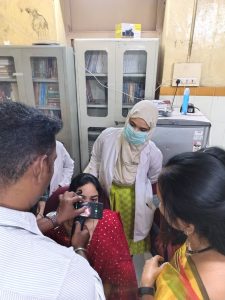
AI Based Cataract Screening at GGH Guntur. (Supplied)
Similar innovations are being explored for various other diseases. At Government General Hospital (GGH) Guntur, doctors are employing smartphone-based AI tools for cataract screenings. This device captures images of the eye and utilizes artificial intelligence to detect early indications of lens opacity.
Health officials state that this technology allows screenings to be conducted even in facilities lacking specialized ophthalmological equipment.
“AI-assisted imaging facilitates early cataract detection and helps pinpoint patients who require referral for further assessment or surgery,” the department added.
At GGH Paderu, a non-invasive blood test system is being assessed to estimate hemoglobin levels using images captured by a smartphone camera. This technology analyzes images of the eye region through AI algorithms to gauge hemoglobin levels without the need for blood samples.
“Non-invasive hemoglobin estimation enables swift anemia screenings, particularly in remote and tribal regions where laboratory resources are limited,” the department pointed out.
Officials believe such technologies could significantly advance the early identification of anemia, especially among women and children, who are among the most affected demographics.
The pilot program also introduces several other AI-enabled tools aimed at identifying heart disease, neurological disorders in children, glaucoma, sickle cell anemia, and more.
Also Read: Chennai study reveals stigma, risk factors driving tuberculosis among trans women
Integrating AI into Public Hospitals
The health department reports that this initiative is part of a larger strategy to embed advanced technology within public healthcare services and enhance diagnostic capabilities across government hospitals.
The state solicited applications from innovators nationwide through the AP MedTech Innovation Challenge, garnering 297 proposals from startups and tech developers.
Following a rigorous three-stage evaluation by the Committee for Applied Technologies in Health (CATH), 18 innovations were chosen for pilot implementation in government hospitals.
The committee, comprised of experts in medicine, artificial intelligence, and health technology, includes representatives from esteemed institutions like the Indian Institute of Science and the Indian Council of Medical Research.
Health officials noted that the pilot program aims to ascertain the accuracy, feasibility, and scalability of these technologies prior to any decision regarding their broader deployment.
“The objective is to deliver quality diagnostic services to a larger population in shorter timeframes using AI-based healthcare solutions,” the department explained.
This initiative is being executed with support from the Ratan Tata Innovation Hub and aligns with the state government’s broader mission to bolster technology-driven healthcare services.
Health Minister Satya Kumar Yadav insists that the government has initiated these measures to facilitate “revolutionary changes in healthcare services using artificial intelligence.”
Officials mentioned that evaluations of the ongoing pilot tests will be conducted shortly, leading to a report that will be submitted to the Chief Minister.
“The outcomes from these pilot projects will help determine how AI-enabled diagnostic tools can be scaled and integrated into the public healthcare system,” the department added.
If expanded, health officials believe this initiative could revolutionize disease detection practices in government hospitals and primary health centers, moving early screenings closer to communities and minimizing reliance on centralized laboratories.