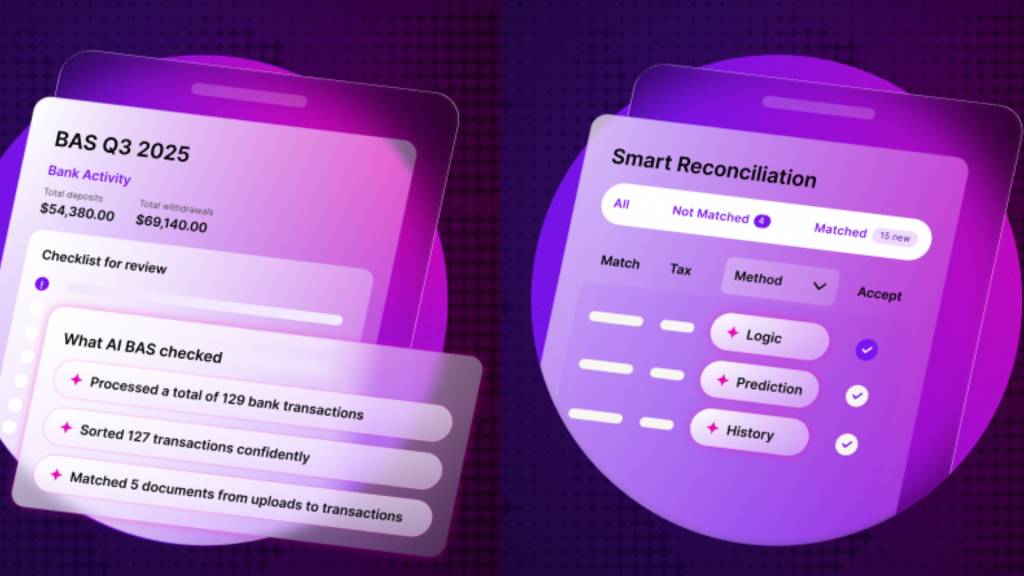
MYOB is introducing innovative AI tools designed specifically for small business users, with a commitment to enhance the speed of BAS filing and bank reconciliation while ensuring transparency and human oversight remain intact.
On Monday, the business accounting platform unveiled four new AI-driven features aimed at reducing the tedious tasks that often distract entrepreneurs from focusing on their core operations.
The standout AI BAS feature aims to automatically import and categorize transactions from business bank feeds while accurately calculating GST.
MYOB asserts that this tool can identify missing receipts and apply appropriate deductions, while preparing files for submission to the Australian Taxation Office (ATO).
The AI BAS feature will first be available to sole traders utilizing MYOB’s Solo platform, as well as SMEs using the MYOB Business Lite and Pro packages.
Another feature, powered by AI, offers valuable business insights by tracking key spending trends, enabling users and their advisors to pinpoint areas for growth.
Related Article Block Placeholder
Article ID: 331692

Additionally, a new bank transaction reconciliation tool aims to simplify administrative tasks, as the AI component learns from previous actions to enhance accuracy.
Furthermore, the system includes an AI-driven feature that reminds businesses to follow up on unpaid invoices, providing users with automatic payment alerts.
All these features are currently available at no cost and are in beta testing, with MYOB planning to gradually expand access throughout the coming year.
In a statement marking the launch, MYOB CEO Paul Robson described this moment as “decisive” in the realm of AI for small businesses.
“We’re addressing business challenges ripe for innovation and redefining how our customers and partners operate, unlocking significant productivity gains through enhanced efficiency and insights,” he commented.
“The strategic application of smart AI is fundamental to this vision.”
Central Focus on Oversight and Privacy
Notably, MYOB clarified that the initial version of its AI BAS tool will not independently submit documents to the ATO.
While the tax office is moving towards a future where tax processes are automated, the system ensures final oversight from a human advisor prior to submission.
MYOB recognizes that AI tools can produce inaccurate information, emphasizing the importance of user assessment of outputs and the necessity of seeking professional advice when needed.
This commitment to transparency also extends to the other AI features introduced in MYOB’s platform.
Moreover, users will have the ability to override AI-generated suggestions, ensuring they maintain control over their financial data.
Related Article Block Placeholder
Article ID: 329030

For instance, if a bank transaction is incorrectly categorized, either the user or a business advisor can intervene to avert any negative impact on cash flow projections.
Considering the sensitive nature of the data users may share with MYOB’s AI tools, the company has detailed its approach to data gathering and privacy.
While de-identified or aggregated data will inform suggestions within tools like the business insights feature, MYOB asserts full compliance with leading global information security standards and Australian data privacy regulations.
“We aim to design products that emphasize the responsible and secure use of AI in workflows that genuinely benefit businesses, meeting our customers at any stage of their AI journey while offering outstanding technological experiences,” stated Robson.
AI Innovations in Accounting
MYOB is not the only accounting platform investing heavily in AI to enhance efficiency and reduce stress for users.
Competitor Xero recently launched its own AI agent, Jax, capable of tasks such as forecasting cash flow, reconciling bank transactions, and providing insights based on industry benchmarks.
Thriday debuted AI-driven accounting solutions in 2023, evolving its business expense management tool into a comprehensive AI-powered financial management platform that its new parent company, Tyro, now promotes.