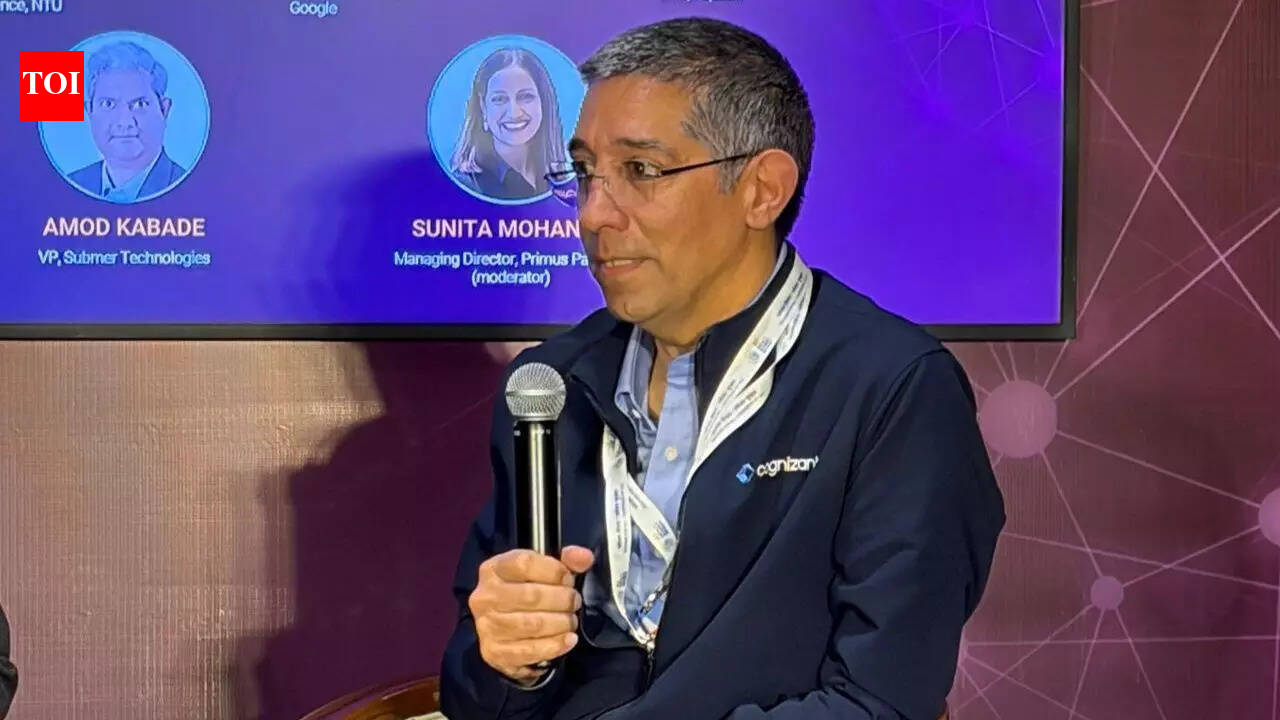

In a recent interview, Babak Hodjat, the chief AI officer at Cognizant, emphasized that fears surrounding the disruption of IT services due to artificial intelligence are exaggerated. His statement follows the significant decline of over a trillion dollars in the stock market, triggered by the introduction of Anthropic’s Claude AI tools.
Speaking to Reuters, Hodjat highlighted that while there have been advancements in automated solutions from emerging companies like Anthropic, organizations still need substantial assistance in deploying, integrating, and managing AI systems. He remarked, “That mapping is our job; it does not come just automatically out of the box.” With a background that includes contributions to Apple’s Siri voice assistant, he affirmed that the demand for AI-driven transformation remains a crucial factor for growth in service firms.
Cognizant, which employs more than 70% of its workforce in India, has forecasted its annual revenue to exceed Wall Street predictions. Similarly, competitors like TCS and Wipro have indicated that AI adoption is likely to drive demand for software services rather than diminish it.
How AI is Already Transforming Jobs
Despite Hodjat’s reassurances about the future role of service companies, the reality of job reductions due to AI is already beginning to surface in the industry. Shipping and logistics software company WiseTech Global has announced plans to cut nearly one-third of its workforce as it incorporates AI into its customer software and internal processes. TCS previously reported 12,000 job cuts, although it clarified that these layoffs were not directly linked to AI advancements.
Cognizant, which currently utilizes AI to generate around 30% of its code, aims to boost this figure to 50%. CEO Ravi Kumar S stated during a recent earnings call that Cognizant hired 25,000 fresh graduates in 2025 and anticipates surpassing that number in 2026. Furthermore, Hodjat noted that nearly all of Cognizant’s clients have experimented with AI agents but understand that they require ongoing support to effectively integrate these systems into their existing infrastructures in order to realize meaningful returns.
In conclusion, while AI technology continues to evolve and transform industries, the necessity for human oversight and support remains paramount. Companies like Cognizant are poised to adapt and leverage these changes, ensuring they harness AI’s benefits while maintaining a strong workforce.