Seasonal Allergies in Pets: What You Need to Know
As fall approaches, many of us not only face cooler mornings and colorful leaves, but also the familiar challenge of seasonal allergies. It’s not just humans who suffer; our furry friends can also have allergic reactions to environmental factors such as pollen, mold, and dust.
Recognizing Allergies in Pets
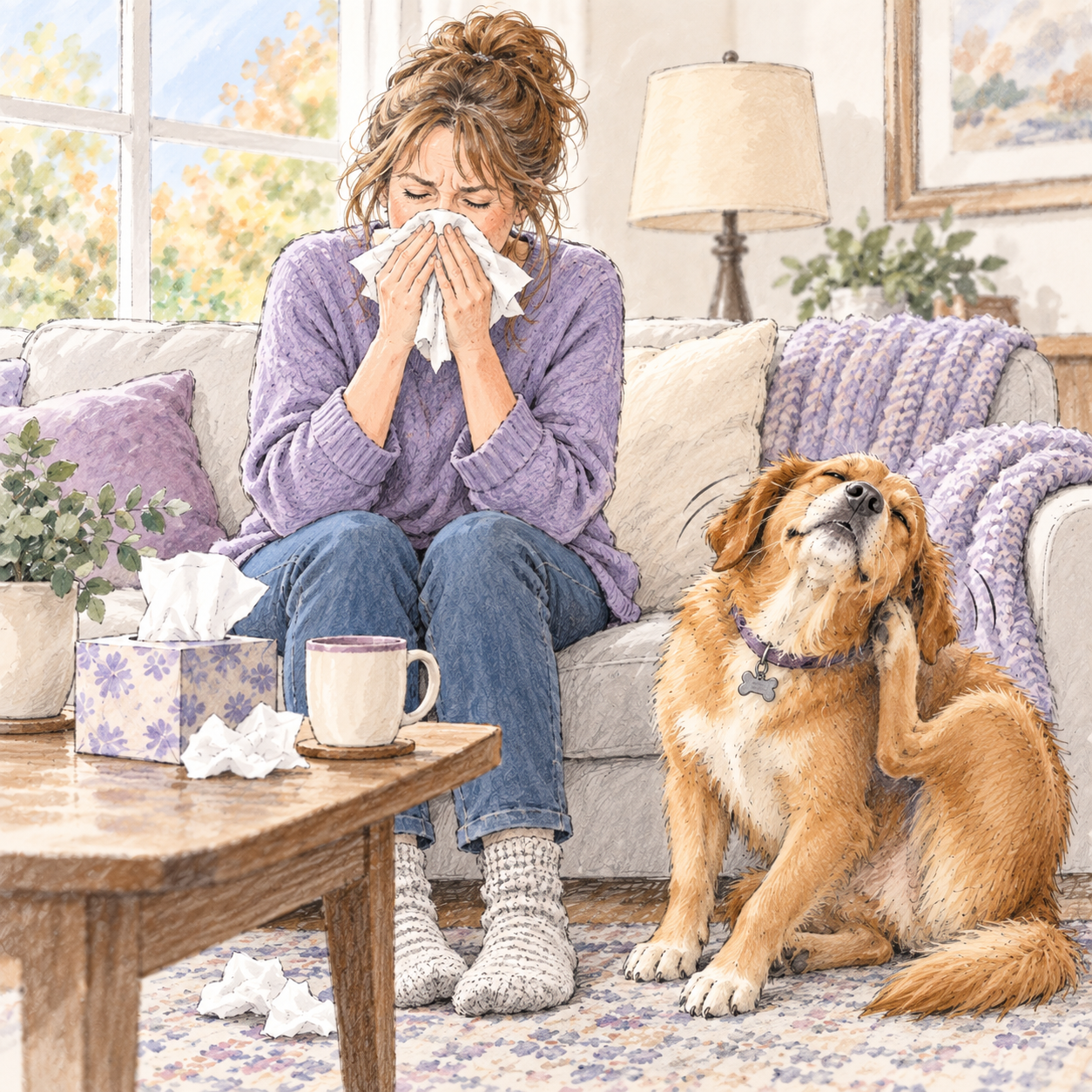
Unlike humans who primarily experience sneezing and nasal congestion, pets typically show allergy symptoms through their skin. Key signs to watch for include:
- Itching: Excessive scratching, licking, or chewing, especially on paws and ears.
- Skin Irritation: Redness, inflammation, or hair loss from constant grooming.
- Ear Issues: If your pet shakes their head frequently or has recurring ear infections, it may indicate an allergy.
Cats might exhibit more subtle symptoms, such as excessive grooming or small scabs.
Tracking Symptoms
If you notice changes in your pet’s behavior, keep a record:
- Note when symptoms arise.
- Take photos of any irritated skin.
- Observe if symptoms improve with seasonal changes.
This information will be valuable for your veterinarian in diagnosing potential allergies.
Home Management Tips
While avoiding allergens entirely may be impossible, there are steps you can take to minimize exposure:
- Post-Outdoor Care: Wipe your pet’s paws and coat after walks to remove allergens.
- Clean Environment: Regularly wash bedding and maintain a clean home to reduce dust and mold.
- Seek Timely Treatment: Persistent itching can lead to skin damage and infections, so consult a vet promptly.
Being Proactive
Seasonal allergies could seem trivial, but being attentive to your pet’s changes is crucial. If you notice increased scratching, licking, or head shaking, don’t overlook it. Your pet may be experiencing discomfort, and early intervention can prevent bigger issues.
For more information on pet safety and allergies, visit the Pet Safety Learning Center at Paws4Safety.com.
(Kim Bradley is the founder of Paws 4 Safety, an initiative focused on educating pet owners about emergencies and everyday care for their pets.)