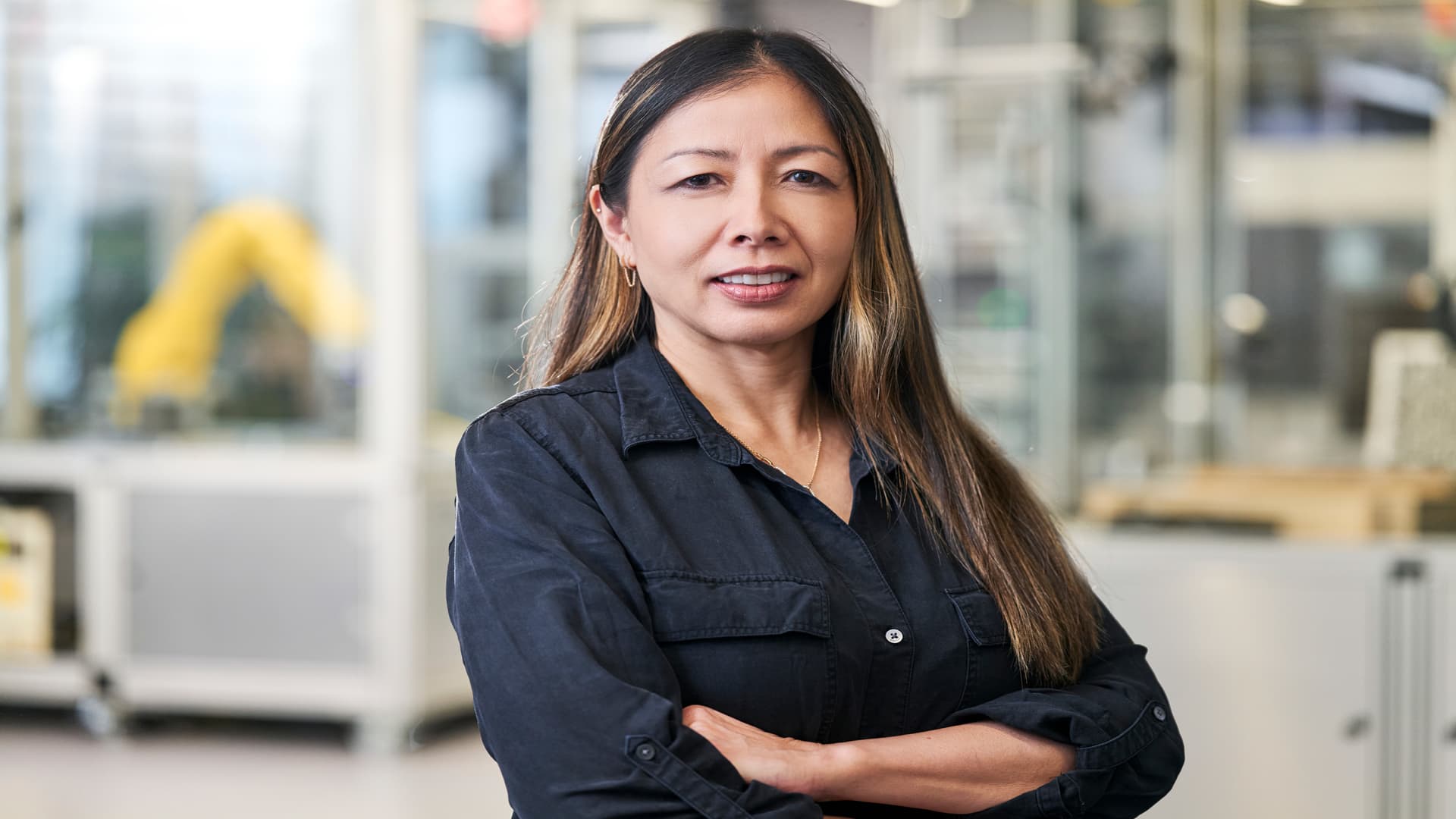
Wendy Tan White, the CEO of Intrinsic, has successfully navigated the company out of Alphabet’s “Moonshot” factory, X.
Intrinsic
Google emerged as a leading force in smartphones with the creation of the Android operating system, teaming up with handset manufacturers who sought alternatives to Apple’s iPhone. Now, Google is applying a similar strategy to the field of robotics.
Recently, Google declared that Intrinsic, a project focused on robotics software, will transition from the “Other Bets” category to become a core part of the main company.
Much like Android operates across devices from prominent manufacturers such as Samsung, Motorola, and Xiaomi, Intrinsic offers solutions for robotic systems, albeit with less recognizable partner companies like FANUC, Universal Robots, and KUKA, which are primarily engaged in industrial robotics. Potential competitors in this space include Amazon and Tesla.
According to McKinsey, the market for general-purpose robots is projected to reach $370 billion by 2040, presenting a significant opportunity for Google as artificial intelligence transitions from digital platforms like chatbots and image generators into the physical world.
Intrinsic communicates on its website its goal of constructing an operating system that enables manufacturers to “concentrate more on addressing challenges, rather than dealing with the underlying technology.” Similar to Android, developers can utilize Intrinsic’s pre-built capabilities to create applications efficiently.
“Our aim is to make it accessible to everyone,” Intrinsic CEO Wendy Tan White stated in a CNBC interview last year. “It doesn’t matter what your hardware is, or what AI model you’re using; we’re here to help you integrate them.”
With its new position within Google, Intrinsic will gain increased access to the company’s AI models, infrastructure, and cloud resources. The team will maintain its distinct identity under the Intrinsic brand, continuing to be led by Tan White, who has guided the organization through its evolution from Alphabet’s X factory since 2021.

Google has had a complex history in the world of robotics.
In 2013, Alphabet purchased Boston Dynamics, known for its advanced walking robots, and Schaft, a Japanese company specializing in humanoid robotics. They also acquired several startups focused on vision technology. After years of attempts to establish a coherent business strategy, Google sold both Boston Dynamics and Schaft to SoftBank in 2017 for an undisclosed price.
However, the recent surge in AI development has significantly altered the landscape.
In mid-2025, Google unveiled two groundbreaking AI models, Gemini Robotics and Gemini Robotics-ER (Extended Reasoning), which empower physical robots through generative AI commands. In a blog post following the announcement, Google confirmed its collaboration with Apptronik, a Texas-based robotics firm, to create the next generation of humanoid robots using Gemini 2.0.
Last month, Google partnered with Boston Dynamics to integrate Gemini into Atlas humanoid robots designed for production environments. Additionally, in November, Google’s DeepMind hired the former CTO of Boston Dynamics, Demis Hassabis.
Intrinsic will closely collaborate with DeepMind’s AI technology throughout the research, model development, deployment, and implementation phases in manufacturing and logistics, as stated by the company. The team will also engage more deeply with Google’s Gemini, infrastructure, and cloud teams.
Chief Technology Officer Brian Gerkey highlighted the advantages of leveraging DeepMind’s models, enhancing them with specialized data and “standing on the shoulders” of existing technology.
Late last year, Intrinsic entered into a partnership with Foxconn to introduce AI robots for electronics assembly in Foxconn’s U.S. factories. The current landscape of AI server manufacturing largely involves a combination of rigid automation and manual labor.
Google has been investing heavily in data centers and hardware to keep pace with the increasing demand for AI tools and models. According to Amin Vahdat, head of Google’s AI infrastructure, the company must double its serving capacity every six months to meet the soaring demand for AI services, as reported by CNBC in November.
“You want to explore areas with significant investments in the end market,” Tan White remarked. “Right now, the electronics market is booming due to the demand for more products and computational power.”
A survey by Deloitte in 2025 found that 80% of manufacturing executives plan to allocate 20% or more of their improvement budgets toward smart manufacturing initiatives, focusing on foundational tools and technologies.
Intrinsic’s prominent product, Flowstate, offers a web-based platform that allows users to create robotic applications without the need for extensive coding. The company also provides open-source tools for developing robotic applications, echoing Google’s strategy with Android.
Tan White pointed out that Google CEO Sundar Pichai has likened this initiative to the company’s mobile strategy.
“He referred to it as the Android of robotics,” Tan White stated, recognizing Pichai’s credibility given his background with Chrome and Android prior to becoming CEO. “It speaks volumes.”
WATCH: AI robots may outnumber working human population in a few decades

In summary, Wendy Tan White is steering Intrinsic into a significant new phase within the robotics industry, backed by Google’s powerful AI infrastructure. As the company transitions from Alphabet’s Moonshot factory to a core component of Google, it aims to reshape the landscape of robotic applications, tapping into the vast potential of this surging market. With ambitious goals and strategic partnerships, Intrinsic is poised to be a significant player in the future of robotics.