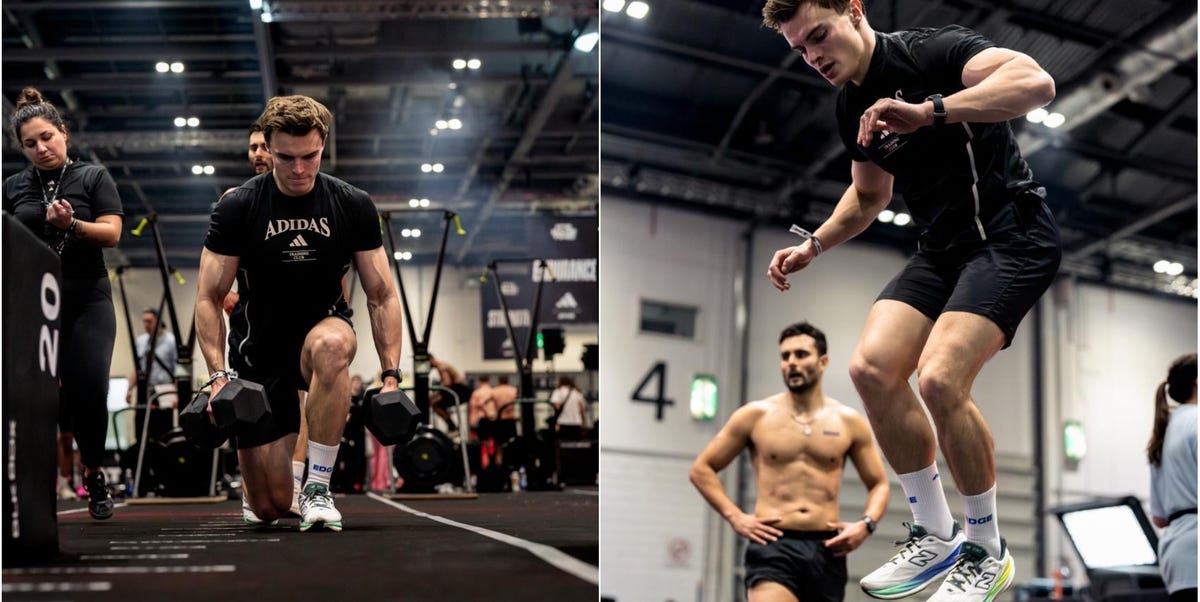
You may not have heard of it yet, but Athx is an emerging fitness competition gaining traction among athletes. The event revolves around three primary pillars: strength, endurance, and metabolic conditioning. Athletes undergo a 2.5-hour grueling challenge designed to push their limits and reveal their true capabilities.
While at first glance it may seem like just another competition for self-styled hybrid athletes, Athx stands out for several reasons.
One of the unique features of Athx is the structured rest periods. This allows participants to push to their maximum exertion rather than simply trying to endure fatigue. The event tests absolute strength through max lifts, assesses peak aerobic capacity, and concludes with a demanding final challenge that tests every muscle in the body.
Inaugurated in 2023 with five events across the UK, Athx has steadily gained popularity, and in 2026, it will expand to mainland Europe. Curious about the competition’s potential? I attended the inaugural event of the new season at ExCeL London to see if Athx is on the brink of becoming a mainstream phenomenon.
What Are the Athx Workouts?
Participants begin with a comprehensive warm-up before entering the strength zone. The initial six minutes focus on achieving a one-rep max (1RM) in the strict overhead press, allowing for multiple weight attempts. Following this, competitors have another six minutes dedicated to back squats, where they must complete three reps. An eight-minute block follows to hit a five-rep max in the deadlift, concluding the strength portion.
Next comes a 10-minute break for hydration and refueling before entering the endurance zone. This phase includes 22 minutes of continuous running and rowing. Competitors alternate between a run and a row after every 500m, 750m, or 1km, depending on their division.
Another brief 30-minute rest period allows athletes to regroup before facing the metcon. This final challenge has a 25-minute cap but encourages athletes to work as quickly as possible. Elements include Ski-erg, dumbbell snatches, sandbag carries, box jump-overs, walking lunges, burpee broad jumps, and another round on the SkiErg to finish strong.
What it Takes to Get Through Athx
Athx serves as a robust benchmark for overall athleticism. Athletes who excel in strength may find their endurance lacking, while those with strong aerobic capacity could struggle with heavier lifts. This balance between strength and endurance is crucial for succeeding in the competition.
Having participated myself, I can attest to the challenges ahead. Although I was in charge of my weight selections, I felt apprehensive entering the strength zone. My usual range is around 8-12 reps, not a one-rep max. As for deadlifts, it’s been quite some time since I last attempted them.
Strategy was key. The warm-up time was ample, but I had to avoid overexertion. While I could have attempted heavier lifts than my 120kg squats or 130kg deadlifts, I refrained, opting instead for a more measured approach knowing a significant amount of running, rowing, and an intense metcon awaited. It’s crucial to recognize when to conserve energy, especially when fatigue sets in.
Heavy lifts can lead to systemic fatigue, and there was little time to manage that strain before pivoting to running and rowing. I focused on maintaining a steady pace to ensure a strong finish; even with this approach, it remained challenging. The fact that I could see my progress against my competitors on screen added a competitive edge that fueled my performance.
Then came the metcon. These workouts are not my forte, and by the end, I experienced a level of discomfort in my quads unlike anything I’ve encountered before. I nearly stumbled during the box jump-overs as my legs threatened to buckle. I attributed my struggles to my mistake of becoming static during the lengthy 30-minute break between the endurance and metcon phases, which allowed lactic acid to accumulate and hampered my recovery.
Is Athx Worth Trying?
While Athx is still a relatively new concept, its structured approach and engaging environment indicate potential for broader acceptance. Each element of the competition is carefully crafted to facilitate a high-energy atmosphere, encouraging participants to tap into their ultimate strength and endurance, leaving everything on the competition floor.
How Is Athx Different to Hyrox?
In contrast to Hyrox, which emphasizes aerobic conditioning with lighter stations for strength trainers, Athx incorporates refueling and recovery zones into a longer format. This allows the event to feature heavier strength training in addition to endurance and high-intensity conditioning challenges. This structure positions Athx as a more balanced hybrid competition, though the more specialized nature of Hyrox may still attract some participants looking for a different experience.
Ryan is a Senior Writer at Men’s Health UK with a passion for storytelling, health and fitness. Having graduated from Cardiff University in 2020, and later obtaining his NCTJ qualification, Ryan started his career as a Trainee News Writer for sports titles Golf Monthly, Cycling Weekly and Rugby World before progressing to Staff Writer and subsequently Senior Writer with football magazine FourFourTwo.
During his two-and-a-half years there he wrote news stories for the website and features for the magazine, while he also interviewed names such as Les Ferdinand, Ally McCoist, Jamie Redknapp and Antonio Rudiger, among many others. His standout memory, though, came when getting the opportunity to speak to then-Plymouth Argyle manager Steven Schumacher as the club won League One in 2023.
Having grown up a keen footballer and playing for his boyhood side until the age of 16, Ryan got the opportunity to represent Northern Ireland national futsal team eight times, scoring three goals against England, Scotland and Gibraltar. Now past his peak, Ryan prefers to mix weightlifting with running – he achieved a marathon PB of 3:31:49 at Manchester in April 2025, but credits the heat for failing to get below the coveted 3:30 mark…