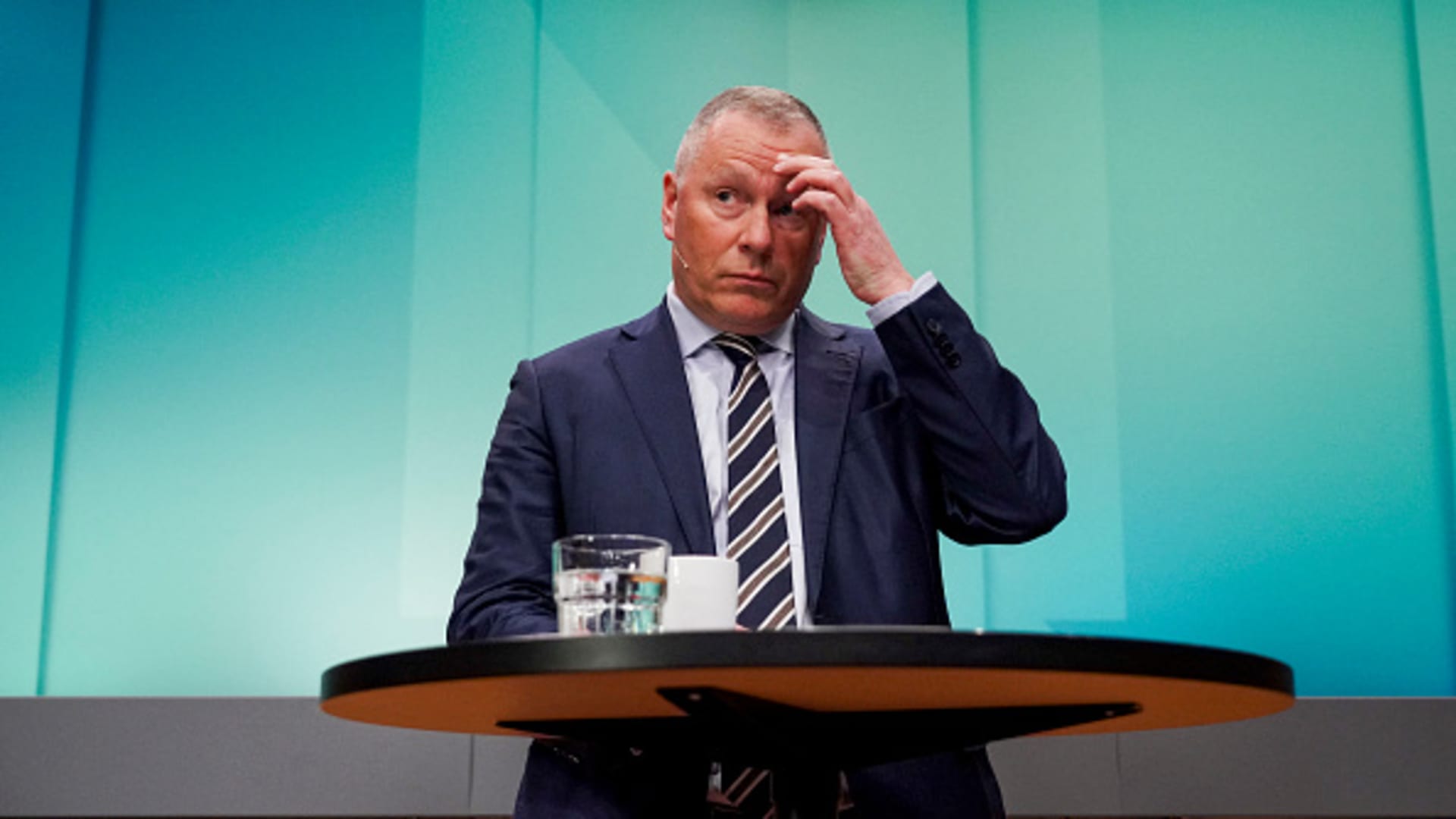
Nicolai Tangen, CEO of Norges Bank Investment Management, speaks at a press conference regarding the company’s annual results for 2024 at Norges Bank in Oslo, Norway, on January 29, 2025.
Ole Berg-rusten | Afp | Getty Images
Norway’s $2 trillion oil fund, recognized as one of the largest investors globally, announced on Thursday that it is now employing artificial intelligence to assess investments for potential reputational and ethical risks.
Managed by Norges Bank Investment Management (NBIM), this fund was created in the 1990s to reinvest revenues from Norway’s oil and gas sector. With stakes in over 7,200 companies across 60 countries, it holds approximately 1.5% of the world’s publicly listed stocks.
NBIM has a significant influence on the global market and is a key player in Environmental, Social, and Governance (ESG) investing. The fund uses its influence and voting power to uphold standards for the companies it supports, focusing on their impact on people, the environment, and society.
In its annual responsible investment report, the fund’s management revealed the integration of AI technology to provide governance and sustainability insights for portfolio managers.
This advanced technology enhances the breadth and depth of information analyzed, allowing for quicker identification of material risks, as stated by NBIM.
A representative from NBIM indicated to CNBC that their ESG risk monitoring team began using Anthropic’s Claude AI model in daily operations in November 2024. They noted that it has become “an essential tool in our monitoring of ESG risk across the portfolio.”
As highlighted in Thursday’s report, by 2025, large language AI models were deployed to screen all companies as they entered the equity portfolio on their first day.
“These tools allow us to swiftly scan a wide array of public information that extends beyond what typical data vendors cover,” the report stated. “When risks emerge around key themes, the LLM conducts deeper searches, providing contextual summaries.”

NBIM receives daily AI-generated assessments of risks for investments made the prior day, which allows its team to promptly explore strategies for mitigation.
“Within 24 hours of our investment, the AI tools identify new companies in the fund’s equity portfolio that may have potential ties to issues such as forced labor, corruption, or fraud,” NBIM explained in Thursday’s report.
“Often, this information has not been reflected in international media coverage or data vendor alerts. We consistently review this data before making any investment or risk decision. In several cases, we identified and divested these investments even before the broader market recognized the risks, effectively avoiding potential losses.”
According to NBIM, this AI approach has been especially beneficial for researching smaller firms in emerging markets, where local news may only be reported by smaller outlets in indigenous languages.
“Artificial intelligence is transforming the way we operate as investors,” noted NBIM CEO Nicolai Tangen in the report. He asserted that sustainability and governance “are inherently linked to financial performance,” emphasizing the ongoing complexities and uncertainties in the world.
The fund’s total value now stands at approximately $2.2 trillion. In 2025, it reported an annual profit of 2.36 trillion kronor, equivalent to $246.9 billion.
Nearly 40% of NBIM’s investments are allocated to U.S. equities, with notable holdings including a 1.3% stake in Nvidia, a 1.2% stake in Apple, and a 1.3% stake in Microsoft. The fund also invests in fixed income, real estate, and renewable energy infrastructure.

However, some of the fund’s ethics-related decisions faced criticism last year, particularly from the White House.
In September, the U.S. State Department expressed to CNBC that it was “very troubled” by NBIM’s decision to divest from America’s machinery manufacturer Caterpillar and five Israeli banks, citing “unacceptable risk” of these companies allegedly contributing to rights violations in Palestinian territories.
A spokesperson asserted that NBIM’s decision regarding Caterpillar “seemed based on unfounded claims against both Caterpillar and the Israeli government.”
Norway’s finance minister, Jens Stoltenberg, clarified that the divestment was “not politically motivated.”
Until November 2025, the Executive Board of Norges Bank governed the exclusion of companies from the fund’s investment portfolio or their placement on an observation list, basing these decisions on recommendations from the independent Council on Ethics, appointed by Norway’s Ministry of Finance.
In light of the controversy surrounding several of its divestments last year, temporary guidelines were instituted, with a review of NBIM’s ethical framework slated to be presented by a government-appointed committee later this year.
Under these temporary guidelines, Norges Bank is restricted from making decisions regarding the observation or exclusion of any companies from the fund. However, it may revoke previous decisions concerning a company’s exclusion or placement on the observation list. Concurrently, the Council on Ethics has lost its ability to recommend observation or exclusion until the ethical framework review is completed.
“The ongoing conflict in Gaza and discussions surrounding the fund’s ethical framework and investments in Israel illustrated in 2025 how intricate and challenging these matters can be in practice,” Tangen said in Thursday’s report.
“While our ethical framework is under revision, we continue our responsible investment endeavors, reinforcing the connection between ownership and investment decisions while prioritizing financially material issues.”