The United States is currently facing a civil conflict, much of which occurs out of sight.
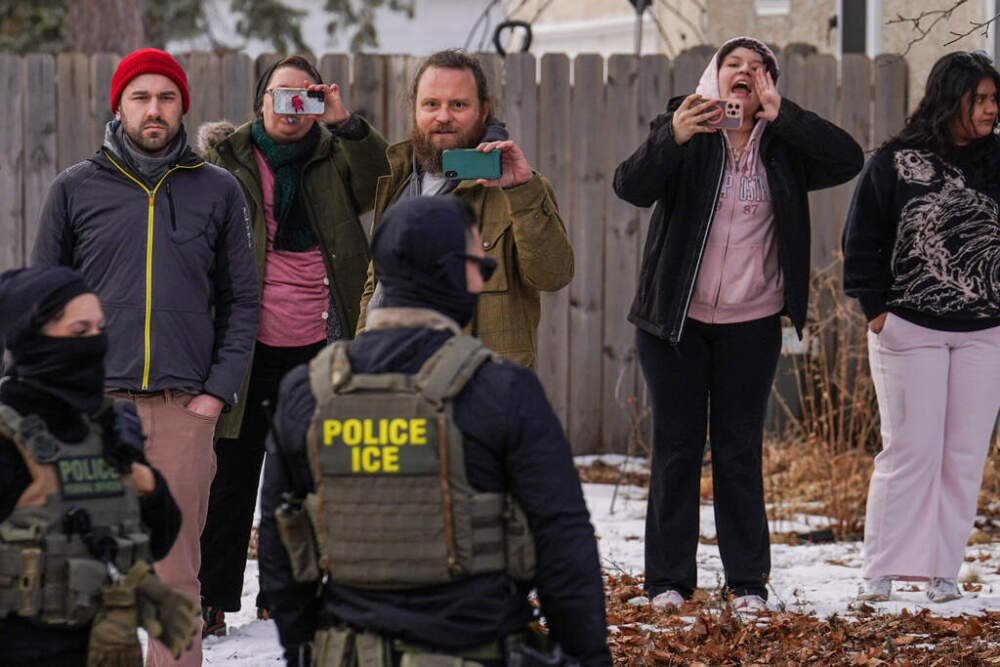
Many have witnessed disturbing images from cities like Chicago, Los Angeles, and Minneapolis. These images depict federal officers donned in camouflage and masks, wielding military-grade weapons and deploying tear gas in neighborhoods. In contrast, protesters—some equipped with gas masks—unite in solidarity, banging on trash cans, blowing whistles, and using their vehicles to create barricades for community protection. Many also wield the strongest weapon available: their cell phone cameras.
However, the resources available to each side are not equivalent, as the most formidable tool in this battle—artificial intelligence—operates largely behind the scenes.
As protesters continue to assert their First Amendment rights, employing technology to alert others about ICE actions or document acts of violence, ICE is significantly expanding its technological toolkit. With a substantial budget of nearly $85 billion, of which $75 billion is available for expenditure over the next four years, they are using these digital resources not only to track undocumented immigrants but also to surveil U.S. citizens.
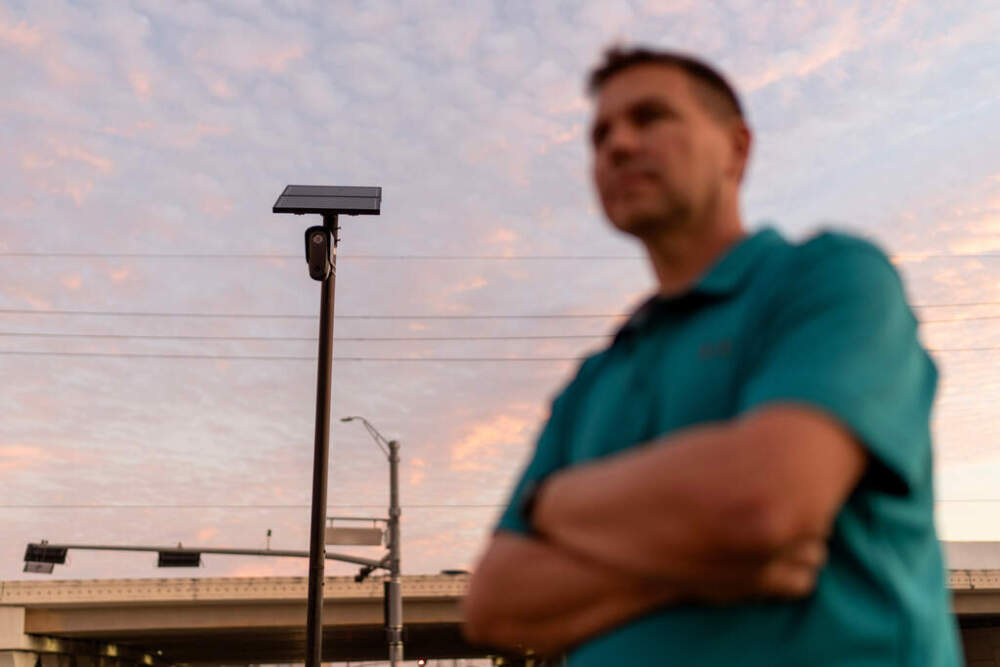
Facial recognition technology can swiftly scan image databases for real-time matches. License plate readers can track your vehicle’s movements over time. Cell-site simulators can force nearby phones to connect, allowing real-time tracking of their locations. ICE has also resumed acquiring access to commercial databases that enable tracking of any phone within a designated area without a warrant. Such practices evidently infringe upon our Fourth Amendment rights, exposing sensitive information related to doctor visits and protest participation, which may deter people from exercising their First Amendment rights to free speech. (The issue of bias is also critical and merits further discussion that cannot be included here.)
Many believe that this level of surveillance infringes upon fundamental civil liberties. Yet, we have largely relinquished these liberties through terms of service, data-sharing agreements, and the habitual use of devices designed to collect more information than most citizens realize. Every time we use our cell phones for navigation, share on social media, or make online purchases, we leave traces that data brokers can sell to federal agencies—traces that disclose our interests, habits, and even medical conditions. This is no coincidence.
For decades, we have been presented with a singular narrative regarding technology: that it is intelligent, neutral, innovative, and aimed at enhancing our lives. However, the default operation of our devices is not necessarily in the best interest of users. In truth, these tools primarily serve corporate profit motives and, increasingly, the interests of state power. We’ve been conditioned to view our phones, wearables, cameras, and smart devices as mere tools for convenience. Yet, we have simultaneously surrendered our private lives to the collection, analysis, and sale of our data, often to the highest bidder, including the government itself.
Over the years, I have explored the societal effects of AI, but in recent weeks, as I have witnessed the rapid erosion of our rights, this knowledge has become deeply personal. My smartwatch, the smartphone in my pocket, and the laptop I am using all continuously gather information that could potentially be used against me.
I refer to this acute awareness as technoconsciousness, and it’s something we desperately need.
Technoconsciousness refers to the critical awareness of how technological systems, particularly AI, shape power dynamics, perpetuate inequality, and undermine our rights to privacy, free speech, and due process. It recognizes that while technology has evolved at breakneck speed, the regulatory structures meant to safeguard us and our democratic values have lagged behind. Technoconsciousness challenges us to confront a disquieting truth: the consolidation of power through technology is inherently anti-democratic. Nevertheless, we have allowed this technological dominance to flourish in pursuit of convenience, efficiency, and economic gain, leading us to our current predicament.
What we are experiencing is a pivotal test.
In recent years, discussions on Capitol Hill have subtly shifted away from meaningful AI regulation towards a focus on ‘risk management.’ This reframing has stripped technology of its political and ethical implications, reducing it to a technical challenge best left to experts. The public discourse and democratic debate around genuine AI regulation have been supplanted by calls for innovation. Many of us, particularly those insulated by privilege, have remained silent. We did not foresee that the lack of regulation could one day be wielded against us.
Historically, the federal government has tested the boundaries of its power on the most vulnerable populations, and the current situation mirrors that trend. Undocumented individuals are particularly at risk. ICE’s use of technological tools today is a precursor to the broader federalization of technological power.
However, the implications will extend further. Even if political currents shift, the surveillance infrastructure will not vanish; it will merely target new communities.
Embracing technoconsciousness does not entail rejecting technology entirely. Instead, it calls for challenging the notion of neutrality, reclaiming control, and opposing the normalization of a surveillance state. On an individual level, it involves critically assessing our data-sharing choices and striving to understand how our devices operate, as well as recognizing our roles within our digital environments. Collectively, it necessitates more challenging actions: political engagement.
We can initiate this by demanding that every elected official articulate their commitment to protecting all individuals in the U.S. through AI policy. We require more than vague pledges for safety: we need laws enforcing warrants, ensuring transparency, and eliminating warrantless surveillance. This issue is far from abstract. The methodologies employed by ICE today, if unchecked, will soon become the norm.
Technoconsciousness empowers us to envision alternatives. As historian and writer Donna Haraway advises, true progress stems not from accepting what we believe to be inevitable but from exploring what is possible. The images emerging from cities across the U.S. depict communities fostering solidarity, defending one another, documenting injustices, and resisting the quiet erosion of their rights. They serve as a powerful reminder that together we are stronger.
The battlefield remains concealed only if we fail to name it. Now that we have clarified it, we must unite and push back together.