Conflict Between the US Government and Anthropic Over AI Tools
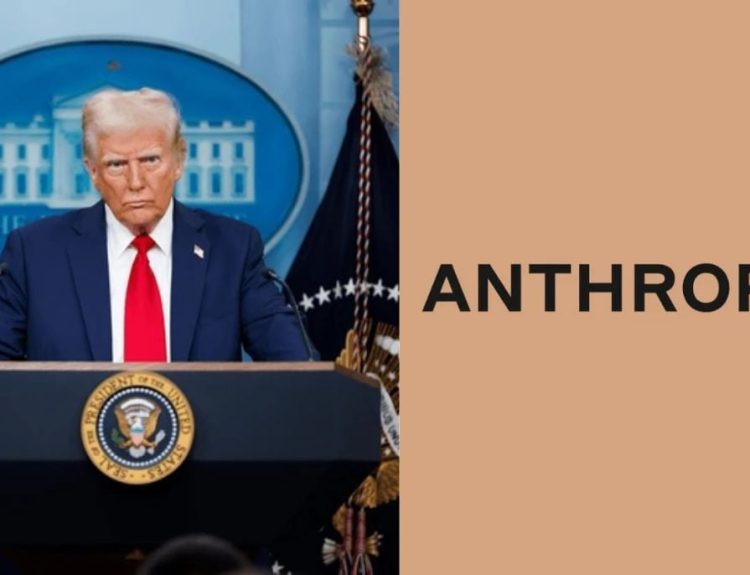
Recent tensions have arisen between the U.S. government and Anthropic, a technology firm specializing in artificial intelligence (AI) solutions for both defense and civilian applications. The controversy centers around the use of Anthropic’s Claude software in a military operation that led to the abduction of Venezuelan President Nicholas Maduro in January.
According to reports, U.S. Defense Secretary Pete Hegseth has set a deadline for Anthropic to revise its policies regarding AI tool usage by the Pentagon. If they fail to comply by Friday, the company risks losing its government contracts, as indicated by unnamed sources from The Associated Press and Reuters.
Despite the pressure, Anthropic is steadfast in maintaining its safeguards, which prohibit its technology from being employed for domestic surveillance or in the development of autonomous weaponry capable of targeting without human oversight.
What is Anthropic?
Founded in 2021 by former OpenAI leaders, Anthropic has quickly risen to prominence. It became the first AI developer to engage with classified military operations under the U.S. Defense Department, which is located at the Pentagon in Washington, D.C.
Anthropic is well-known for creating Claude, a highly regarded large language model (LLM). LLMs are a type of AI technology that generates text, visuals, or audio that closely resembles human-created content, derived from extensive datasets, including books, websites, and videos.
For military applications, LLMs serve various purposes, such as summarizing documents, analyzing data, translating languages, transcribing audio, and drafting communications. In theory, they could also support autonomous or semi-autonomous weapons systems, capable of identifying and engaging targets without human direction. Nevertheless, most AI companies include clauses that prohibit such uses.
Describing itself as a “responsible” AI developer, Anthropic identifies as a “Public Benefit Corporation,” with a mission focused on creating advanced AI technologies that ultimately benefit humanity.
In a notable incident in November, Anthropic claimed that a hacking group backed by the Chinese government had compromised the Claude code in efforts to infiltrate around 30 global targets, including government entities and major corporations. Some of these attacks were reportedly successful.
Earlier this month, AI safety researcher Mrinank Sharma resigned from Anthropic over concerns regarding how AI is being utilized. In a statement made on February 9, he expressed that “the world is in peril. And not just from AI, but from interconnected crises escalating in real-time.” He further commented on the challenges of aligning values with actions within the organization itself.
Which Other AI Companies Collaborate with the US Military?
Last summer, the Pentagon announced defense contracts awarded to four AI companies: Anthropic, Google, OpenAI, and xAI, with each contract valued at up to $200 million.
As the first AI firm approved for classified military networks, Anthropic collaborates with established partners such as Palantir Technologies, which faces criticism for its associations with the Israeli military. Elon Musk’s xAI, which operates the Grok chatbot, is also cited as prepared for classified usage, according to a senior Pentagon official.
However, the Trump administration seeks to leverage the products of these AI firms without restrictions. Hegseth articulated a vision where military AI operates “without ideological constraints,” emphasizing that the Pentagon’s approach would not be “woke.”
Why is Anthropic at Odds with the Pentagon?
Reports indicate that during a meeting, Hegseth provided Anthropic CEO Dario Amodei with a deadline of Friday, 5 PM (22:00 GMT) to agree to reduce limitations on the use of Anthropic’s AI models within the Pentagon’s internal network.
Department officials warned of the potential to label Anthropic as a supply chain risk or invoke the Defense Production Act to grant the military broader authority for using its products, even if those uses did not align with how the company intends them to be used.
Amodei has voiced ethical concerns regarding unchecked government utilization of AI, particularly concerning the implications of fully autonomous armed drones and mass surveillance capabilities that could track dissent. In a recent essay, he warned, “A powerful AI could gauge public sentiment and detect pockets of disloyalty before they escalate.”
Despite a reportedly cordial meeting, Amodei held firm on two crucial issues—resisting fully autonomous military operations and domestic surveillance of U.S. citizens. He reiterated his apprehensions surrounding “autonomous drone swarms” capable of engaging targets independently.
He argued, “The constitutional protections in military structures depend on the presence of humans capable of disobeying illegal orders involving fully autonomous weapons,” stressing the inability of autonomous drones to discern such distinctions.
Pentagon officials critique Anthropic’s ethical constraints, suggesting that military operations require tools devoid of embedded limitations. They assert that ensuring the lawful application of Anthropic’s tools would rest squarely on the military itself.
How Was Claude Used in Venezuela?
On January 3, U.S. special forces conducted an operation that led to the abduction of Maduro, who currently faces drug and weapons charges in New York. Reports surfaced on February 14 indicating that Anthropic’s Claude had played a role in the operation aimed at capturing Maduro in Caracas.
While an unnamed representative from Anthropic declined to confirm whether Claude was utilized in that operation, they stated any application of Claude within the private or public sectors would need to adhere to the company’s usage guidelines.
The guidelines explicitly prohibit the use of Claude for surveillance, weapon development, or “inciting violence.” Following the U.S. operation, a total of 83 individuals, including 47 Venezuelan soldiers, lost their lives.
Additionally, it remains unclear how precisely Claude was employed during the Caracas operation. However, AI technologies can facilitate tasks such as drone control, image analysis, and summarizing intercepted communications.
A report released by Francesca Albanese, the UN special rapporteur on human rights, highlighted corporations like Palantir that are aiding Israel in its actions against the Palestinian population, constituting violations of international law. The report indicated that Palantir had increased its support to the Israeli military since the onset of the ongoing conflict in Gaza.