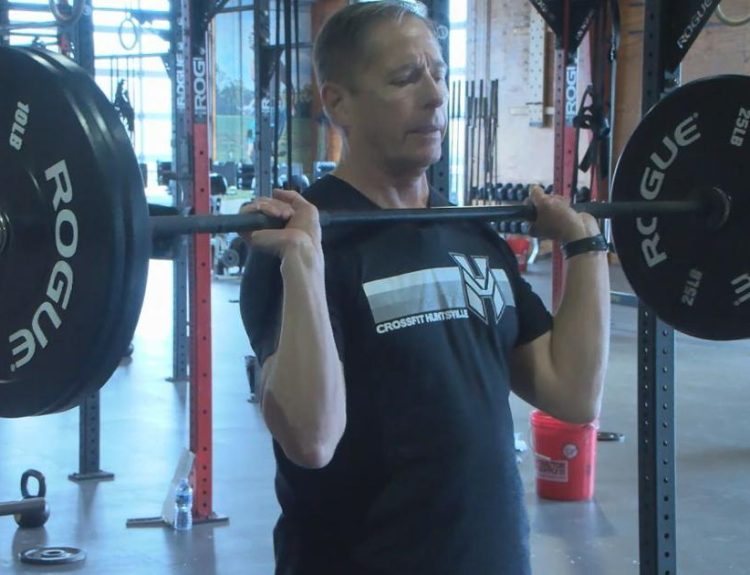
Believe it or not, not everyone finds joy in jogging. To explore alternatives, online fitness coach Jeremy Ethier undertook an experiment to identify cardio exercises that can rival, or even surpass, jogging for fat burning.
In this endeavor, Jeremy partnered with his friend Dennis, who has a noticeably lower fitness level. The significance of fitness levels cannot be overstated; individuals with higher fitness are generally better at turning stored fat into energy. This dynamic provides valuable insights into the best cardio exercises based on one’s fitness base. Read on to discover their rankings.
Testing Methodology
The testing utilized a metabolic mask to accurately measure calorie expenditure—a method recognized as the gold standard outside of laboratory conditions. This device gauges the air inhaled and exhaled during exercises, assessing oxygen consumption and carbon dioxide output to calculate calorie burn, as well as the proportion of calories derived from fat versus carbohydrates. This differs significantly from the estimates provided by smartwatches or gym machines, which rely on metrics such as heart rate, speed, and body weight.
Additionally, biological sex can influence fat-burn efficiency. According to research from the University of Bath, both biological sex and fitness levels are the primary indicators of one’s ability to metabolize fat. The findings suggest that fit women can burn fat more efficiently than men during endurance exercises—a factor contributing to women’s exceptional performance in ultra-marathons.
Thus, while the findings from this experiment hold true, it’s important to acknowledge that both sex and fitness level can significantly impact the results.
Results Overview
Skipping (10 mins)
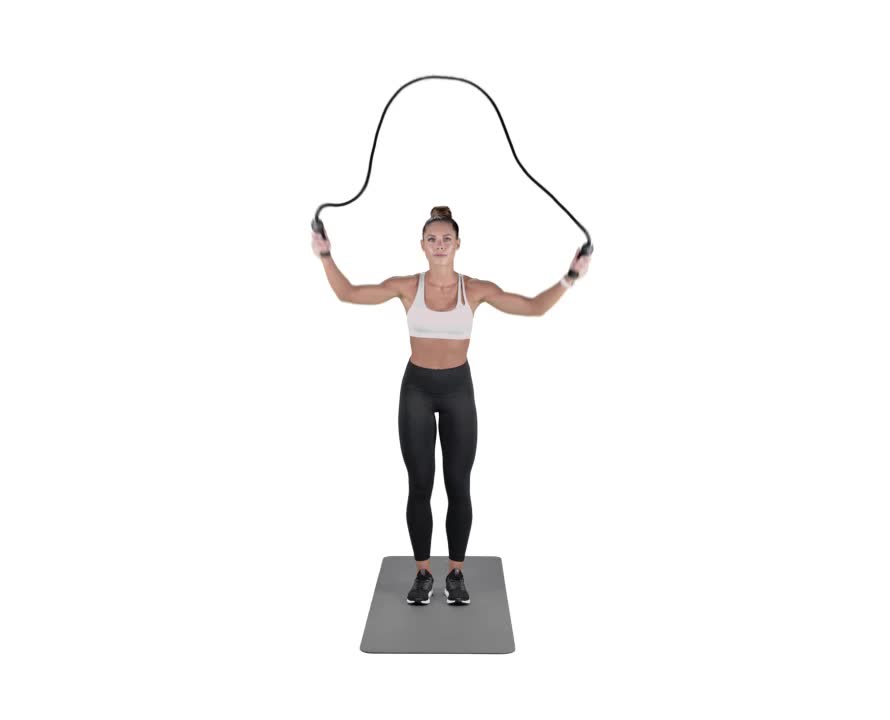
First on the list is the classic warm-up exercise: skipping. “The jump rope workout we’re performing is high-intensity interval training (HIIT), which involves alternating periods of intense effort and brief rest,” Jeremy stated in the video documenting the experiment. This approach has gained immense popularity due to the “afterburn” effect, where the body continues to burn calories long after the workout ends.
Jeremy burned 160 calories, plus an additional 28 calories from afterburn (measured 20 minutes post-recovery), while Dennis burned 69 calories with 8 afterburn calories.
HIIT (10 mins)
Next, they tackled a popular HIIT workout from YouTube. “To enhance the intensity without relying too much on coordination, we opted for one of the most popular mainstream HIIT workouts,” Jeremy explained.
Jeremy managed to burn 136 calories along with 24 afterburn calories, while Dennis recorded 100 calories and 16 afterburn calories.
However, Jeremy pointed out that for both skipping and HIIT, his heart rate did not reach the designated high intensity to classify as “actual” HIIT.
“This means we need to push harder,” he concluded.
Sprint Interval Training (10 mins)
Moving on…fast sprints were next. They engaged in 10-15 seconds of maximum effort sprints followed by 30-60 seconds of walking. “Some experts believe that as little as one minute of all-out effort can deliver the same benefits as 50 minutes of standard cardio,” Jeremy highlighted.
Jeremy achieved a calorie burn of 178 with 48 from afterburn, while Dennis burned 148 calories and 27 from afterburn.
“However, one striking observation from the data is that 97% of the calories I burned were from carbohydrates, with only 3% from fat. We’ll explore the implications of this when we compare it to walking,” Jeremy added.
Jogging (20 mins)
Now we shift to a classic low-intensity workout: jogging.
“Despite the jog lasting twice as long as our sprint workout, I was surprised to find the calorie burn was almost double, with me burning 350 calories and Dennis burning 260 calories,” Jeremy commented. “Analyzing our heart rate data sheds light on this trend: jogging keeps the heart rate consistently elevated, whereas HIIT only creates short spikes.”
Fasted Jogging (20 mins)

Fasted jogging resulted in similar calorie expenditure compared to regular jogging.
Citing an earlier study from the British Journal of Nutrition, which suggested that morning jogs on an empty stomach can lead to greater fat loss compared to post-meal workouts, Jeremy explained that they wanted to test the effects of fasted cardio. Their results showed that they burned a similar amount of calories compared to regular jogging, but a larger percentage of those calories came from fat.
Referring to Dr. Eric Helms, a leading exercise science researcher, Jeremy explained: “When you skip a meal prior to a workout, your body has fewer carbohydrates to utilize and thus relies on fat for energy.” However, this approach may not always be beneficial, as less fuel can impair performance throughout the day.
Dr. Helms emphasizes that the total calorie deficit or surplus is what primarily drives long-term fat loss, despite efforts in a workout session. In other words, what matters most is your overall daily activity, diet, and consistency.
Jeremy notes that while there may be no conclusive evidence showing long-term fat loss benefits from fasted cardio, some individuals might find it more manageable. Ultimately, making fitness enjoyable and sustainable is crucial, as they experienced discomfort from constant jogging.
Properly fueling your body remains essential, even during weight loss efforts, thus consulting a professional for personalized advice is generally recommended.
Kangoo Jog (20 mins)

Kangoo boots in action
Next came the unique experience of the Kangoo jog. “These boots are often criticized in races for their unconventional appearance, but they reportedly minimize joint impact by 80% while increasing calorie burn by 25% compared to traditional jogging,” Jeremy explained. Their results showed they burned approximately 315 and 235 calories, respectively.
“Although the boots felt gentle on the joints, we observed a 10% decrease in calorie expenditure compared to regular jogging, likely due to their weight limiting our speed,” Jeremy observed, noting that the boots typically cost around £200.
Swimming (20 mins)
“While the mask and drysuit restricted our swimming technique, we quickly noted an increase in our heart rates,” Jeremy stated. “After 20 minutes of a modified dog paddle, we ended up burning more calories than anticipated: 276 calories for me and 223 for Dennis.”
Despite the limitations of their setup, it’s crucial to highlight the advantages of swimming: “Unlike many exercises, swimming engages nearly all major muscle groups simultaneously. More active muscles mean more calories burned,” Jeremy elaborated. “Furthermore, water extracts heat from the body faster than air, leading to increased calorie expenditure, particularly in colder pools.”
Walking (30 mins)
Arguably the most accessible exercise, walking was notably included in this experiment. “During 30 minutes at 3.2 mph on the treadmill, we burned around 200 calories each,” Jeremy noted. “However, the fat-burning aspect intrigued me: 81% of the calories burned derived from fat, representing the highest percentage yet. To compare, jogging demonstrated a mere 40% of calories from fat, while sprints accounted for only 3%.”
Nevertheless, he emphasized that fat burn and fat loss differ. “Similar to fasted cardio, total calorie burn predominates in significance,” he remarked. “Although walking didn’t yield the highest calorie expenditure, those calories can accumulate over time.” Furthermore, he cited a study indicating that individuals who incorporated an extra 2.5 hours of walking weekly (about 20 minutes daily) resulted in an additional 3.5 pounds of fat loss within 12 weeks.
Incline Walking (6%, 30 mins)
A simple way to elevate calorie expenditure during walking is to incorporate incline. “When compared to walking on a flat surface at the same speed, both of us burned around 50% more calories,” Jeremy reported. Such a marked improvement highlights the efficiency of incline walking.
They also experimented with walking while carrying a 20-pound [9kg] backpack to find out if weighted walking could be the ultimate cardio for fat loss. Known as rucking, this endeavor yielded varied results between Jeremy and Dennis.
“For me, rucking only resulted in a 13% increase in calorie burn compared to standard walking,” Jeremy mentioned. “However, for Dennis, who experienced a greater relative increase in weight, it amounted to a 30% increase.” This discrepancy illustrates why individuals may hit weight loss plateaus.
“As one loses fat, it’s akin to removing a backpack laden with what they have been carrying. Consequently, they will burn fewer calories unless adjustments are made to dietary intake or exercise intensity. To sustain fat loss, gradually consuming less and increasing activity levels is generally advised—while also lifting weights to maintain muscle and metabolic health,” Jeremy concluded.
StairMaster (20 mins)
The duo also assessed two moderate-intensity activities, starting with the StairMaster—a gym staple that garners mixed opinions. “After 20 minutes of activity, the machine indicated I burned 223 calories while Dennis recorded 190,” Jeremy stated. However, it’s important to note that “calorie estimates from machines often vary significantly, sometimes by 10-30%. According to the metabolic mask’s assessment, I burned 256 calories and Dennis 215 calories,” he explained.
If relying solely on machine-calculated data, be conscious that those numbers may not fully reflect true caloric expenditure.
Boxing (20 mins)

Boxing may not lend itself to multitasking (e.g., watching TV) and can be challenging for those who don’t find enjoyment in the activity. “After 20 minutes, it became clear that this wasn’t the best option for weight loss, as the calorie burn was comparable to the StairMaster—270 for me and 215 for Dennis,” Jeremy remarked.
For a clear visual ranking of all the activities, refer to the figures below.
Total Calories Burned by Jeremy
- Jogging (20 mins) – 350 kcal
- Fasted Jogging (20 mins) – 335 kcal
- Kangoo Jog (20 mins) – 320 kcal
- Incline Walking, 6% (30 mins) – 295 kcal
- Swimming (20 mins) – 276 kcal
- Boxing (20 mins) – 270 kcal
- StairMaster (20 mins) – 256 kcal
- Weighted Walking, +20 lb (30 mins) – 225 kcal
- Regular Walking, 3.2 mph (30 mins) – 196 kcal
- HIIT Sprints (10 mins) – 178 kcal
- Jump Rope (10 mins) – 146 kcal
- HIIT Bodyweight (10 mins) – 136 kcal
Total Calories Burned by Dennis
- Jogging (20 mins) – 260 kcal
- Incline Walking, 6% (30 mins) – 250 kcal
- Fasted Jogging (20 mins) – 250 kcal
- Kangoo Jog (20 mins) – 240 kcal
- Weighted Walking, +20 lb (30 mins) – 226 kcal
- Swimming (20 mins) – 223 kcal
- Boxing (20 mins) – 218 kcal
- StairMaster (20 mins) – 215 kcal
- Regular Walking, 3.2 mph (30 mins) – 175 kcal
- HIIT Sprints (10 mins) – 148 kcal
- HIIT Bodyweight (10 mins) – 100 kcal
- Jump Rope (10 mins) – 69 kcal
Calories Burned Per Minute by Jeremy
- HIIT Sprints – 17.8 kcal/min
- Jogging – 17.5 kcal/min
- Fasted Jogging – 16.75 kcal/min
- Kangoo Jog – 16 kcal/min
- Jump Rope – 14.6 kcal/min
- Swimming – 13.8 kcal/min
- HIIT Bodyweight – 13.6 kcal/min
- Boxing – 13.5 kcal/min
- StairMaster – 12.8 kcal/min
- Incline Walking (6%) – 9.8 kcal/min
- Weighted Walking (+20 lb) – 7.5 kcal/min
- Regular Walking (3.2 mph) – 6.5 kcal/min
Calories Burned Per Minute by Dennis
- HIIT Sprints – 14.8 kcal/min
- Jogging – 13 kcal/min
- Fasted Jogging – 12.5 kcal/min
- Kangoo Jog – 12 kcal/min
- Swimming – 11.2 kcal/min
- Boxing – 10.9 kcal/min
- StairMaster – 10.8 kcal/min
- HIIT Bodyweight – 10 kcal/min
- Incline Walking (6%) – 8.3 kcal/min
- Weighted Walking (+20 lb) – 7.5 kcal/min
- Jump Rope – 6.9 kcal/min
- Regular Walking (3.2 mph) – 5.8 kcal/min
Explore Our Free Marathon Plans
Interested in trying our marathon plans? For a limited time, we’re offering customers 14 days of free access to our complete training library on the Runner’s World UK app.