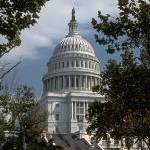
“Democracy is a pathetic belief in the collective wisdom of individual ignorance,” – H.L. Mencken
Democratic Collectivism
Apart from love, war, and the occasional real estate bubble, few things capture a person’s imagination quite like the fervor of an election year. Many voters cling to the naive belief that they can obtain something for nothing via the ballot box. This delusion leads to the repeated election of unscrupulous politicians.
Concepts like independence, liberty, and freedom have now devolved into mere slogans. People may pretend to uphold these ideals, but in reality, they yearn for government handouts, safety nets, and free resources. Consequently, society has traded the structured discipline of a constitutional republic for the deceptive allure of democratic collectivism.
“Where all think alike, no one thinks very much,” noted the political commentator Walter Lippmann in the 20th century. As Election Day beckons, it seems few are engaging in thoughtful discourse. Here’s what we mean…
Voter beliefs have become so homogenous and thoughtless that their expectations often exceed what the government can realistically provide. Many citizens survey the economic and social challenges before them and instinctively look to government spending for a solution, hoping for a free lunch in the process.
These societal assumptions do not support the idea of a government dedicated to fostering a free society. Instead, they seek grand promises of miracles and instant solutions. Voters clamor for lower taxes while demanding increased public expenditure, expect greater prosperity, and desire generous entitlements for a comfortable retirement. They want their cake and expect to eat it too.
The Convictions of the People
The deeply ingrained beliefs of the populace have reached a point where questioning the government’s role in issues like unemployment rates, teenage pregnancies, or stock prices seems ‘radical.’ For instance, did you know the U.S. government recently allocated $750,000—your money—for
a new soccer field for Guantanamo Bay detainees?
This spending spree on foolish projects is merely the tip of the iceberg. Yet, the public continues to demand extensive government spending on a plethora of items, particularly if funded by taxing the wealthy.
Though we may disagree, it appears we are in the minority. Our observations are simply backed by a century’s worth of electoral evidence. Collectively, voters expect the government to spend recklessly, even if it leads to broader ruin. Who are we to challenge the collective will and wisdom of democratic collectivism?
Consequently, a practiced national policy of government deficits has emerged to satisfy the immediate demands of the populace. It’s what the people want; it’s what they consistently vote for. The signs are everywhere…
The collective mindset desires grants for schools, museums, and nature centers. They advocate for agricultural aid and railway subsidies. They demand green energy initiatives, expecting everyone else to convert to electric vehicles.
They want free food and perpetual disability benefits. They wish for funding for quirky projects—like robotic squirrels, pottery classes, caviar tastings, and Martian food sampling—and much,
more. Ultimately, they expect all these benefits without contributing a cent; they want someone else—meaning you—to foot the bill.
In Mob We Trust
Nearly a century ago, a significant milestone was reached in Washington. Honest statesmen advocating sound financial practices found themselves rendered ineffective, as political and monetary interests became increasingly intertwined.
In 1913, the Sixteenth Amendment empowered Congress to levy income taxes. In that same year, the Seventeenth Amendment was ratified, mandating the direct election of Senators by popular vote. Before the year ended, the Federal Reserve Act was enacted, transferring the power to issue currency from Congress to the Federal Reserve.
Following these pivotal changes, the federal government consolidated and centralized its power. As a result, it gained the authority to tax, borrow, spend, and inflate currency on a massive scale.
The implications of the Sixteenth Amendment and the Federal Reserve Act are widely discussed. However, today, we focus on the impact of the Seventeenth Amendment.
In essence, the Seventeenth Amendment allows Senators to garner votes from their constituents by allocating federal money back to their districts. This practice ensures that the government remains responsive to the public’s collective desire for private security through public spending, fostering political corruption and graft. Hence, less than a century later, the United States, technically bankrupt, allocated
$3.4 million for turtle tunnels in Florida—where some misguided individual proposed that these projects create jobs.
A century ago, the government locked itself into a model of mass public spending, and there is no turning back. While citizens express genuine concern over the nation’s staggering debt, the collective voter still demands their share of government resources. Everyone seems eager to take without giving, perpetuating a cycle that politicians are more than happy to exploit to gain electoral favor.
As the grim realities unfold, tax revenues fall short, deficits rise, and debts skyrocket. The Federal Reserve sustains this illusion by stretching the value of the dollar. In the process, individual liberties are sacrificed for government safety nets that are increasingly fraying at the seams.
According to legend, Benjamin Franklin, upon signing the Constitution, responded to a woman’s question about the new government’s nature by saying, “A Republic, if you can keep it.”
Alas, ‘we the people’ were unable to preserve it. What remains is democratic collectivism—a modern interpretation of governance characterized by a mob mentality.
In mob we trust.
Sincerely,
MN Gordon
for Economic Prism