Guess Who’s Coming to Dinner
The annual winter meeting of the National Governors Association (NGA) offers an exclusive experience for the nation’s governors, allowing them to gather at the White House each February for a black-tie dinner. This event is traditionally seen as a stage for bipartisan collaboration and a valuable opportunity for governors to forge relationships with one another and the federal government.
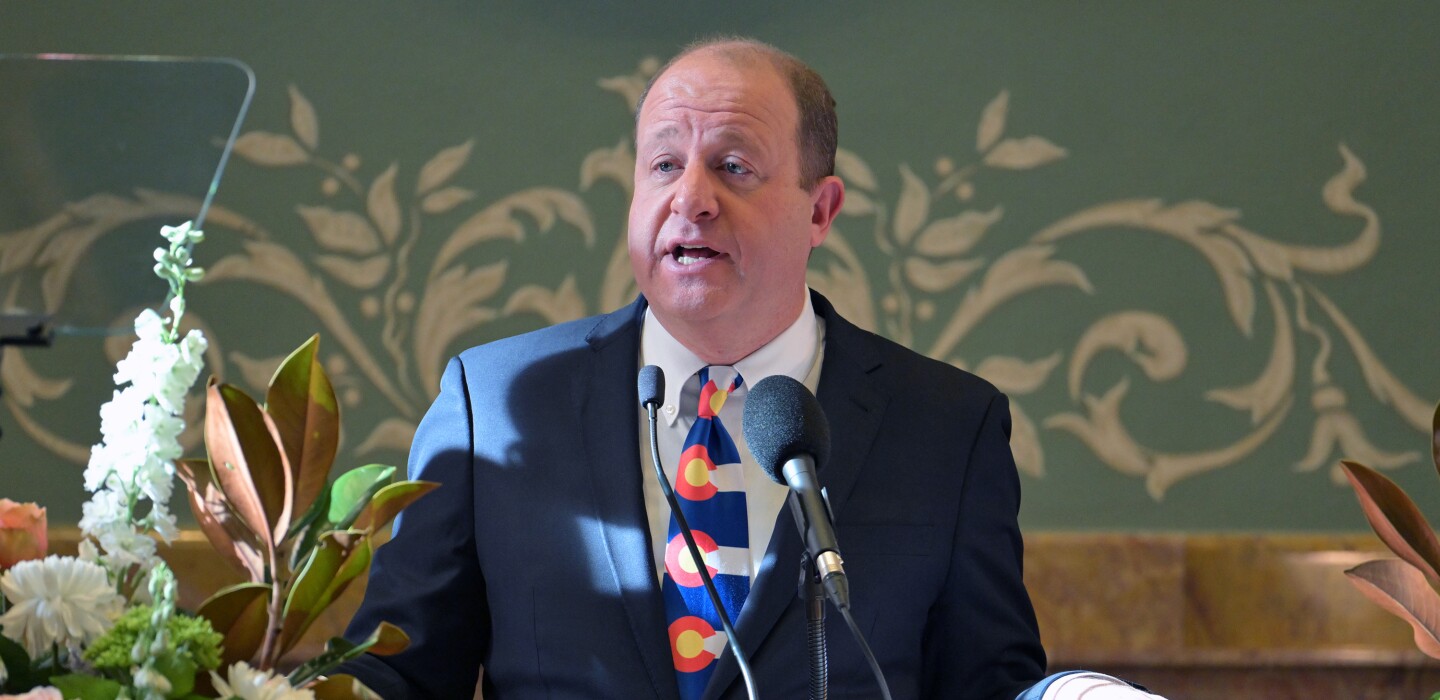
However, the event’s dynamics have shifted this year. President Donald Trump’s decision to revoke invitations for two Democratic governors, Jared Polis of Colorado and Wes Moore of Maryland, has sparked uncertainty surrounding the guest list and the event itself. Both governors have been vocal critics of Trump, and their disinvitation highlights the ongoing partisan tensions that characterize contemporary politics.
In response to the disinvitation, the remaining Democratic governors announced they would not attend the dinner. Following this, Oklahoma Gov. Kevin Stitt, a Republican and chair of the NGA, stated that the NGA would no longer “facilitate” the dinner. The NGA subsequently confirmed that “the president will welcome governors from all 55 states and territories to the White House.” However, Trump criticized Stitt, labeling him a RINO (Republican in name only) and asserting that Moore and Polis were “not worthy” of an invitation. The NGA has not clarified the dinner’s guest list or made its CEO, Brandon Tatum, available for comment.
According to Kentucky Gov. Andy Beshear, a Democrat, the NGA White House dinner is an event “the American people admittedly don’t care about.” Nevertheless, its historical significance as a space for governors and presidents to engage marks it as a critical component of political tradition. Over the years, it has been an occasion for presidents to outline budget proposals and set the tone for their leadership. For instance, Jimmy Carter introduced the Friendship Force during his tenure, while Michelle Obama initiated a “healthy food” initiative alongside the event in 2009.
Governors have often leveraged this annual dinner to form alliances and explore their political ambitions. Notably, former Utah Gov. Olene Walker made pivotal decisions about her political future based on alliances formed during the NGA dinners. However, political tensions have not been uncommon; historically, notable instances of absence or partisan drama have occurred, such as Wyoming Gov. Jim Geringer boycotting the dinner in 1998 amid the Clinton-Lewinsky scandal or Chris Christie skipping the event in 2014 during his presidential campaign.
“I don’t remember any governor ever being disinvited from either the meeting or the dinner,” observes Raymond Scheppach, a former NGA executive director. In previous decades, the NGA was highly regarded as a powerful lobbying entity. Despite recent declines in its influence due to a lack of bipartisan agreement, the organization still advocates for solidarity among governors of opposing parties. The recent confusion around the dinner’s guest list reflects the evolving political landscape.

(Jeff Wheeler/The Minnesota Star Tribune/TNS)
One Hundred to One
Amy Klobuchar is not alone in eyeing a transition from the U.S. Senate to the governor’s office in Minnesota; she is joined by fellow senators Michael Bennet of Colorado and Republicans Marsha Blackburn of Tennessee and Tommy Tuberville of Alabama. For Blackburn, the change would come with a notably increased salary compared to the $174,000 annual pay of a U.S. senator. Conversely, the others would face a significant pay cut.
Many may wonder why someone would leave the prestige of the U.S. Senate for a governorship. A potential explanation lies in the current divisive nature of Congress, which has become increasingly contentious and sluggish. Senators often find their influence diluted as one of a hundred, while governors enjoy a higher level of executive authority and are generally granted latitude in shaping state policy.
Since 1913, 65 U.S. senators have pursued gubernatorial positions, as reported by Ballotpedia. Only 27 have successfully made the transition to governor, with numerous senators encountering challenges in both primary and general elections. A notable example is Richard Nixon, who, despite his extensive political career, faced defeat in a bid for the California governorship in 1962, leading to his iconic concession speech. Since the mid-1980s, however, senators have fared better in gubernatorial elections, winning 13 times against 8 losses. Some current governors, like Republicans Mike DeWine of Ohio and Kelly Ayotte of New Hampshire, previously held Senate positions.
Former governors tend to have more success running for Senate seats, having won 127 out of 347 such elections since 1913. Recent examples include Democrats Roy Cooper in North Carolina and Janet Mills in Maine, both currently seeking Senate positions.
For some governors, the idea of moving to the Senate does not hold the same appeal. Ronald Reagan dismissed the Senate as a viable path during discussions about his political future, and Minnesota Gov. Tim Walz recently expressed that he would “rather eat glass” than run for the open Senate seat due to Klobuchar’s departure.
Key Takeaways
- The NGA’s annual White House dinner showcases relationships between governors and the federal government.
- This year’s event has faced controversy due to disinviting two Democratic governors.
- The political landscape has shifted dramatically, causing confusion surrounding the guest list.
- Historically, governors have used this dinner to bolster political aspirations and alliances.
- Gubernatorial elections often present a more favorable outcome for U.S. senators in recent decades.
FAQ
What is the National Governors Association?
The NGA is a coalition of governors that facilitates collaboration on national policies and state issues.
Why did the Democratic governors not attend the dinner?
They chose to abstain from the event in response to President Trump’s disinvitation of two of their colleagues.
What roles have past presidents played during the NGA dinner?
Presidents have historically utilized the event to announce budget proposals and establish the tone for their administration.
Have there been notable conflicts related to the NGA dinner in the past?
Yes, previous events have seen partisan tensions and absences due to political situations, such as controversies surrounding the Clinton administration.
In conclusion, the NGA dinner remains a significant political tradition reflecting the evolving dynamics among governors. Whether in times of collaboration or conflict, it serves as a barometer of the current political climate.