Engaging with scientists about ultraprocessed foods leads me to a constant inner dialogue: These don’t seem good, but how do I identify the worst products? Additionally, How can I manage to feed a busy 2-year-old and a 6-year-old without relying on these?
If I struggle to convert concerns about ultraprocessed foods into actionable steps, I can only imagine the confusion faced by the average consumer, especially with skyrocketing grocery costs.
Therefore, I took my reporting straight to the grocery store.
This led me to the snack aisle with Dr. Mande, a pivotal figure in the development of nutrition facts labels during the 1990s. He has a background including positions at the FDA and USDA and currently serves as a professor at Harvard’s T.H. Chan School of Public Health, as well as being a nutrition advocate.
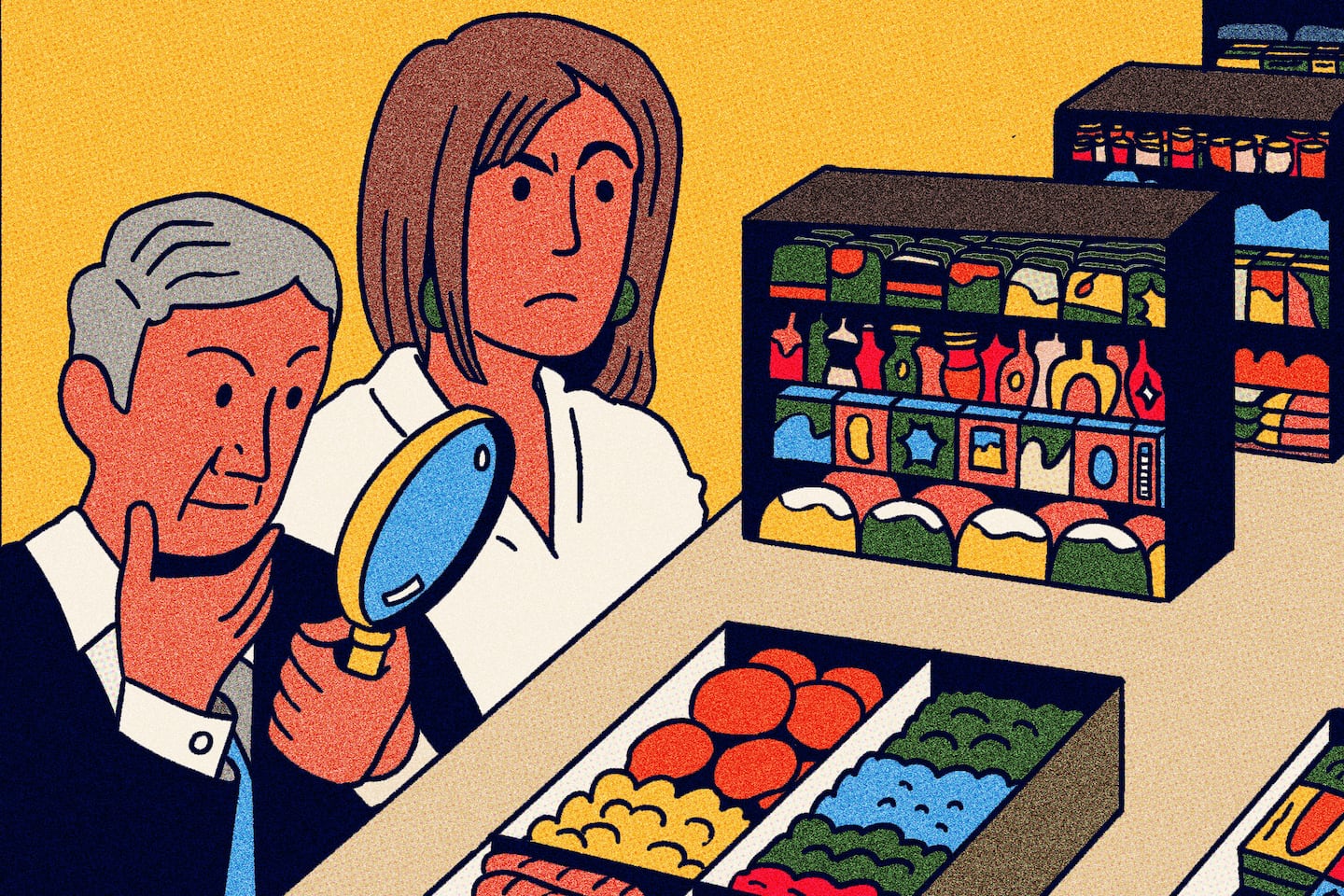
I invited Dr. Mande to join me on my regular grocery trips to Trader Joe’s and Harris Teeter in Washington, D.C. Together, we examined the foods my family typically buys, evaluating our choices in the context of ultraprocessed foods and overall nutrition.
As we navigated the aisles, he provided valuable insights into reading ingredient lists and understanding nutrition facts. Here’s some of his practical guidance.
Before our trip, I braced myself for an assessment of my family’s grocery choices, anticipating disappointing feedback. My fears were confirmed in the cheese section.
“Ultraprocessed,” Dr. Mande stated softly as he examined the ingredients in the “Mexican cheese” I had selected for taco night. He highlighted the “anti-caking agents” and “mold inhibitor” listed at the end of the ingredient list.
It’s estimated that nearly 75 percent of the American food supply is ultraprocessed, accounting for over half of our caloric intake. Foods labeled as ultraprocessed are often deemed “poison.” However, there is no universally accepted definition; the Trump administration is currently soliciting input to develop one.
The term originates from a classification system introduced by Brazilian researchers in 2009, primarily describing foods with chemical additives or those produced via industrial processes.
This categorization means ultraprocessed foods can be found in nearly every section of the supermarket. From sliced bread, breakfast cereals, and lunch meats to dairy products, it’s difficult to find anything outside of the produce section that isn’t ultraprocessed. I felt grateful when Dr. Mande deemed my chips and peanut-based snack bar to be somewhat acceptable.

Curious about the implications of my choice, I asked Dr. Mande how concerning my ultraprocessed cheese truly is. “You know,” he mused, “it does provide convenience.”
He was right. Finding foods that my young children will actually consume while managing a hectic schedule and budget was indeed a small win amidst the onslaught of advice on fostering a healthy relationship with food for kids.
Dr. Mande’s advice is to avoid getting overly stressed. His main concern with ultraprocessed foods, he explains, is how they are often manipulated into unrecognizable forms, mixed with added sugars and chemicals, and then reformulated to encourage overconsumption.
“The two main drawbacks of ultraprocessed foods are that they are hyperpalatable and calorically dense,” Mande explains. “They are specifically designed for overconsumption, which those ingredients facilitate.”
“Focus on consuming nutrient-dense foods rather than merely calorically dense ones.”
In the frozen foods aisle, Dr. Mande emphasizes checking the nutrition facts on a stir-fry package. “I always begin here,” he says, pointing to the ingredients list on the back.
He advises closely examining the first three ingredients, as they are listed in order of predominance. Ideally, these should be recognizable, nutritious items you would ordinarily want to consume. If sugar or another sweetener appears as the second or third ingredient, it’s best to be cautious.
As you continue deciphering the list, look out for unrecognizable ingredients or those that are clearly additives or preservatives. However, not all ingredients with unfamiliar names are automatically detrimental, and the presence of a preservative to extend shelf life doesn’t necessarily disqualify a food item.
Nonetheless, there are components to keep an eye on.
Take artificial dyes, for instance. The administration has made significant efforts to remove them from foods, at times erroneously claiming to have banned them. While some states have enacted bans and companies are gradually phasing them out, experts argue that this is a generally positive trend. Some dyes are confirmed to be more harmful than others, and they play an essential role in making ultraprocessed foods more appealing, especially to children.
Just because a dye or ingredient is labeled as “natural” doesn’t mean it’s healthy.
“Cyanide is natural. It is deadly,” Dr. Mande quips.

Ultimately, he points out, “You need to evaluate how much the fact that it’s ultraprocessed concerns you,” while also considering your overall dietary intake.
Visualize a plate: if half is filled with produce, whole grains, and protein, you’re on the right track, he suggests.
Next, Dr. Mande highlights the nutrition facts.
“The critical point about ‘percent daily value’ is that if it’s five or less, it’s low; if it’s 20 or more, it’s high,” he says. “Some things should be low, and some should be high.”
As we peruse the aisles, Mande and I stay vigilant for added sugars, saturated fat, sodium, and dietary fiber.
In the prepared foods section, the alarming levels of saturated fat and sodium frequently exceeded 20 percent of the daily value. The dino-shaped chicken nuggets, often a necessary protein source for young eaters, are arguably ultraprocessed, but the sodium content raises concerns. I was relieved to discover that the granola bars my child prefers boast a largely recognizable ingredient list. However, they do contain a considerable amount of added sugar—something Dr. Mande notes could develop a preference for overly sweet foods in kids.

For each item, Dr. Mande suggests considering any family history of health issues (like high blood pressure related to sodium or heart disease linked to saturated fat) and how each food item fits into your overall diet.
He emphasizes that the concern lies more with added sugar—like the freeze-dried fruit my kids love which contains natural sugars and is, therefore, less of a worry.
As we moved to the pasta aisle, it was time to discuss carbohydrates. Dr. Mande indicated dietary fiber as a key measure of how refined a carbohydrate-heavy product is, whether it’s bread, pasta, chips, or crackers. You generally want the fiber percentage to be on the higher side.
He shared a useful trick: ideally, the grams of dietary fiber should represent at least 10 percent of the total carbohydrates. For example, a spaghetti serving containing 40 grams of carbohydrates should have at least 4 grams of dietary fiber. (The chip I hoped would be a good choice? It had 14 grams of carbs and just 3 grams of dietary fiber—a respectable 21 percent).
Marketing claims regarding “whole grain” products can be misleading, but if the dietary fiber is 10 percent or more of the total carbohydrates, then that product is a better choice. Conversely, an excessive fiber content may indicate the presence of fiber additives, pointing to a primarily ultraprocessed item.
A gluten-free noodle made from red lentil flour stood out as the nutritionally superior choice, while one derived from brown rice barely exceeded the fiber percentage of standard pasta.

A gluten-free boxed mac and cheese marketed as a healthy alternative fails the test, despite being fortified with a variety of vitamins labeled “extracted from broccoli”—a description that sounds healthy but is nutritionally insufficient. Conversely, a more unassuming option made with chickpea flour turned out to be higher in fiber and protein (though both options had high sodium). Dr. Mande suggests simple solutions, like adding peas to boxed mac and cheese, to create a nourishing meal quickly (an idea I’ve definitely considered).
As we strolled past the tortilla section, Dr. Mande encouraged me to try whole grain options for taco night to boost fiber, after I had selected red lentil pasta to blend with the familiar tri-color spirals my kids enjoy. (To my surprise, my picky eaters ended up liking both the new pasta and the whole wheat tortillas).
Research supports small adjustments, such as these, particularly highlighted in the recent dietary guidelines set forth by the Trump administration, which prioritize “real food”—a focus on protein, fresh produce, and whole grains.
Adding just one extra serving of whole grains daily can lower the risk of diabetes by 18 percent and reduce overall mortality risk by 13 percent, according to Michael Goran, a researcher from the University of Southern California who served on the committee reviewing these guidelines. Reducing calories from ultraprocessed foods by just 10 percent daily could lower diabetes risk by 14 percent.
Yet, even with expert guidance, discerning healthy options from unhealthy ones remains challenging. While holding a box of standard round crackers, I mused, even if heavily refined with added sugars, they might still be preferable to a bag of Doritos, right?
“I’m not sure that’s accurate,” Dr. Mande replied, advocating for a label comparison. He suggested that a basic corn tortilla chip with fewer ingredients and potentially more fiber might actually be the wiser choice.
As our shopping journey came to a close, I reflected on my newfound insights. While my family’s diet may not be as dire as I feared, it likely still exceeds ideal levels of added sugars, sodium, and saturated fat while lacking sufficient dietary fiber.
I realized that many of my pressing questions (What specific additive is the worst? Are all ultraprocessed foods equally harmful? Where do we draw the line?) remained unanswered due to a lack of research.
“The nutrition field has suffered due to the lack of investment in research,” he lamented. “We don’t know many things—it wouldn’t be challenging to uncover, but we simply don’t.”
He informed me about some of his favorite cookbooks for individuals in my situation, including How to Cook Everything Fast by Mark Bittman and Simply Ancient Grains by Maria Speck, suggesting that having a plan is crucial when navigating culinary challenges. Primarily, he encourages establishing a routine that suits each family’s needs.

One final takeaway emerged: consumers shouldn’t feel defeated when navigating these choices alone. The market inundates us with confusing messages and options, often prioritizing corporate profit and convenience over health.
If it appears daunting, Dr. Mande reassures that it’s because it often is. He encourages me to aim for progress, not perfection. Every expert I’ve consulted emphasizes making manageable improvements in my diet, whether it’s limiting ultraprocessed foods or selecting whole grain alternatives.
Collectively, advocates argue, consumers must demand better.
“The solution lies in reforming the system,” Dr. Mande asserts. “Consumers cannot navigate this landscape alone to protect themselves.”
As I headed home, I picked up a tube of ready-to-bake biscuits. We would use them for a breakfast-for-dinner dish alongside eggs and vegetables.
I examined the label, recalling the lessons from Dr. Mande. While it contained few dietary fibers, high amounts of added sugars, sodium, and saturated fat confirmed its status as “definitely ultraprocessed.”
“Well,” I sighed, pausing before placing it in the cart. “Can’t win ’em all.”
Tal Kopan can be reached at tal.kopan@globe.com. Follow her @talkopan.