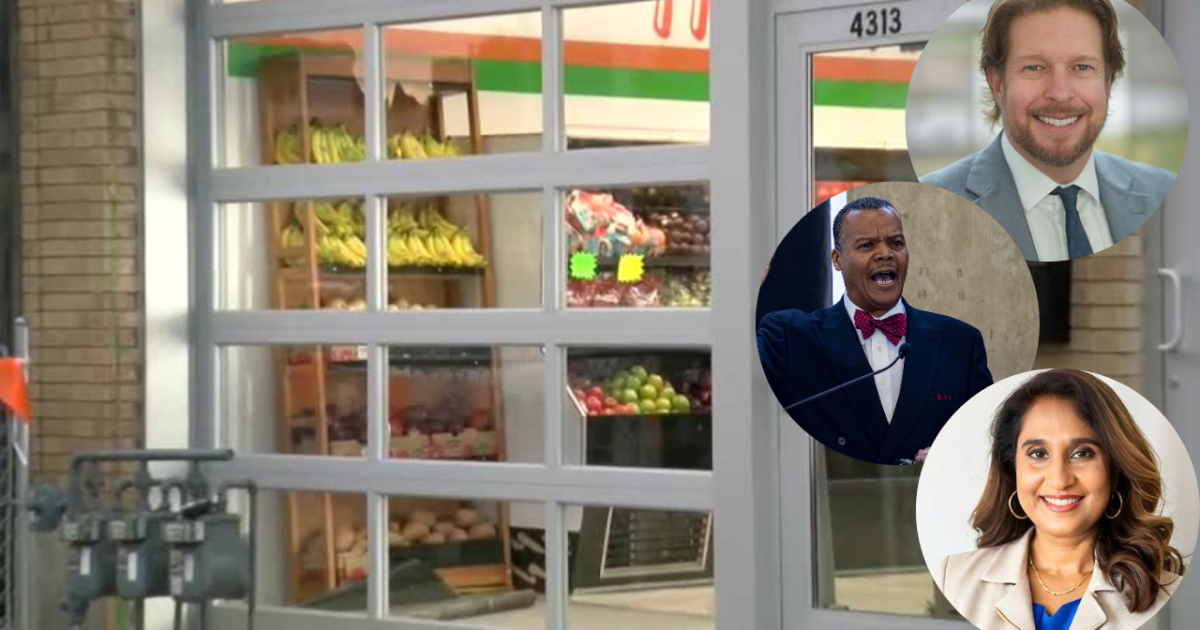
In various neighborhoods across Milwaukee, the simple task of purchasing fresh groceries has transformed into a significant challenge. This situation is influenced by distance, transportation issues, and long-standing inequalities.
With the ongoing closure of neighborhood grocery stores, more residents are becoming trapped in “food deserts,” areas where access to healthy and affordable food is either limited or completely absent.
Watch: Neighbors adjust shopping plans after Milwaukee Sentry on Silver Spring announces closure
Neighbors adjust shopping plans after Milwaukee Sentry on Silver Spring announces closure
“A food desert describes a location where fresh and healthy food is scarce,” explained Dr. Kirk Harris, an associate professor of Urban Development at UW–Milwaukee. “Access to these food options is often difficult because the stores within these communities do not provide fresh produce. Access to nutritious food is closely linked to the health outcomes of community members.”
According to the Near West Side Food Access Project, there were 13 designated food deserts in Milwaukee County as of 2015.
Dr. Christopher Simenz, a public health expert at the Medical College of Wisconsin, reported that approximately one in five residents in Milwaukee lives in a food desert.
“Grocery store closures on the north side of Milwaukee are happening at an alarming rate,” he noted. “And that number keeps increasing.”
Watch: Milwaukee neighbors wonder where they’ll shop next after ALDI closure
Milwaukee neighbors wonder where they’ll shop next after ALDI closure
Prasanta Anumolu, a community development educator at UW Extension in Milwaukee County, believes the term “food desert” may underestimate the core issue.
“The term implies that these are naturally occurring circumstances,” Anumolu pointed out. “However, they are not. Karen Washington, an activist, coined the phrase ‘food apartheid’ to emphasize that these situations stem from prolonged policies, historical redlining, and intentional decisions.”
Segregation Drives the Issue
Dr. Harris explained that the concentration of food deserts in Milwaukee highlights deeper systemic problems.
Simenz agrees, emphasizing that food accessibility is intertwined with housing, income, and stability.
“Many households facing food insecurity in Milwaukee are making difficult choices,” he said. “They are forced to decide between paying for rent or food.”
Housing challenges, according to Simenz, often aggravate issues related to food access.
“Evictions, instability in housing, and repeated displacements can disrupt not only employment but also education and food access,” he emphasized. “These matters are interconnected, stacking upon one another.”
Dr. Harris noted that displacement further entrenches segregation. “When individuals are pushed out of their communities, it amplifies the existing segregation,” he explained, “which in turn perpetuates the issue.”
Transportation as a Barrier
Transportation significantly impacts whether residents can reach healthy food options.
“A grocery store might be a mile away,” Harris said, “but if you lack a vehicle and need to buy groceries for a family, that distance becomes a daunting challenge.”
Anumolu highlighted that the USDA assesses food desert definitions based on proximity because “not everyone has access to a car.”
“That half-mile or mile makes a significant difference,” she noted, “as it represents what is realistically walkable.”
Simenz added that access to public transportation does not always resolve the issue.
“Imagine trying to take three buses with two transfers while managing kids just to reach the grocery store,” he said. “Consider how that ice cream will hold up after such a journey.”
Earlier this year, the Milwaukee County Transit System adjusted multiple routes while aiming to address a $14 million budget deficit.
“When reliable transportation routes change or diminish, we often see disruptions in access to food,” Simenz added.
The Cost of Food
“Many communities experiencing food desert conditions also belong to economically vulnerable populations,” Harris remarked. “Individuals facing this reality must also bear transportation costs, which creates another layer of difficulty in obtaining food.”
MCTS increased fares in 2026, raising the cost of a single ride from $2 to $2.75.
“Common misconceptions overlook the cost aspect,” Simenz explained. “Food may be nearby yet still be prohibitively expensive. For instance, in many upscale markets on the outskirts of the city, milk can cost between $5 and $10 a gallon, while pre-cut fruit can soar to $10 per pound. Such items are luxuries for many and not genuine options.”
Health Implications
The disappearance of full-service grocery stores carries health consequences that extend far beyond mere inconvenience.
Dr. Harris pointed out the existence of “food swamps”—areas equipped with food options that are unhealthy, featuring high volumes of fast food and processed items. “These are the kinds of products you should not be consuming regularly,” he emphasized. “This trend is apparent in corner stores and gas stations, which may offer food but lack nutritional value.”
Simenz added that this scenario leads to both hunger and inadequate nutrition.
“One can consume enough calories yet still experience nutritional insufficiency,” he stated.
Community-Based Solutions
In spite of the challenges, community-driven solutions are beginning to emerge.
“Support the stores that remain,” Anumolu urged. “Grocery profit margins are razor-thin, and community backing is vital to keeping them afloat.”
Watch: Sherman Park Grocery Store pleads for help to stay open
Neighbors concerned as Milwaukee food desert grocery store fights to stay open
Sherman Park Grocery, which opened in 2022 in a designated food desert, exemplifies such efforts.
The store has recently enhanced its offerings by adding a new cooler through collaborations with MCW and Feeding America, allowing it to provide quick and healthy options, including salads, sandwiches, and fruit cups.
“This initiative directly responds to community needs,” Anumolu emphasized.
Simenz noted that mobile markets, food pantries, and community food centers are equally important—especially when they tie in educational components with food offerings.
Organizations like NourishMKE, Feeding America Eastern Wisconsin, and Hunger Task Force are instrumental in filling the gaps when grocery access is minimal.
A Collective Community Challenge
Even those who do not personally face food insecurity should recognize the broader implications for the city.
“It affects everything,” Simenz stated, emphasizing the economic impact. “If people cannot eat, their productivity declines. Employment and transportation to work become compromised, manifesting a ripple effect throughout the community.”
Dr. Harris added that addressing food deserts requires diverse strategies, encompassing both immediate relief efforts and long-term policy changes.
“We need to create effective incentives for retailers to enter historically segregated and disadvantaged communities,” he stressed, also pointing out that government involvement is crucial in these efforts.
Simenz concurred and highlighted that food insecurity is not a matter of individual failure.
“There are real people who lack access to healthy food,” he asserted. “This situation is not about personal choices; it’s anchored in systemic inequalities that create barriers. Until we prioritize public health and provide ample access to nutritious food, these challenges will persist.”
Let’s talk:
Hello! At TMJ4 News, we value our audience’s input on issues that impact you. If you have a story idea, tip, or would like to discuss this topic further, please reach out using the form below. For additional contact options, visit tmj4.com/tips.
It’s time to watch on your own schedule. Stream local news and weather 24/7 by searching for “TMJ4” on your device.
Available for download on Roku, Apple TV, Amazon Fire TV, and more.