The Rise of K-Beauty: Insights and Trends in the Global Market
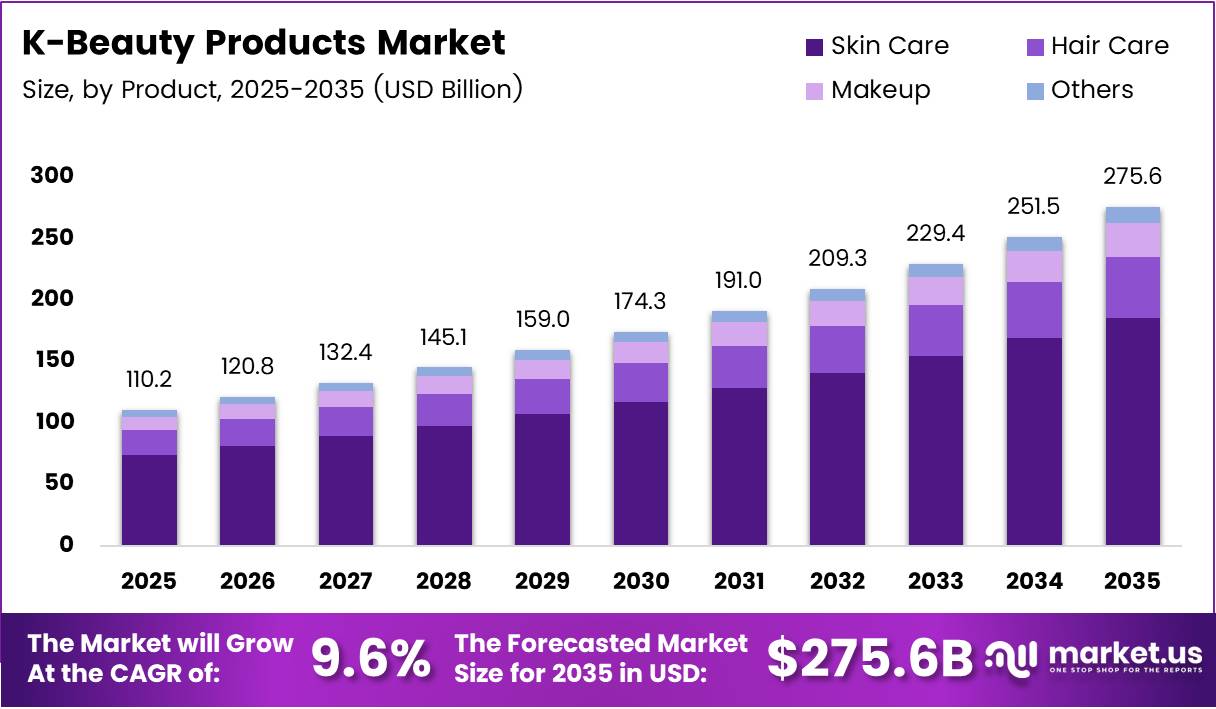
The K-Beauty (Korean Beauty) industry is experiencing remarkable growth, transforming from a niche market into a mainstream phenomenon. By 2035, the global market for K-Beauty products is projected to reach approximately $275.6 billion, a significant increase from $110.2 billion in 2025. This growth is largely driven by innovative formulas, intricate skincare routines, and a robust export infrastructure.
Understanding K-Beauty Products
K-Beauty encompasses a wide variety of products including skincare, haircare, color cosmetics, and functional beauty solutions. With a focus on ingredient efficacy, these products employ multi-step skincare routines and technology-driven claims to appeal to consumers. As a result, K-Beauty has established a strong presence in major retail markets across North America, Europe, and Asia.
Market Durability and Consumer Preference
The sustainability of the K-Beauty market can be attributed to both strong consumer demand and a well-established export system. South Korea has developed a comprehensive manufacturing and exporting network that competes with traditional leaders like France and the U.S. This robust framework enables K-Beauty brands to maintain competitive prices and consistently innovate.
Government initiatives are also helping K-Beauty firms expand their reach. For instance, in November 2025, a new government program was launched to facilitate Korean brands’ entry into global retail and online marketplaces, lowering barriers for international expansion.
The Premium Product Segment
The premium skincare category serves as a profit driver for South Korean brands. As premium products make up a larger portion of sales, profit margins increase, encouraging brands to invest in high-quality ingredients and clinical positioning. This shift enhances the credibility of K-Beauty among Western consumers, who previously viewed it primarily as an affordable option.
The Role of E-Commerce
Cross-border e-commerce has emerged as a key distribution channel, enabling quicker market entry into emerging regions. Digital platforms allow K-Beauty brands to evaluate and expand into new markets without the immediate need for physical retail space. As a result, K-Beauty products are now available in countries across Africa, Eastern Europe, and Latin America, far outperforming traditional cosmetics.
According to Korea JoongAng Daily, South Korean cosmetics exports were valued at $10.28 billion in 2024, representing a 20.6% increase year-over-year. The diverse demand across various regions indicates a robust trajectory for future growth in the K-Beauty market.
Key Market Insights
- Market Growth: The K-Beauty sector is projected to advance at a Compound Annual Growth Rate (CAGR) of 9.6% from 2026 to 2035.
- Product Leadership: Skincare products dominate the market with a 67.3% share, underscoring the global emphasis on skincare routines.
- Consumer Demographics: Women account for 67.9% of market demand, although the men’s segment is growing.
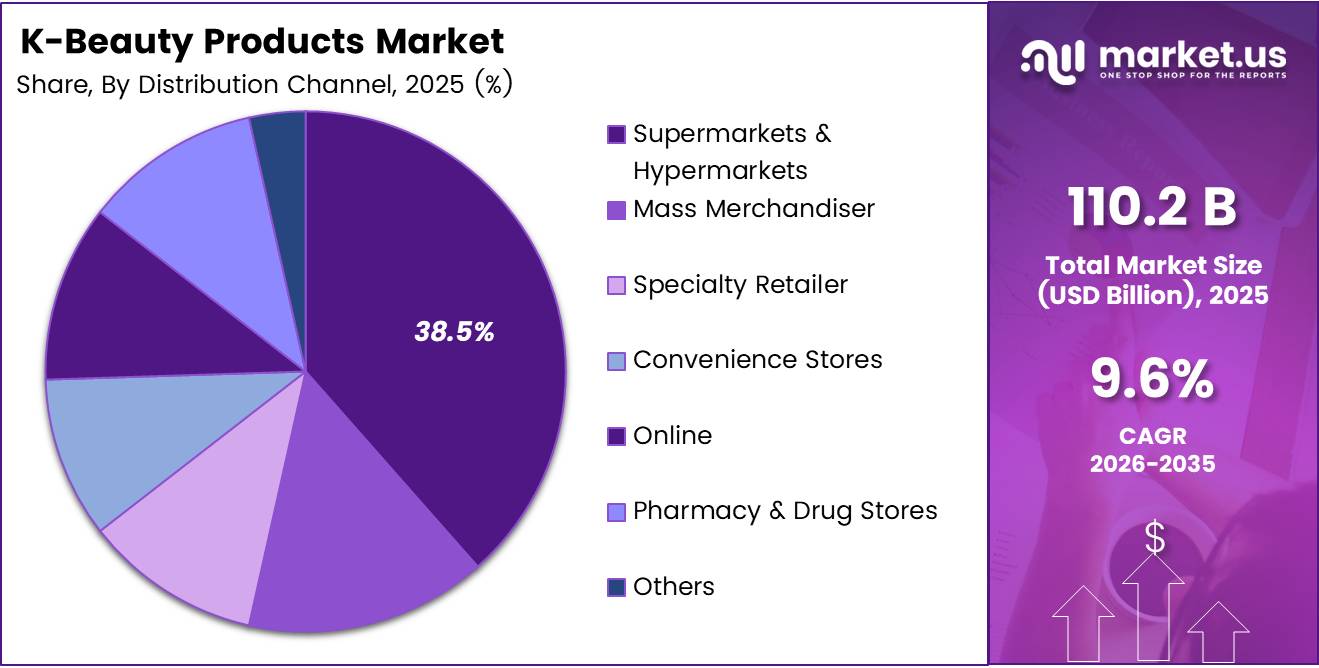
- Distribution Channels: Supermarkets and hypermarkets make up 38.5% of retail, allowing for high visibility and impulse purchases.
- Regional Dominance: North America leads with a market share of 39.70%, valued at $43.7 billion.
Product Breakdown by Category
Skincare:
- Cleanser: Serves as the entry point for K-beauty routines.
- Moisturizer: Offers a variety of textures, aiding customer retention.
- Serum: High concentration of active ingredients justifies premium pricing.
- Sunscreen: Increased awareness of UV protection drives sales.
Haircare:
- Korean haircare products, including shampoo, conditioner, and serums, are gaining popularity due to innovative ingredients and targeted treatments.
Makeup:
- Although makeup has a smaller share, growth in this category is accelerated by product innovation and the influence of K-Beauty culture on global trends.
Consumer Segmentation
Women are the primary consumers, largely due to their engagement with skincare routines. In contrast, men’s grooming is the fastest-growing segment in K-Beauty, driven by simplified products like BB creams and sunscreens.
Distribution Channels
Supermarkets and hypermarkets continue to dominate as they provide accessible shopping environments. Additionally, online channels are becoming increasingly essential, allowing brands to reach customers directly without the constraints of physical retail.
Conclusion
The K-Beauty market’s growth reflects the changing landscape of beauty and skincare, emphasizing innovation, quality, and accessibility. As the industry expands, brands that adapt to emerging trends and diverse consumer needs will secure competitive advantages. The continuous evolution of K-Beauty, bolstered by technological advancements and global consumer adoption, suggests that this dynamic market will remain at the forefront of the beauty industry for years to come. As we move forward, keeping an eye on emerging trends and consumer preferences will be vital for anyone looking to navigate the exciting world of K-Beauty.