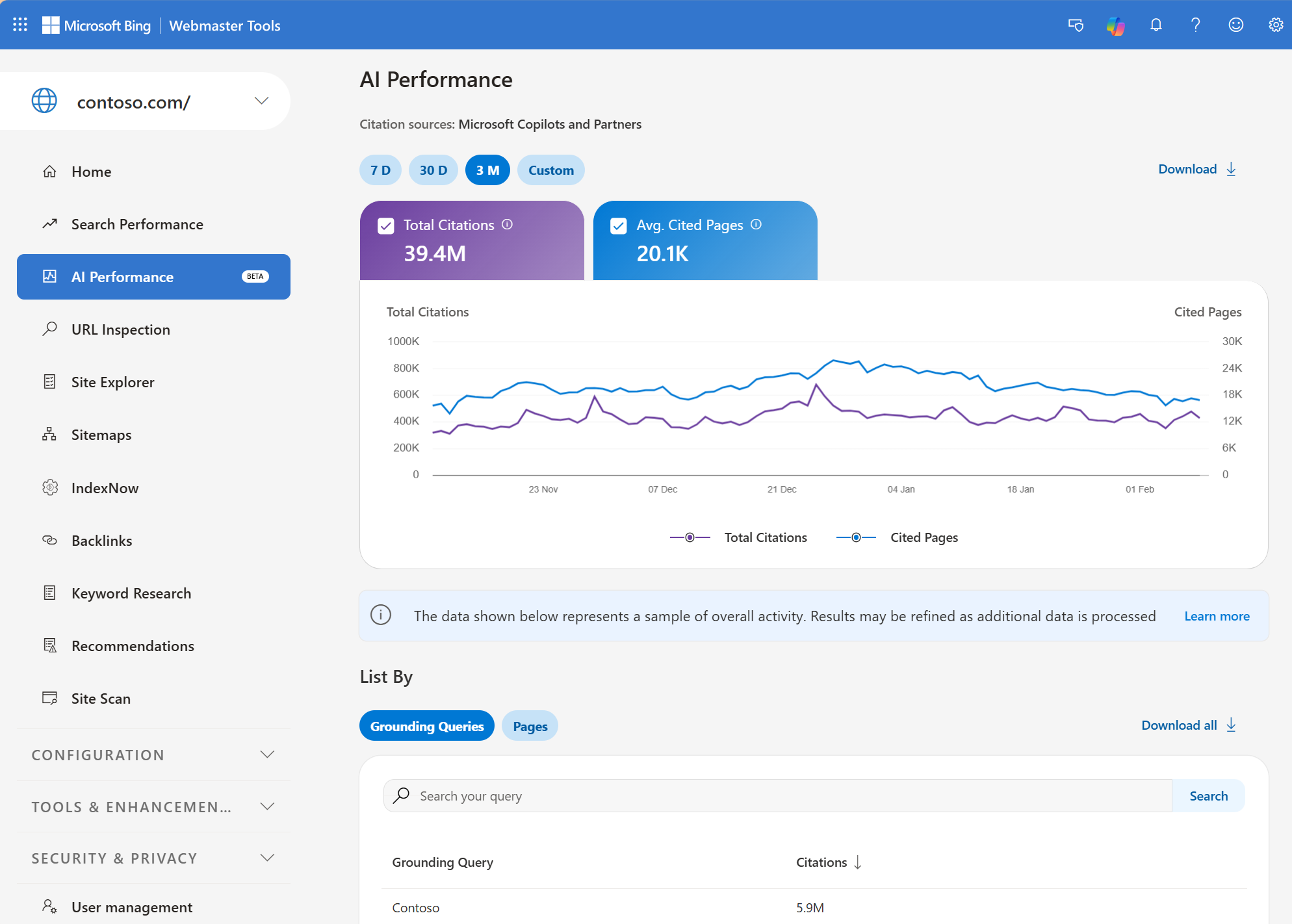
Microsoft has unveiled a new AI Performance Report within Bing Webmaster Tools, designed to track how publisher content is utilized in AI-generated experiences. According to the company, this report illustrates how frequently a site’s content is cited across platforms like Microsoft Copilot, AI-generated summaries in Bing, and various partner integrations.
This initiative aims to provide site owners with insights into when their content is referenced by AI systems and how these citation activities evolve over time. Microsoft frames this launch as a preliminary step towards the development of Generative Engine Optimization tools.
Key Features of the AI Performance Report
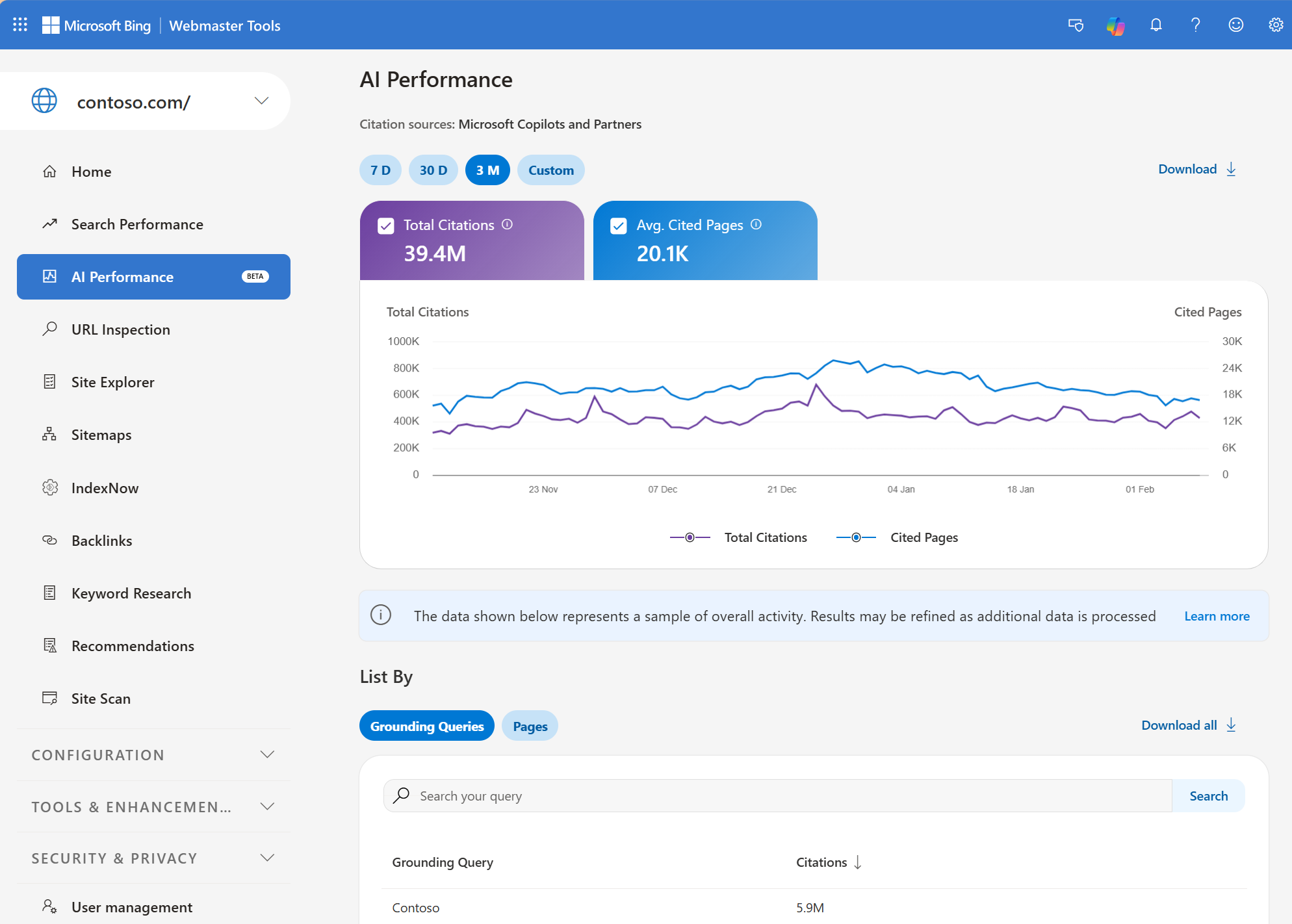
The AI Performance dashboard offers a comprehensive view of citation activity across various AI platforms. It includes a total citation metric that tracks how many times a site’s content is referenced in AI-generated answers within a specific time frame. Microsoft clarifies that this metric does not reflect the location of the citation within an answer or its visibility.
Additionally, the report features average cited pages, which quantify the average number of unique pages from a site that are referenced as sources in AI-generated answers per day over the chosen time period. Microsoft emphasizes that this data is aggregated and does not indicate page ranking, authority, or significance in specific answers.
Another section highlights grounding queries, defined by Microsoft as the phrases utilized by the AI to retrieve content that was later cited. This information represents a sample of overall citation activity.
On the individual page level, the report provides citation counts for specific URLs, showing how frequently certain pages are referenced in AI-generated answers during the selected date range. Microsoft notes that this reflects the frequency of citation rather than the importance or ranking of the page. A timeline view illustrates how citation activity varies over time across supported AI experiences.
Utilizing the Data Effectively
According to Microsoft, publishers and site owners can examine cited pages and grounding queries to discern which aspects of their sites are being referenced in AI-generated answers. This analysis can validate which pages are being sourced and identify topics or pages that are frequently cited.
Moreover, site owners can leverage this data to discover indexed pages that receive less frequent citations. This could signal areas where enhancements to content clarity, structure, or completeness may be necessary.
Overall, this new AI Performance report offers valuable insights for website publishers, empowering them to optimize their content for AI-generated environments.