
Nuts: Nutritional Powerhouses with Remarkable Health Benefits
Nuts, once regarded primarily as festive treats often associated with high caloric content, are now recognized for their substantial health advantages when chosen and consumed appropriately. This article explores the benefits of various nuts, emphasizing their unique properties and contributions to overall wellness.
Nutritionist Mariana Urbach, who leads the Clinical Nutrition Unit at Clalit Health Services in the Dan–Petach Tikva district, clarifies the distinctions among walnuts, almonds, hazelnuts, pecans, macadamias, and Brazil nuts, highlighting how each can enhance health.

Before exploring the specifics of each nut, Urbach offers several universal guidelines applicable to all.
“Enjoying nuts healthily requires both variety and moderation,” she states. “The general recommendation is about 50 grams a day, which can be increased to 100 grams, but keep in mind that translates to approximately 700 calories. Since nuts are high in fat, they should substitute other fat sources in the diet rather than be added to them.”
Her practical advice is straightforward: purchase a variety of nuts, combine them in a container, and relish the benefits they collectively provide. “This way, you are not ‘putting all your eggs in one basket’ nutritionally.”
Storage is equally crucial. “Due to their high fat content, nuts are highly susceptible to heat, especially in Israel’s climate. Keep them in the refrigerator and away from light. While light home roasting may help preserve freshness, it could diminish some antioxidants.”
Walnuts, often referred to as California walnuts, rank among the most popular nuts both in Israel and globally. With 59 known varieties, these trees can yield fruit for up to a century, originating from a region spanning southwest China to the Balkans.
Historical studies indicate that the Greeks began systematically cultivating walnuts following Alexander the Great’s campaigns in India and Persia. In Israel, walnuts are mentioned as early as biblical times and are frequently noted in rabbinic literature.
In classical and medieval medicine, walnuts were recognized as a therapeutic food for treating poisonings, stings, bites, intestinal worms, and internal inflammation. Their validated health benefits have secured their position as a highly esteemed health food today.
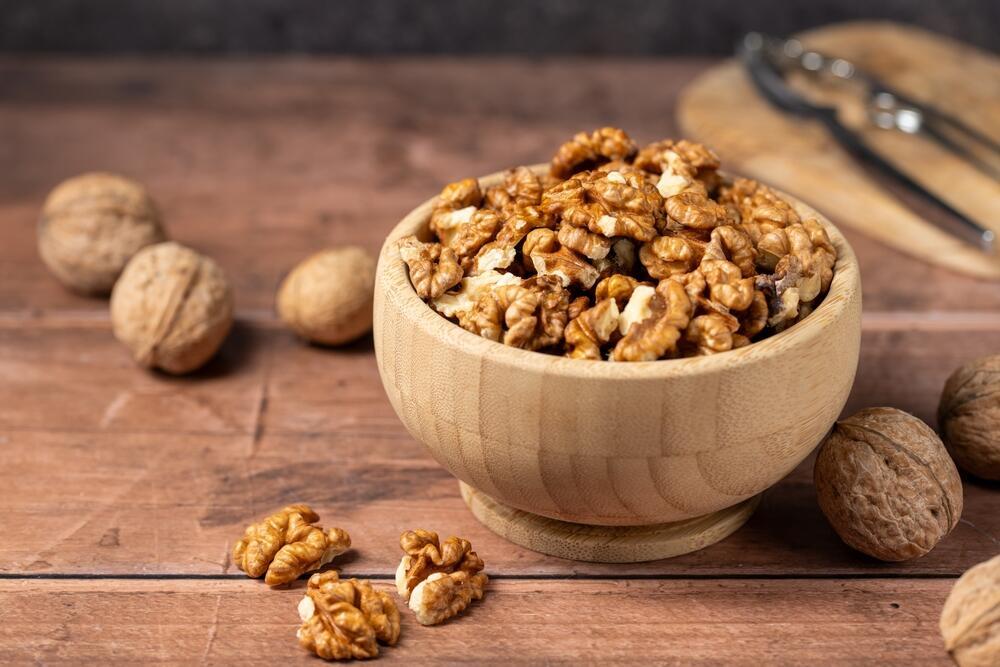
Expert insight: “Walnuts are the only nut officially recognized by the FDA as a food with proven health benefits,” Urbach comments. “Regular, moderate consumption has been shown to reduce LDL cholesterol, thus lowering the risk of cardiovascular disease.”
A significant study conducted by Harvard University in 2021, part of the Nurses’ Health Study, revealed that consuming walnuts at least five times a week led to a 14% reduction in heart disease risk. Further evidence points to benefits for bone health and cognitive function.
What sets walnuts apart nutritionally? Walnuts are rich in high-quality plant oils akin to olive oil, avocado, and tahini. Most of their fats are unsaturated, with significant amounts of alpha-linolenic acid (ALA), a plant-based omega-3 fatty acid. However, Urbach emphasizes that plant-derived omega-3 differs from that found in fish, so walnuts aren’t a substitute for fish consumption.
Additionally, walnuts are a source of dietary fiber, complex carbohydrates, and modest levels of plant protein, which isn’t a complete protein. They should not be relied upon as a primary protein source. They are rich in minerals, including copper, magnesium, phosphorus, manganese, and iron, and also provide ample vitamin B6. Their antioxidant content, primarily comprised of phytosterols and polyphenols, is nearly double that of many other nuts.
Buying tips: Opt for walnuts that appear light and fresh, avoiding those that are dark or shriveled. They should possess a mild flavor without bitterness or off-putting smells. If they smell rancid, discard them.
Almonds are recognized as one of humanity’s oldest and most familiar foods, having been among the first fruit trees cultivated around 10,000 years ago. Archaeological findings indicate that Numeira in modern-day Jordan served as an early site for almond cultivation roughly 5,000 years ago.
Almonds have been revered throughout history. They were discovered in the tomb of Tutankhamun (circa 1325 BC), served at Sumerian feasts, and appear in Biblical accounts as gifts from Jacob’s sons to Pharaoh. Ancient physicians like Hippocrates and Galen extensively documented their medicinal properties.
In folk medicine, almonds were used for treating stomach ailments, lung diseases, and respiratory issues, as well as enhancing libido. Traditional Chinese medicine regards almonds as beneficial for improving qi, calming the lungs, and aiding digestion.
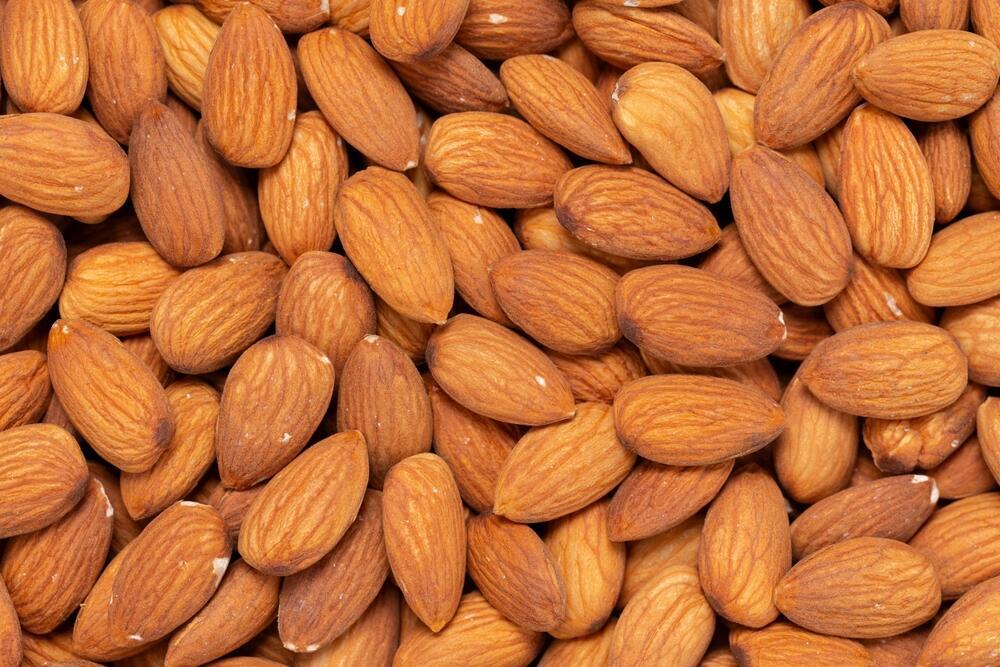
Expert insight: “Almonds are closely tied to Tu B’shvat; however, we often consume them long after harvest, making freshness exceedingly important,” Urbach notes. “Quality almonds should appear bright and intact, not shriveled or excessively dry.”
Botanically, almonds are not true nuts but instead the seeds of the almond tree’s stone fruit. They are slightly lower in calories than walnuts, offering about 550 to 570 calories per 100 grams, and are higher in fiber.
“Research indicates that consuming about 50 grams of almonds daily, which amounts to roughly 30 to 35 almonds, can aid in lowering blood pressure, reducing cholesterol levels, and decreasing the risk of diabetes.”
Almonds are abundant in complex carbohydrates (almost 20%), protein (around 20%), and healthy fatty acids (approximately 52%). While they contain both omega-3 and omega-6 fatty acids, they are particularly rich in monounsaturated fatty acids (MUFA), such as oleic acid, akin to olive oil. This quality makes almonds especially beneficial for the cardiovascular system and improving blood lipid profiles.
Varieties grown in Israel are particularly noted for their heart-healthy fat content. Furthermore, almonds are rich in B vitamins and antioxidants, primarily polyphenols, which are recognized for their role in mitigating inflammation and slowing aging processes.
How should almonds be consumed? Soaking almonds in water makes peeling their thin skin easier. After soaking and peeling, store them in the refrigerator.
Are roasted almonds advisable? Light roasting is permissible, although it may slightly diminish antioxidants. However, roasting doesn’t affect the vitamins or minerals, so almonds can be lightly roasted if preferred. Because they are very dry and concentrated, it is advised to drink water before and after consuming them.
Hazelnuts, primarily known for their inclusion in chocolate spreads and desserts, boast a fascinating history. They are the edible fruits of shrubs from the Corylus genus and are not classified as true nuts in botanical terms. These nuts thrive in regions with cold winters, growing predominantly in areas like Turkey, the U.S., Spain, Italy, France, China, and Australia.
Historically, hazelnuts were attributed with various medicinal qualities, including remedies for stomach discomfort and coughs, as well as enhancement of memory and even hair growth. During the Middle Ages, they were utilized for detoxification, promoting intestinal health, addressing urinary issues, and memory improvement.
Hazelnuts were also used for treating epilepsy, open wounds, and facial spasms. In modern folk medicine, they are still employed to address intestinal disorders, lower blood cholesterol, prevent bleeding, enhance vision and memory, and even to promote breastfeeding and fertility.

Expert insight: “Hazelnuts hail from the Caucasus and Anatolia, which imparts a distinctive nutritional profile,” Urbach elucidates. “They are particularly high in omega-3 fatty acids, with around 78% of their fat content being polyunsaturated.”
Additionally, they are abundant in B vitamins, which support functions of the nervous system, enhance concentration, facilitate wound healing, and bolster immune health. Shelled hazelnuts are more convenient to handle when stored properly.
Brazil nuts originate from the tropical rainforests of South America and are the seeds of remarkable trees in the Amazon rainforest, which can live for over 500 years. Despite their name, they do not qualify as true nuts in botanical terms.
These nuts received their scientific name in honor of Claude Louis Berthollet, an esteemed 18th-century French chemist. Recently, Brazil nuts have gained popularity for their exceptional nutritional profile.
Expert insight: “Brazil nuts have a relatively high protein content compared to other nuts. They contain between 60% and 66% fat, but their standout feature is their exceptional richness in essential minerals, including calcium, iron, magnesium, zinc, phosphorus, and particularly selenium. They represent the richest plant-based source of selenium, a vital mineral often lacking in many diets.”
Urbach emphasizes that selenium is essential for human health, boosting the immune system and playing a crucial role in maintaining cell membrane integrity. “It is vital for a balanced diet, which has consequently led to the rising popularity of Brazil nuts.”
What is the optimal way to consume Brazil nuts? Brazil nuts are typically available in their natural, unroasted form. Ensure they are fresh and of high quality, appearing white beneath the brown shell. A yellowish hue or oily texture suggests spoilage and should be avoided,” she advises.
Urbach also recommends moderation: “Limit your consumption to just one or two Brazil nuts daily.”
Native to southeastern North America, particularly in the southern U.S., pecans are now also cultivated in Israel, where they flourish in agricultural fields and private gardens. Israel has emerged as one of the leading pecan-producing countries outside the U.S, alongside nations like Australia, Brazil, Mexico, Peru, and South Africa.

Pecans are renowned for their sweet flavor and play a key role in many desserts and baked goods, notably the classic pecan pie associated with the southern U.S. Each year, the U.S. produces between 80% and 95% of the world’s supply of pecans, yielding approximately 150,000 to 200,000 tons from around 10 million trees.

Expert insight: “Pecans thrive in Israel,” Urbach mentions. “While their origins lie in South and Central America, they have adapted remarkably well here and yield impressive harvests.”
About 70% of a pecan’s weight consists of fat, primarily polyunsaturated fatty acids beneficial for heart health and circulation. Studies have also investigated their ability to lower blood pressure and reduce LDL cholesterol levels.
Pecans are also noteworthy for their calcium content, along with other minerals and antioxidants, such as phytosterols and polyphenols. They also contain protein and B vitamins necessary for bodily functions and have even been researched for potential muscle-strengthening abilities.
Urbach advises selecting fresh, natural pecans over those that are sugared or heavily salted. They are harvested in late fall, and their shells allow easy cracking by pressing two nuts together. For prolonged freshness, store them in their shells whenever possible.
Macadamias are regarded as one of the most luxurious nuts, celebrated for their rich flavor and nutritional benefits. Native to eastern Australia and Indonesia, they were first introduced to Israel roughly 50 years ago and recently became a commercially viable crop.
Their shells are among the toughest in nature, requiring approximately 21 kilograms of force per square centimeter to crack.
Nutritionally, macadamias contain between 60% and 80% high-quality fat and are packed with essential minerals and vitamins. Macadamia oil is particularly valued in cosmetics for its high palmitoleic acid content, an omega-7 fatty acid, and its resistance to oxidation.

Expert insight: “Macadamia nuts are incredibly delicate,” Urbach cautions. “Look for those that are white, not yellow, and always check their smell before eating.”
High in fat content, macadamias provide around 720 calories per 100 grams due to their approximately 73% fat composition. This fat primarily consists of polyunsaturated fatty acids. Additionally, macadamias contain dietary fiber and other nutrients beneficial for the nervous system, offering significant digestive support.
Regarding vitamins and minerals, macadamias stand out for their calcium content. Overall, they are considered the most delicate of all the nuts discussed here.
Due to their susceptibility to spoilage, macadamias require careful storage, Urbach adds. They should only be consumed when fresh, as the risks involved in eating spoiled nuts outweigh the benefits of consumption. “If in doubt, avoid eating them.”