Exploring AI in Education: A New Approach at Willamette University
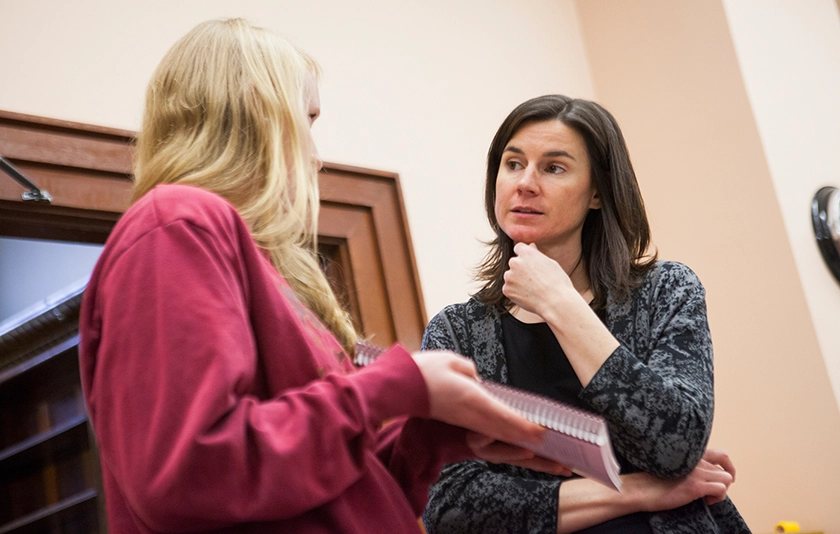
At Willamette University, Associate Professor Brandi Row Lazzarini BA’96 has embraced artificial intelligence as both a mentor and a learner. In 2023, as ChatGPT began to gain significant attention, she utilized AI tools to enhance her computer programming skills for biomechanical data analysis. This experience ignited her curiosity about how AI can reshape the educational landscape for her students.
“I observed the benefits AI offers in learning, but I was equally aware of the potential drawbacks,” Row Lazzarini explains. “This led me to explore various perspectives on the subject.”
This thoughtful approach is reflected in how she guides her students in integrating AI technologies into their academic work. In her courses, students learn essential self-awareness and critical thinking skills to leverage AI responsibly. They apply these insights to significant projects relevant to their interests—ranging from helping future physical therapists create patient education materials to assisting first-year students in navigating their career paths with AI.
A Methodical Approach to Learning
Last fall, Row Lazzarini taught a first-year colloquium titled “Generative AI and the Learning Experience,” where students delved into the science of learning to comprehend how AI might influence educational practices. They adopted a systematic method to develop analytical essays focusing on learning-related concepts.

Instead of using AI as a shortcut, Row Lazzarini encouraged her students to incorporate AI thoughtfully into their writing processes. For instance, they utilized AI to conduct broad surveys of academic literature, helping them determine which sources warranted a deeper examination.
Afterward, students engaged in peer reviews and refined their arguments manually. By the time they reviewed their drafts with AI, many were surprised to discover that the AI’s input was no longer pertinent; their immersion in the material had propelled them beyond the tool’s capabilities.
Students found the course’s exploration of AI to be deeply impactful.
“It’s impossible to ignore the ever-evolving landscape of artificial intelligence, making courses like this AI colloquium essential,” noted Sonali DeSilva-Craycroft BA’29, a participant in Row Lazzarini’s class.
A Learning Laboratory at Willamette
Willamette University serves as an ideal environment for Row Lazzarini, enabling students to harness AI in ways that enrich their educational experiences. As both an alumna and professor, she personally understands the value of the university’s small, hands-on classes in maximizing student learning.
“A high-touch environment ensures that students develop proficiency as individuals, rather than relying solely on machines,” Row Lazzarini emphasizes.
She argues that students thrive and are less inclined to depend on AI shortcuts when tasked with projects that resonate with them. Aligning with Willamette’s mission to transform knowledge into action, she encourages her students to apply their learning and articulate how their projects can create meaningful impacts.
“At Willamette, we provide students with the freedom and intellectual space to explore topics and projects that hold personal significance,” Row Lazzarini explains.
Her colloquium concluded with collaborative projects investigating the real-world ramifications of AI. Students selected topics of personal interest related to AI. For instance, one group analyzed the potential challenges faced by commercial artists, while another designed a website aimed at educating college students about the risks associated with AI therapy tools. Others delved into how AI would influence their job searches and business operations.
“The group project was the highlight for me,” remarked Major LeProwse BA’29. “Our focus was on how artificial intelligence is transforming business practices. We crafted a proposal and created a website to showcase our research.”
The group’s website presented an in-depth examination of AI’s effects on business, featuring a career table that assessed the automation risks across various professions—an exemplary illustration of students thoughtfully utilizing AI tools to reflect on their futures.
Conclusion
Through innovative approaches and meaningful projects, Willamette University’s exercise and health science program exemplifies how AI can be embraced as a powerful educational tool rather than a crutch. By fostering critical thinking and personal relevance in coursework, students are not only prepared for the future but also equipped to navigate the complexities of an AI-influenced world.