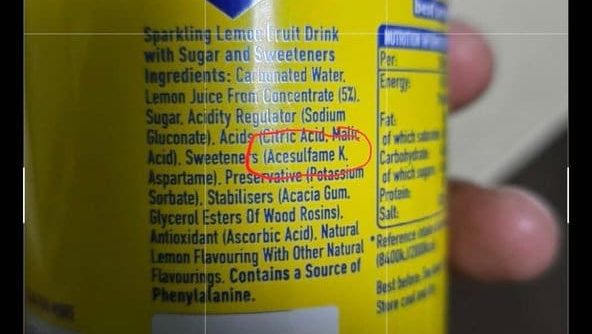
KENYA – The Kenya Bureau of Standards (KEBS) has rejected claims that sugar-free soft drinks available in Kenya contain undisclosed sulphur-based sweeteners. The agency clarified that all approved additives adhere to international safety standards and local labeling regulations.
This clarification comes in response to allegations made by the Consumer Federation of Kenya (COFEK), which stated that certain sugar-free beverages include sulphur-based sweeteners like Acesulfame-K without appropriate consumer warnings.
COFEK raised concerns regarding ingredient transparency and potential health implications for consumers.
“Why are ‘sugar-free’ drinks sneaking these additives into tiny, unreadable ingredient lists with zero allergy warnings, yet wine makers clearly warn consumers? Who is protecting consumers here?” COFEK stated in a post on its social media channels.
In response, KEBS characterized these claims as misleading and not representative of current regulatory standards.
The standards agency explained that manufacturers are required to declare sulphur-containing ingredients only when their concentration exceeds 10mg per kilogram, a limit established by the World Health Organization (WHO) and the Food and Agriculture Organization (FAO).
“The Kenya Standards have a threshold of 10mg/kg as set by the WHO/FAO expert committee on allergies & chemical reactions, beyond which any product containing a sulphur-containing ingredient must declare it,” KEBS added. “It is not true that there are ingredients being sneaked.”
KEBS emphasized that this threshold is intended to protect consumers from allergic reactions and other adverse effects associated with sulphur-based compounds. The agency also highlighted that every food additive utilized in soft drinks undergoes a stringent evaluation process before it is authorized for use in the country.
According to KEBS, soft drink manufacturers must list all added ingredients on their product labels in accordance with Kenyan standards and food safety regulations. The agency noted that compliance checks and product testing are regularly conducted to ensure consumer safety.
This debate arises amidst increasing scrutiny of the soft drinks sector, as the government considers implementing stronger regulatory measures to address the growing prevalence of diet-related non-communicable diseases, such as diabetes and obesity.
Last year, Nandi Hills Member of Parliament Bernard Kitur proposed a Health Promotion Levy on sugary beverages, suggesting that this tax would incentivize manufacturers to lower sugar content while also generating funds for public health initiatives.
“To mitigate this public health crisis, we propose the introduction of the Health Promotion Levy in the soft drinks industry. This levy aims to reduce sugar consumption, encourage healthier product reformulation, and generate revenue to support public health programmes,” he concluded.
KEBS affirmed its commitment to collaborating with stakeholders in order to ensure consumer protection while synchronizing local standards with global food safety guidelines.
Key Takeaways
- KEBS denies claims of undisclosed sulphur-based sweeteners in sugar-free soft drinks.
- Ingredient declares are required only when sulphur levels exceed 10mg/kg.
- KEBS emphasizes rigorous evaluation of all food additives before approval.
- Soft drink manufacturers must comply with local labeling regulations.
- The Kenyan government is considering stronger regulations related to non-communicable diseases.
FAQ
What is the role of KEBS?
KEBS oversees the standards and regulations for food safety in Kenya, ensuring compliance by manufacturers.
What are sulphur-based sweeteners?
These are artificial sweeteners that contain sulphur compounds, often used to provide sweetness without sugar.
Why is transparency in labeling important?
Transparency helps consumers make informed choices and reduces potential health risks associated with undisclosed ingredients.
What is the Health Promotion Levy?
This proposed tax aims to reduce sugar consumption in beverages and generate funding for public health programs.
Sign up HERE to receive our email newsletters with the latest news and insights from Africa and around the world, and follow us on our WhatsApp channel for updates.