Coca-Cola has recently announced its financial results for 2025, showcasing significant strides in organic revenue growth. The company’s success was primarily driven by a remarkable increase in Coca-Cola Zero Sugar volumes, although challenges with its BodyArmor trademark affected profitability in the fourth quarter. As Coca-Cola navigates these changes, it projects steady growth for the upcoming year.
Coca-Cola has reported full-year 2025 organic revenue growth of 5% to US$47.9 billion, led by a 14% surge in Coca-Cola Zero Sugar volumes, but a US$960 million impairment on its BodyArmor trademark dragged Q4 operating income down 32%. The release of the results sent shares falling approximately 3% in pre-market trading.
The beverage giant’s Q4 net revenues of US$11.8 billion missed analyst expectations, as its water, sports, coffee, and tea divisions outperformed the wider portfolio. Coca-Cola is projecting organic revenue growth of 4–5% for 2026 amid a leadership transition, with CEO-elect Henrique Braun set to succeed chairman and CEO James Quincey.
Zero sugar, maximum growth
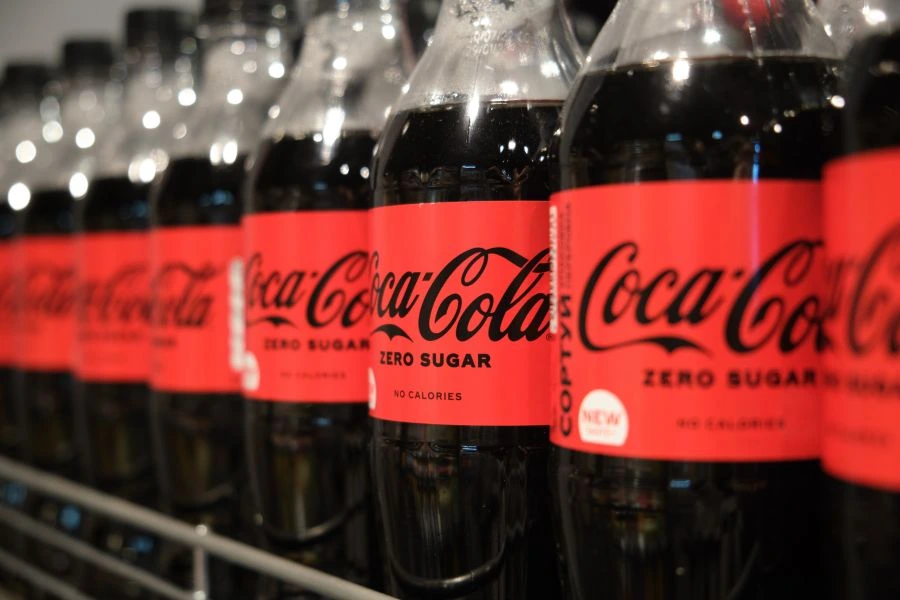
Coca-Cola Zero Sugar grew 13% in Q4 and 14% for the full year, with volume gains across every geographic segment — far outpacing Trademark Coca-Cola, which grew just 1% in Q4 and was flat for the year.
The performance underscores a consumer pivot toward reduced-sugar beverages, a trend Innova Market Insights has flagged as a defining force in product development, with nearly 72% of consumers actively reducing sugar in their diets between 2020 and 2025. Health demands are spurring innovation in sweeteners.
“I’m encouraged by our performance in 2025, which showed both the resilience and momentum that define our business,” Quincey says in the earnings release. “Looking ahead, we will focus on executing our strategy even better and positioning our system for long-term success.”
BodyArmor burden deepens
The US$960 million non-cash impairment on the BodyArmor trademark pushed North American operating income down 65%. It follows a US$760 million write-down in Q3 2024, compounding losses on a brand Coca-Cola acquired full ownership of in 2021 for US$5.6 billion.
The charge contrasts with Powerade’s resurgence — the rival sports drink posted 5% volume growth in Q4, buoyed by activations at FIFA World Cup qualifiers and MLS soccer events. Functional hydration remains one of the fastest-growing beverage segments, with ingredient suppliers racing to develop hybrid hydration concepts. BodyArmor’s struggles appear brand-specific rather than category-driven.
Diversification beyond carbonates
Coca-Cola’s water, sports, coffee, and tea division posted volume growth of 3% in Q4, with water up 4% and tea up 5%. Fairlife, the value-added dairy brand, also contributed to growth.
The segment’s strength aligns with broader industry dynamics, where suppliers are investing in functional beverage applications across hydration, energy, gut health, and sugar reduction. Innovation at Fi Europe 2025 highlighted how formulators are balancing taste and regulation in reformulation.
Latin America leads, Asia-Pacific lags
Latin America delivered the strongest organic revenue growth at 10% in Q4, with value share gains in Argentina and Brazil. North America showed signs of recovery with 1% volume growth after a full-year decline. Europe, Middle East and Africa posted 6% organic revenue growth, while Asia-Pacific was flat, hurt by an 8% currency headwind.
Coca-Cola expects comparable EPS growth of 7–8% for 2026 and approximately US$12.2 billion in free cash flow. The company has created a new chief digital officer role and restructured its geographic leadership ahead of the transition to Braun.
Key Takeaways
- Coca-Cola reported organic revenue growth of 5% for 2025.
- Coca-Cola Zero Sugar experienced a notable volume growth of 14%.
- The BodyArmor trademark suffered a US$960 million impairment in Q4.
- Water and tea divisions posted strong growth, with volumes increasing 4% and 5%, respectively.
- Latin America showed the highest organic revenue growth at 10% in Q4.
- New strategies are being implemented as leadership transitions occur.
FAQ
What drove Coca-Cola’s revenue growth in 2025?
Coca-Cola’s growth was largely fueled by a significant increase in Coca-Cola Zero Sugar volumes.
How did BodyArmor affect Coca-Cola’s finances?
The BodyArmor brand incurred a US$960 million impairment, which significantly impacted Q4 operating income.
Which divisions showed the strongest performance?
The water, sports, coffee, and tea divisions outperformed the overall company portfolio, contributing to robust volume growth.
What is Coca-Cola’s growth forecast for 2026?
The company projects organic revenue growth of 4–5% for 2026.
How are new leadership changes affecting Coca-Cola’s strategy?
Coca-Cola is restructuring its leadership as it transitions to new CEO Henrique Braun, focusing on strategic execution for long-term success.
In summary, Coca-Cola’s financial results for 2025 illustrate both impressive growth in key segments and challenges with specific brands. As the company looks forward to 2026, it remains committed to adapting its strategy to meet evolving consumer preferences and market dynamics.