Introduction
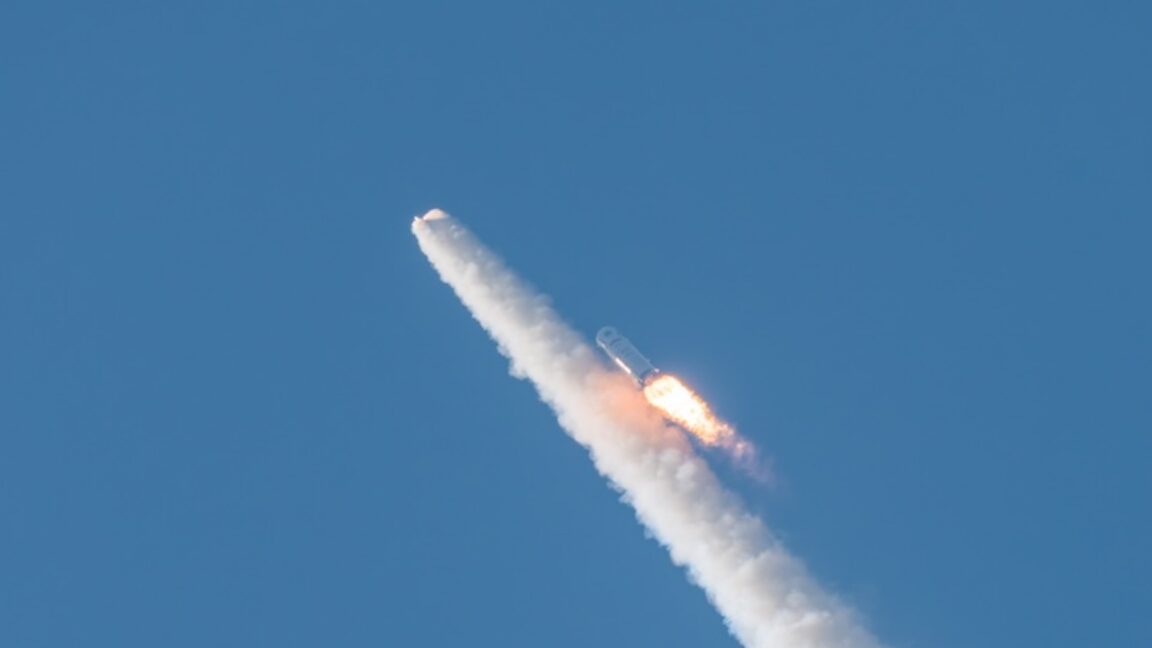
China’s space ambitions are reaching new heights with the launch of the Mengzhou spacecraft, aptly named “dream vessel” in Chinese. Scheduled for its inaugural orbital test flight, this mission promises to enhance China’s capabilities in space exploration by docking with the Tiangong space station.
Credit:
Liu Yang/VCG via Getty Images
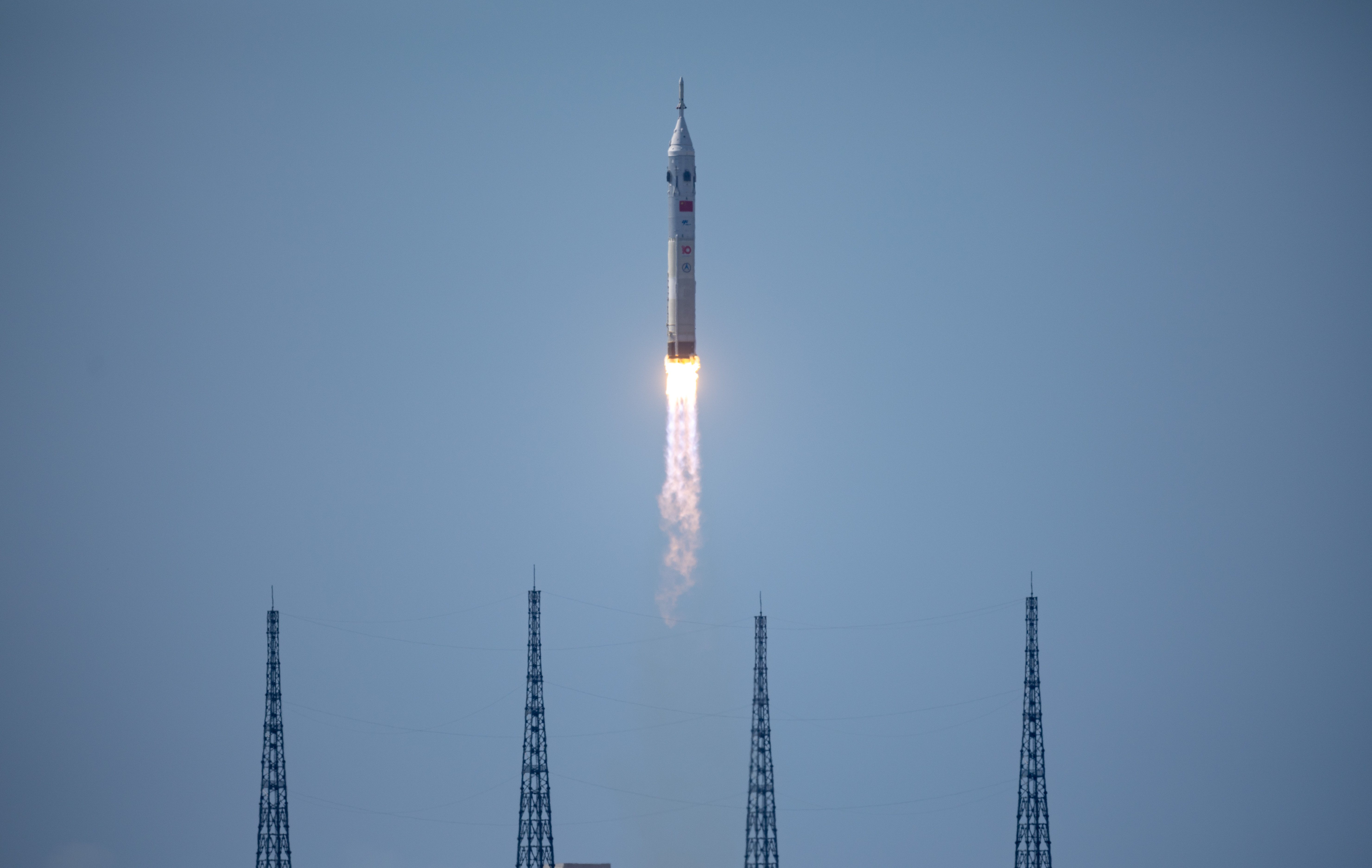
A Chinese Long March 10 booster, powered by seven kerosene-fueled YF-100K engines, lifts off from the Wenchang Space Launch Site on Hainan Island on February 11, 2026 (local time).
Credit:
Liu Yang/VCG via Getty Images
Mengzhou, translating to “dream vessel,” is set to make its debut orbital flight later this year. This mission will see the spacecraft launched aboard a Long March 10A rocket, designed for low-Earth orbit operations, and is expected to dock with China’s Tiangong space station. The Long March 10A features a reusable first-stage booster paired with an upper stage, making it a cutting-edge option for space missions. Meanwhile, the full-sized Long March 10 rocket boasts 21 engines across three boosters, capable of delivering payloads weighing up to 70 metric tons into low-Earth orbit and transporting the 26-metric-ton Mengzhou spacecraft toward the Moon.
China Aerospace and Science Technology Corporation (CASC), the country’s leading state-owned space contractor, announced that the successful recovery of the Long March 10 booster following an in-flight abort test has paved the way for “subsequent full-profile flight tests.” This marks a vital step in China’s quest to perfect reusable rocket technology.
According to CASC, the flight test was instrumental in assessing several essential technologies. These include the reliability of multiple engine restarts and high-altitude ignition during the rocket’s reentry, as well as its adaptability to complex forces and thermal environments, alongside high-precision navigation control during reentry.
CASC manages a large industry involving various manufacturers responsible for designing and building both the Mengzhou spacecraft and the Long March 10 rocket.

Credit:
China Manned Space Agency
The Mengzhou capsule splashes down in the South China Sea after the in-flight abort test.
Credit:
China Manned Space Agency
The successful recovery of the Long March 10 booster continues China’s ambitious push towards reusable rocket technology. Currently, around 10 Chinese companies are developing reusable rocket systems, aiming to replicate the success of SpaceX’s reusable rocket program in the United States.
In December, two Chinese launch providers introduced new rockets—the Zhuque-3 and Long March 12A—that feature recoverable and reusable boosters. While these rockets successfully reached orbit, their boosters were unable to land accurately.
Additionally, several other Chinese firms have conducted high-altitude “hop tests” to evaluate vertical takeoff and landing technologies as they prepare for their initial orbital launches.
These advancements in China’s reusable rocket and lunar exploration initiatives come as NASA gears up to send four astronauts on a mission around the far side of the Moon next month. Although a US-designed lunar lander is expected to take a few more years to be operational for transporting crews to the lunar surface, the landscape of space exploration is evolving rapidly.
Key Takeaways
- The Mengzhou spacecraft will launch on a Long March 10A rocket, aiming to dock with Tiangong space station.
- Long March 10 can carry payloads up to 70 metric tons into low-Earth orbit.
- China’s aerospace industry is actively pursuing reusable rocket technology, with over 10 companies involved.
- The successful in-flight tests mark significant progress for China’s space missions.
- NASA is preparing for a crewed lunar mission, highlighting the competitive landscape in space exploration.
FAQ
What is the Mengzhou spacecraft’s mission?
It is preparing for its first orbital test flight and aims to dock with China’s Tiangong space station.
What is the significance of the Long March 10 rocket?
It can transport large payloads into low-Earth orbit and is part of China’s efforts to enhance its space capabilities.
How does China’s reusable rocket development compare to the US?
China has over 10 companies developing reusable rockets, aiming to match the progress of SpaceX in the United States.
What are high-altitude “hop tests”?
These tests evaluate vertical takeoff and landing technologies as companies prepare for their first orbital flights.
What is NASA’s upcoming lunar mission?
Nasa plans to send astronauts around the far side of the Moon, though a crewed lunar lander is still in development.
As China’s space initiatives progress rapidly, the international space landscape continues to evolve. The successful testing of reusable rockets and lunar missions is shaping what the next era of exploration might hold.