
When Juliana Miura purchases bottled coffee drinks, she seldom gives the receipt a second thought. “Every time I fill my gas, I buy one,” she remarked with a laugh outside a Renton ampm convenience store.
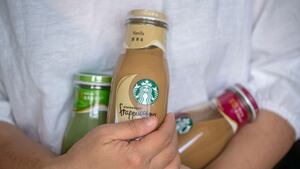
However, a KIRO 7 investigation has uncovered that the sales tax on popular bottled coffee drinks, such as Starbucks Frappuccinos, may be incorrectly applied depending on where they are purchased.
This issue has been identified at convenience stores across Washington, from the North to the South Sound. While some establishments correctly charged zero tax on bottled or canned coffee drinks, others added approximately 50 cents in tax for the very same products.
The Washington State Department of Revenue confirmed to KIRO 7 that these tax charges are erroneous.
This issue was initially brought to light by Action 9, a KIRO 7 sister station in Orlando. This inspired KIRO 7 to verify if similar discrepancies existed in Washington State.
The team conducted random checks at four convenience stores in Seattle, Bellevue, Renton, and Auburn, noting the prices for the exact same bottled coffee drink.
Two stores charged sales tax while two did not. At one Chevron location in Bellevue, the tax added 45 cents to the cost. Conversely, just a few miles away, the identical drink was exempt from tax.
“That’s pretty wild,” commented Jose Perez Peralta of Renton. “I don’t think we should be paying extra.”
To ascertain the validity of the tax issue, KIRO 7 took the receipts to the Washington State Department of Revenue.
“Beverages containing milk are going to be exempt from sales tax,” explained Quinn Dickason, education coordinator in the Taxpayer Services Division with the Washington Department of Revenue.
After reviewing several receipts, Dickason confirmed that the tax charge was incorrect.
“I would say that’s incorrect,” she noted.
The reasoning is straightforward: In Washington State, grocery food is not taxed. While soft drinks such as soda incur taxes, beverages with at least 50% juice or any milk are exempt.
Thus, bottled coffee drinks containing milk should not be subject to sales tax.
For many customers experiencing financial strain, even minor amounts can accumulate quickly.
“Everything’s super expensive,” remarked Fabricio Miura, a regular ampm customer. “Even if it’s only 50 cents, we shouldn’t be paying that.”
To investigate the extent of the issue, KIRO 7 visited additional stores and quickly observed a troubling trend.
Every ampm convenience store visited in Everett, Renton, Auburn, Tacoma, and Lacey imposed sales tax on the same bottled coffee drinks.
A store manager in Auburn indicated that the sales tax policy is dictated by corporate standards.
As reported by data company ScrapeHero, there are 127 ampm locations across Washington state. With an estimated 50 cents in tax per drink, the total repercussions could lead to a substantial amount of incorrectly paid tax across the state.
“We pay without knowing,” Fabricio Miura added. “We didn’t check the receipts.”
His wife, Juliana Miura, stated that she purchases the drinks weekly.
At this frequency, customers could potentially pay around $25 a year in sales tax on drinks that should be exempt.
KIRO 7 made several attempts to reach out to ampm corporate through calls, emails, social media messages, and consumer complaints. After about two weeks, the parent company of ampm, BP, finally provided a response.
“Thank you for bringing this to our attention. We take compliance with local, state, and federal laws very seriously and are reviewing the issue,” stated Paul Takahashi, Head of U.S. Media Affairs with BP.
Regarding regulatory oversight, the Department of Revenue mentioned that it does not routinely audit businesses specifically for food tax accuracy, but would examine tax practices if a store was selected for broader auditing.
Despite KIRO 7’s findings, the department claimed that cases like this are infrequent.
“I think you got lucky,” Dickason remarked. “Generally, people get it right… I don’t think it’s any malicious intent at all. I think it is just a human error,” she added.
Some customers, however, remain doubtful.
“I think it’s a little naive to think it’s a mistake,” Miura expressed. “But hopefully, it’s a mistake.”
Regarding refunds, the Department of Revenue advises that customers should first speak to the store directly. If that approach fails, customers can request a refund through the department’s website—but a receipt will be required.
KIRO 7 remains in contact with ampm to ensure the situation is rectified and will provide updates on any changes to the sales tax system.
Key Takeaways
- Some convenience stores in Washington are incorrectly charging sales tax on bottled coffee drinks containing milk.
- The Washington State Department of Revenue confirms that such drinks should be exempt from sales tax.
- Customers could be unknowingly paying around $25 a year in incorrect sales tax.
- Every ampm visited by KIRO 7 charged sales tax on these drinks despite the exemption.
- Customers are encouraged to check their receipts and inquire about potential refunds.
FAQ
What beverages are exempt from sales tax in Washington State?
Beverages that contain at least 50% juice or any milk are generally exempt from sales tax.
Can customers get a refund for incorrectly charged sales tax?
Yes, customers can request a refund through the store or the Washington State Department of Revenue, but a receipt is necessary.
What should I do if I notice a tax discrepancy on my receipt?
It’s advisable to first discuss the issue with the store directly. If unresolved, seek a refund through the proper channels.