Celebrating Community Health: An Award for Fitness with Rachel
In our ever-evolving pursuit of wellness, local initiatives play a significant role in fostering a sense of community and supporting individual growth. One such initiative is the Business Recognition Program in Goleta, which recently celebrated a standout local fitness entrepreneur, Rachel McDonald, owner of Fitness with Rachel. This program honors businesses that make remarkable contributions to their communities, and Rachel’s dedication to improving the health of residents—especially seniors—is commendable.
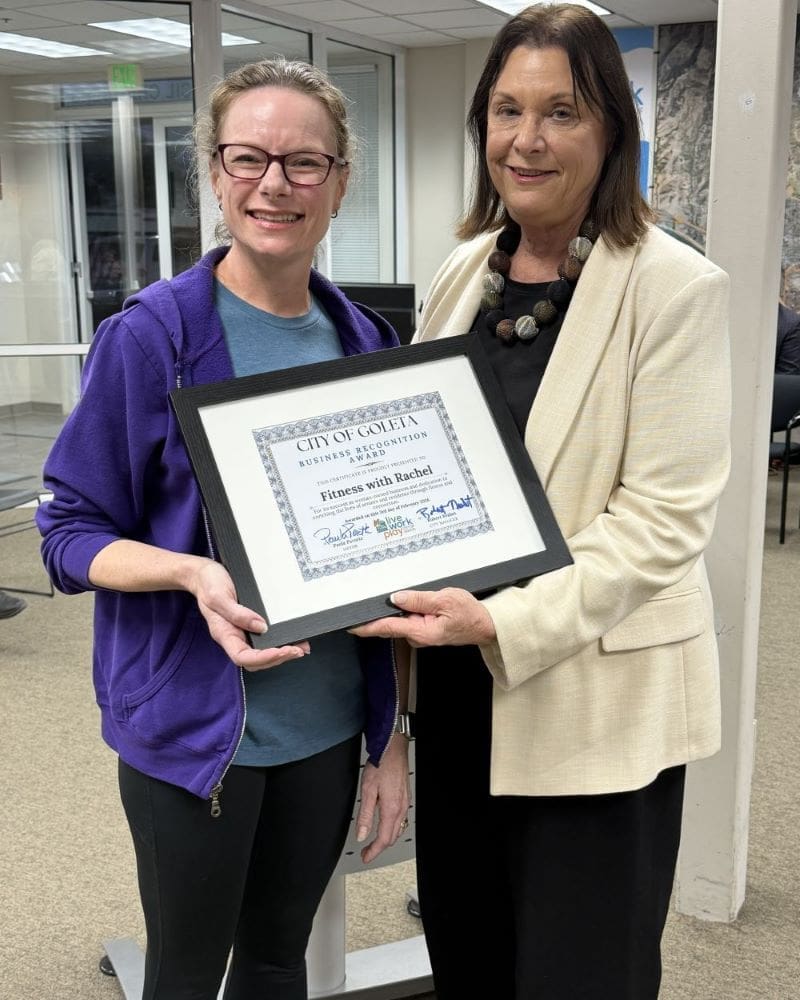
Rachel accepting the Certificate from Mayor Perotte
During the February 3 City Council meeting, Mayor Paula Perotte presented Rachel with an award certificate in recognition of her achievements. “Fitness with Rachel exemplifies the spirit of Goleta—innovative, caring, and committed to community health. We are proud to honor Rachel’s work and the positive impact she has on our residents,” said Mayor Perotte, highlighting the importance of community-centered businesses.
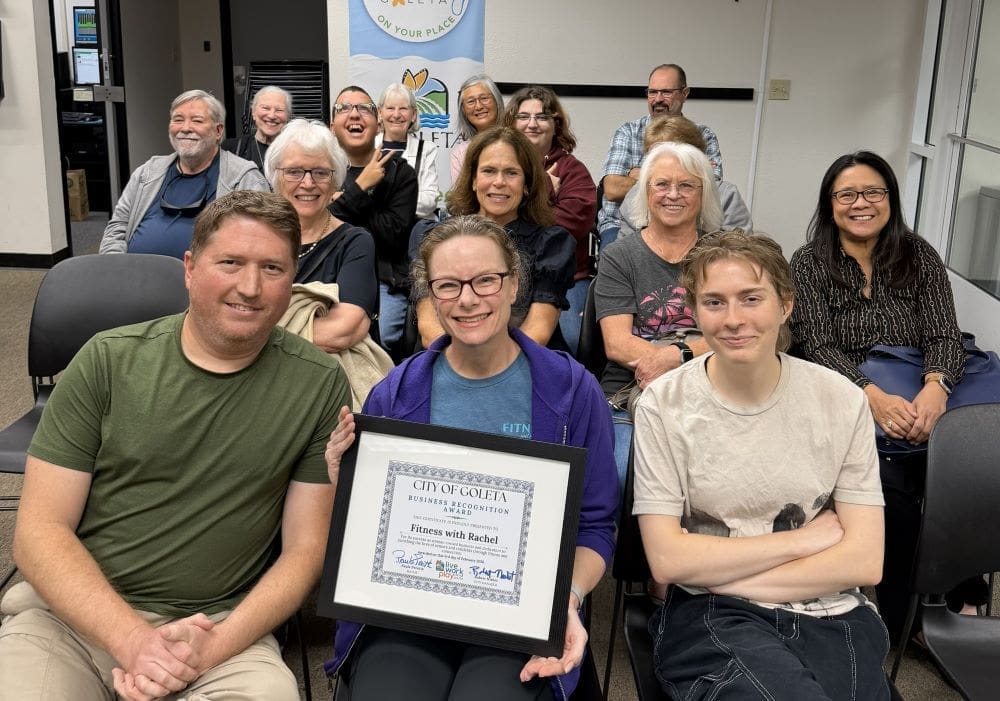
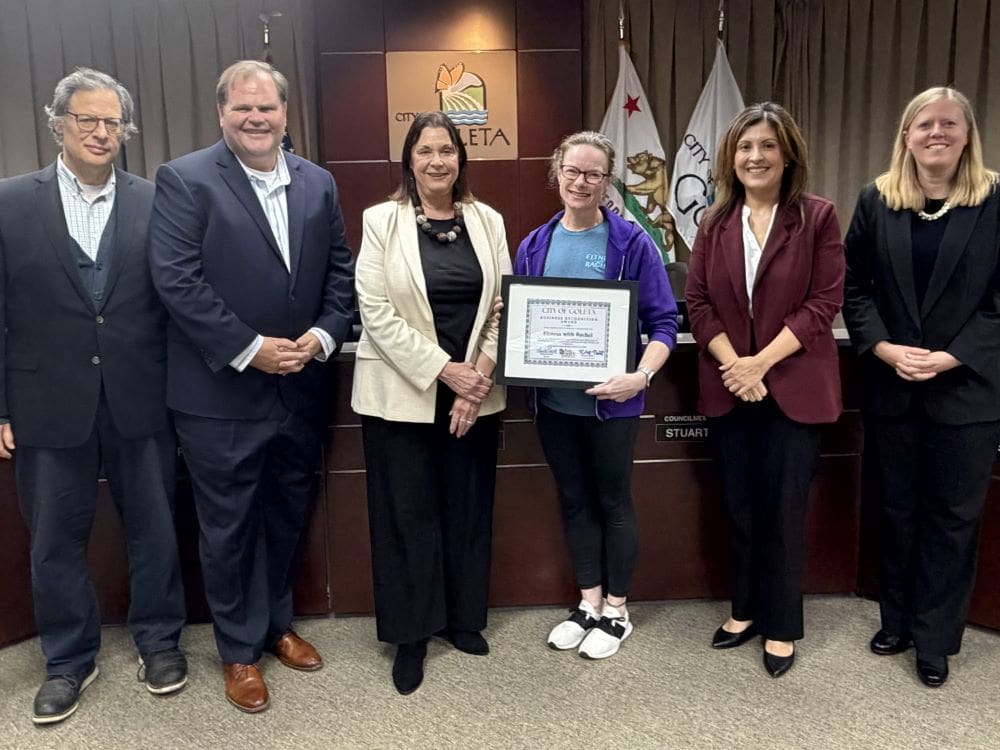
Rachel in Council Chambers with her family, friends, and clients
Fitness with Rachel specializes in various fitness programs tailored to meet the unique needs of seniors and individuals battling cancer. Rachel’s expertise is backed by multiple certifications, including:
- Primary Group Exercise Certification from the Aerobics and Fitness Association of America
- Personal Trainer, Senior Fitness, and Fitness Nutrition Certifications from the American Council on Exercise
- Advanced Cancer Exercise Specialist Certification from the Cancer Exercise Training Institute
Rachel passionately emphasizes the importance of health within her community: “After seeing cancer forever change the lives of numerous friends and family members, offering this service to our local cancer patients and survivors is particularly gratifying for me.” Her classes, such as the themed Dancing Through the Decades, aim to enhance both physical and mental well-being while fostering connection among participants.
The Business Recognition Program acknowledges outstanding businesses quarterly, encouraging community members to nominate businesses that make a difference. If you know a business deserving of recognition, you can learn more about eligibility and how to submit nominations by visiting the Business Recognition Program webpage. Self-nominations are also welcomed, allowing everyone to advocate for businesses they believe in.
In conclusion, the story of Fitness with Rachel serves as an inspiring example of how local businesses contribute to community wellness. By tailoring fitness programs to meet the specific needs of residents and emphasizing the importance of health, Rachel McDonald not only enhances individual lives but also strengthens the fabric of the Goleta community. Get involved—whether through your fitness journey or supporting local initiatives—and make a positive impact in your community!