In recent times, my focus on the Ukraine war has waned due to the lack of significant new developments. For quite a while, Ukraine, bolstered by the European Commission and several NATO countries, has been recycling failed strategies aimed at managing the ongoing conflict with Russia, all while pretending to work towards a peace agreement. This has led to a plethora of actions, including yet another ineffective sanctions package from the European Union, various proposals for peacekeeping forces, and ongoing discussions regarding the seizure of frozen Russian assets—efforts that face considerable resistance—not to mention demands that the U.S. engage in long-range missile strikes on Russia, despite the evident shortfall in weapon supplies for Ukraine and its numerous other needs.
Some prominent figures within the Ukraine-skeptic commentary community are applauding Trump for appearing to secure an advantage against Ukraine’s advocates in Europe. While it may seem that he has managed to evade a political bind, this tactic does not alleviate his larger issue: he still holds the title of The President Who Lost Ukraine, partly due to his own messaging.
Trump has presented a compelling argument against Senator Lindsey Graham’s demands—supported by the pro-war factions in the EU—for “bone-crunching” U.S. sanctions on countries purchasing Russian energy, including India and China, and, if we’re being consistent, Turkey and Europe. Trump had previously pushed for a 25% tariff on India, exacerbating tensions between the countries. Despite these tariffs being limited in scope, they still impacted India, with notable media coverage indicating harm to the Indian economy and a fall in the rupee to a historic low against the dollar. This was compounded by India’s anger over the Biden Administration’s earlier push for Indian purchases of Russian oil to stabilize market prices.
It appears that Trump felt cornered by Graham, who claimed to have over 80 votes in favor of sanctions. Whether the House could align to provide enough votes to override a veto from Trump remains uncertain. Nevertheless, those 80 votes could potentially lead to his impeachment if the House decides to take that route.
It’s worth remembering that this situation began with Trump imposing a 50-day ultimatum to Putin for a ceasefire or face sanctions. Yet, rather than yielding, Russia escalated its military actions. Trump shortened this timeframe to 10-12 days, a move that seemed to highlight U.S. impotence at the time. His attempts at negotiation were the subject of much heated coverage, despite the fact that there was little to no overlap between Russia’s stated objectives and what the Collective West was willing to accept.
Even a summit he attended resulted in a clear acceptance of Russia’s refusal for a ceasefire, reflecting a shift toward Russia’s perspective without offering a viable path toward peace. Zelensky remains steadfast, while Europe attempts to revive their struggling efforts to deploy forces in Ukraine under a peacekeeping guise.
Following the summit, Trump continued to make aggressive statements. Newsweek reports:
Trump hosted Putin at Joint Base Elmendorf-Richardson in Anchorage on August 15. Following a three-hour discussion, no new sanctions were announced, and Putin has not formally agreed to a ceasefire.
Russia’s ongoing assault, characterized by drone, cruise, and ballistic missile attacks, illustrates the stagnation of U.S. peace initiatives, as Trump’s 50-day deadline has elapsed without the anticipated breakthrough.
A White House spokesperson referenced Trump’s comments from August 25, suggesting potential severe repercussions for Russia, and underscoring the need for an end to the war.
“It will be an economic war that will be detrimental for Russia, something he is keen to avoid. He will know his options in the coming weeks,” the White House indicated, noting that this might involve “massive sanctions or massive tariffs or both.”
In a recent BBC piece, we find further insights:
Trump has indicated that tougher sanctions against Russia would follow the country’s most intense aerial offensive in Ukraine since the war’s inception.
Kremlin spokesperson Dmitry Peskov remarked that no sanctions could compel Russia to alter its stated position.
After the recent bombings, Trump expressed dissatisfaction with the situation.
While he previously threatened harsher penalties if Putin disregarded his ultimatums, he has yet to take definitive action.
When asked if he might escalate sanctions against Moscow, Trump responded, “Yes, I am,” although he provided no specifics.
This warning aligns with comments from U.S. Treasury Secretary Scott Bessent, who emphasized the need for stronger European cooperation to amplify economic pressure.
Bessent further noted that should EU nations intensify sanctions on countries buying Russian oil, “the Russian economy will collapse entirely, compelling President Putin to negotiate.”
Amid this backdrop, Trump seems to have maneuvered to alleviate the pressure for imposing secondary sanctions on nations that continue to purchase energy from Russia. He insists that NATO allies need to participate for any sanctions to be effective:
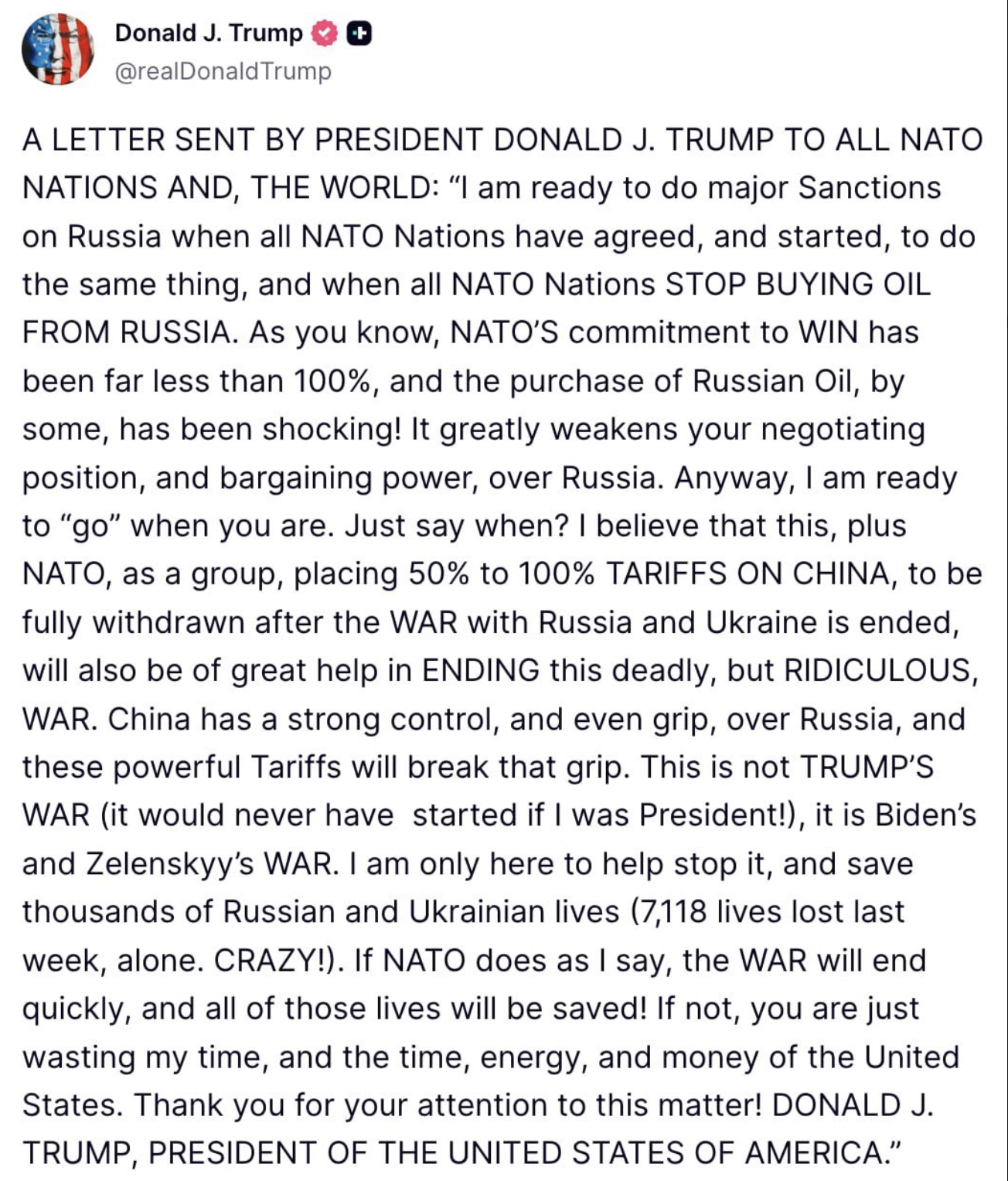
Some commentators seem oblivious to the underlying implications of this strategy, failing to grasp that forcing NATO countries into such measures would likely destabilize their economies, thus shielding Trump from further criticism:
Trump wants the EU to stop buying Russian oil, pointing at Turkey as well.
He seems to ignore that EU imports of oil have already been significantly reduced since March 2023, with further decreases ongoing.
Turkey, while an American ally in NATO, is not part of the EU. pic.twitter.com/vxu6EZURlc
Turning to editorial insights, Simplicius in Trump Finally Outwits Europe and the Neocons on Ukraine? posits:
Trump seemingly has skillfully outmaneuvered Europe, placing the onus on them to act. This translates to, “I will impose sanctions on Russia once you all do something I know is impossible.”
In this manner, Trump has forced Europe into a bind, compelling them to either completely cease their “indirect” Russian oil purchases and potentially crush their economy or face the political disaster of failing to act while allowing Russia to maintain its offensive—both choices fraught with peril for Europe.
This maneuver provides Trump with a temporary reprieve from pressure, as he can now deflect blame toward Europe, asserting, “Why should we pursue sanctions if Europe won’t collaborate? After all, it’s their conflict.”
Simplicius also cautions that this situation may only be a fleeting respite, noting:
The neocon establishment, however, is already gearing up for action. Speaker Mike Johnson has mentioned that sanctions against Russia are “overdue” and there’s considerable enthusiasm for this in Congress. The ever-cunning Lindsey Graham has gone even further by attempting to merge a sanctions proposal into a federal funding bill:
Everywhere, the global establishment is relentlessly promoting the notion that Russia represents an existential threat to civilization as we know it.
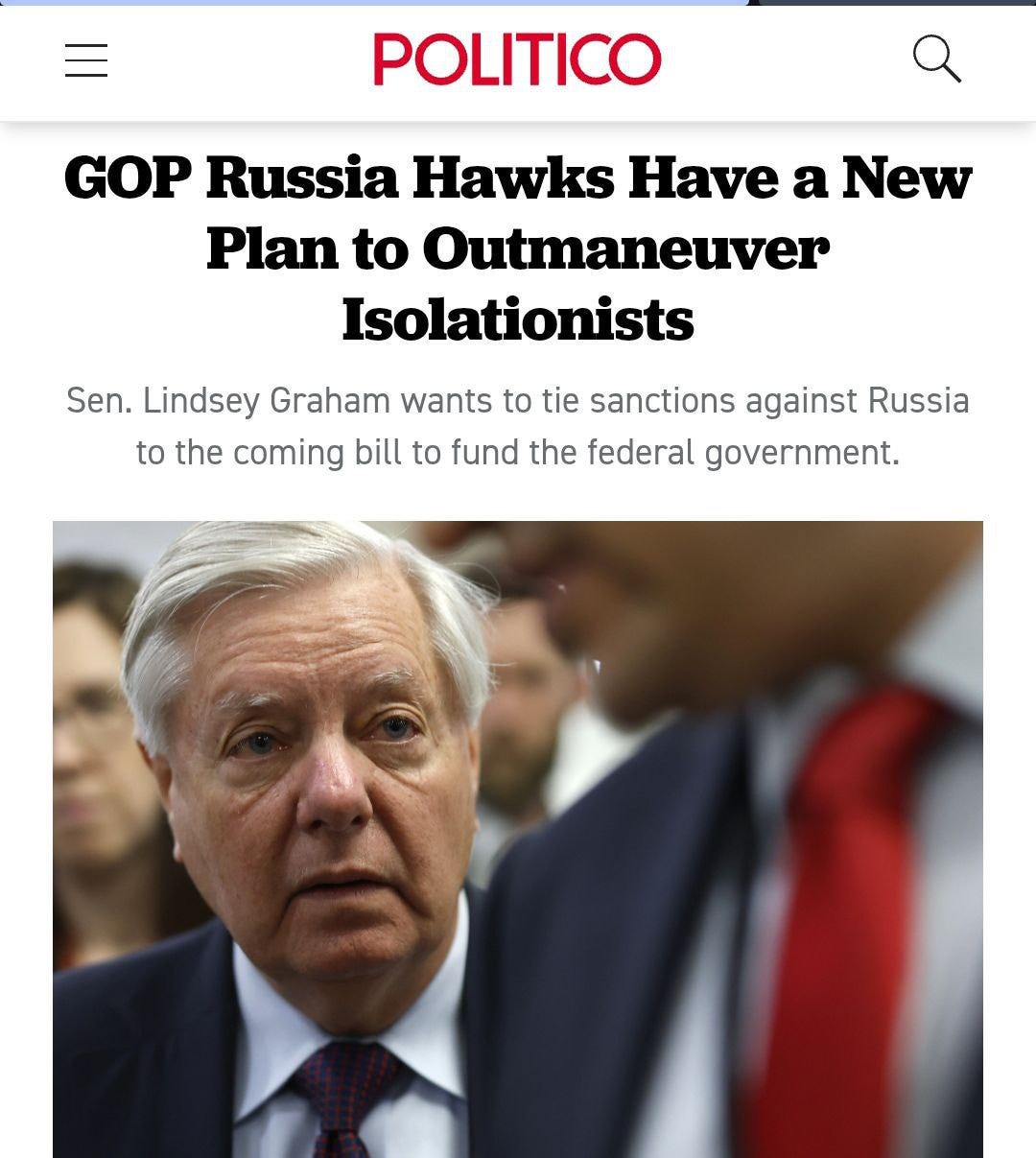
Speculating on Trump’s intentions, those who believe he is attempting to disentangle himself from the Ukraine project rather than simply avoiding immediate pitfalls may find the situation complex. Recent reports indicate that the U.S. plans to push its G7 allies toward establishing a legal framework for seizing frozen Russian assets to aid Ukraine, as per RT on September 13:
The U.S. will urge its G7 partners to support measures for the outright confiscation of Russian state assets that have been frozen, enabling funds to flow into Ukraine.
With an estimated $300 billion in Russian assets frozen following the 2022 conflict escalation—around €200 billion held by Euroclear—the West is exploring pathways to utilize the revenue from these assets for Ukraine.
While the G7 previously endorsed plans to offer loans to Ukraine repayable from asset profits, discussions are now evolving toward outright confiscation measures led by the U.S.
This indicates that Trump is not genuinely distancing himself from the war; rather, he appears to be sidestepping overly aggressive approaches to engage in it. His significant challenge remains: he is still inextricably linked to the ongoing conflict. Observers suggest the war will inevitably reach a conclusion on the battlefield within the next 18 months. The facts of the conflict will become increasingly transparent by the time of the midterms. Biden’s financial support for the “bring Russia down” effort has kept Ukraine in the fight longer than expected, though public awareness of Ukraine’s dwindling position is beginning to surface.
In contrast, many war analysts are now warning that Ukraine’s military potential is nearing collapse, citing low troop numbers along the front lines and a faltering drone capability against Russia’s advancements. As John Helmer has noted, Russia has resumed targeted strikes against Ukraine’s infrastructure, which could hasten a Ukrainian defeat if fully unleashed.
While it may be premature to lay all blame on Trump for shifting U.S. policy away from supporting Ukraine, his tendency to take part in public discussions and meetings relating to the conflict has certainly anchored him in this volatile situation—a point made by various observers who claim that Trump needed to clarify his position against the Ukraine war upon taking office to avoid being ensnared in it. However, Trump’s actions and persistent support of the narrative that Ukraine can triumph have left him entangled in the issue, as he has portrayed Russia as suffering significant losses.
For instance, in interviews, Trump has described Russia’s economy as “stinking,” asserting claims of unsustainable military losses. His statements span various platforms and news outlets, reflecting an attempt to project an image of strength
Consequently, Trump’s legacy will inevitably carry a significant stain due to his failure to dissociate from the Ukraine conflict early on in his tenure. Still, his deeply ingrained narcissism may allow him to reinterpret his place in the history surrounding this war.