SEATTLE — When Juliana Miura purchases bottled coffee drinks, she usually pays little attention to the receipt.
“Every time I fill my gas, I buy one,” she chuckled outside a Renton ampm convenience store.
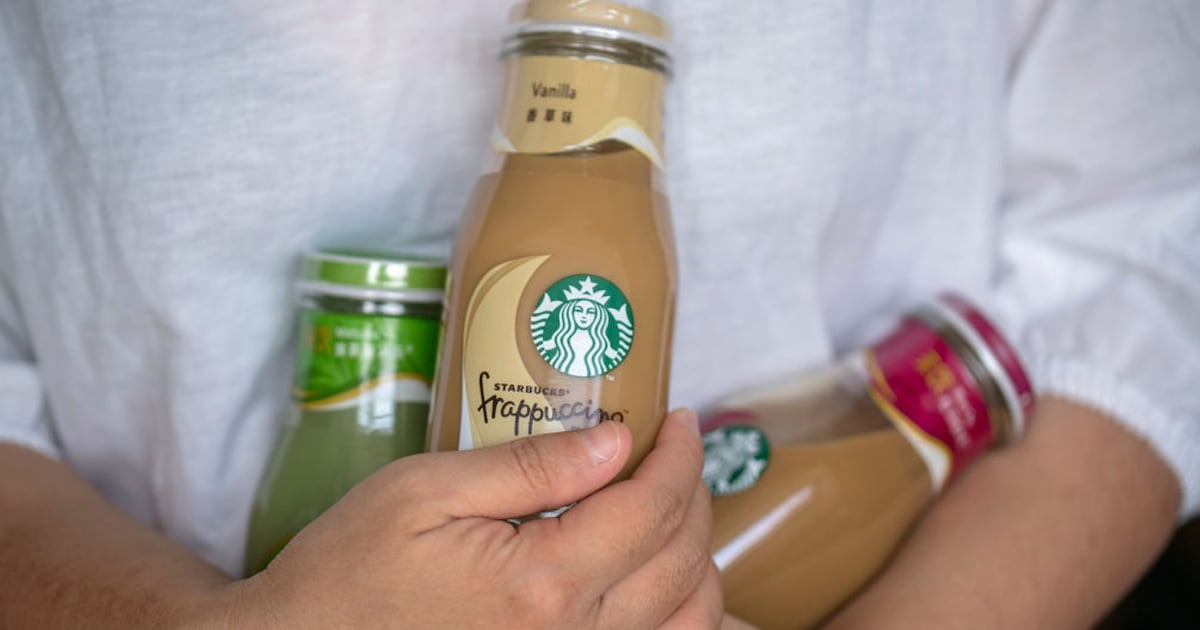
However, a recent investigation by KIRO 7 revealed that depending on the retailer, popular bottled coffee drinks—including Starbucks Frappuccinos—may be subject to incorrect sales tax charges.
Tax Errors at Convinience Stores
This issue is emerging across Washington state’s convenience stores, from the North Sound to the South Sound. While some retailers correctly charge no tax on bottled or canned coffee drinks, others mistakenly add around 50 cents for the same item.
The Washington State Department of Revenue confirmed to KIRO 7 that these tax charges are erroneous.
The problem was first identified by Action 9, a KIRO 7 sister station in Orlando. This prompted KIRO 7 to investigate whether the same issue was occurring in Washington State.
Store Checks Reveal Discrepancies
KIRO 7 conducted random checks at four convenience stores in Seattle, Bellevue, Renton, and Auburn, purchasing identical bottled coffee drinks.
The results showed that two stores charged sales tax while two did not.
At one Bellevue Chevron, the tax added 45 cents to the purchase. Just a few miles away, the same drink at another store was not taxed at all.
“That’s pretty wild,” remarked Jose Perez Peralta from Renton. “I don’t think we should be paying extra.”
Understanding Tax Regulations
To clarify the tax issue, KIRO 7 presented receipts to the Washington State Department of Revenue.
“Beverages containing milk are going to be exempt from sales tax,” explained Quinn Dickason, an education coordinator in the Taxpayer Services Division at the Washington Department of Revenue.
Upon reviewing several receipts, Dickason confirmed that the tax charges were incorrect.
“I would say that’s incorrect,” she stated.
Tax Category Clarifications
In Washington State, grocery food items are not subject to sales tax, whereas soft drinks such as soda are taxed. Beverages containing at least 50% juice or any milk are exempt.
Thus, bottled coffee drinks that contain milk should not incur sales tax.
Impact on Consumers
For customers who are already grappling with rising costs, even small taxes can accumulate into a significant amount.
“Everything’s super expensive,” said Fabricio Miura, an ampm customer. “We’re always working, trying to do our best. Even if it’s only 50 cents, we shouldn’t be paying that.”
KIRO 7 checked additional stores and quickly noticed a trend.
Every ampm convenience store visited in Everett, Renton, Auburn, Tacoma, and Lacey charged sales tax on the same bottled coffee drinks.
Corporate Response
A store manager in Auburn indicated to KIRO 7 that the sales tax policies are dictated by corporate guidelines.
According to ScrapeHero, a data company, there are 127 ampm locations throughout Washington State. With roughly 50 cents in tax per drink, the total could amount to a significant additional cost for customers statewide.
“We pay without knowing,” Fabricio Miura added. “We didn’t check the receipts.”
His wife, Juliana Miura, stated she purchases these drinks every week.
At that rate, individuals could be paying nearly $25 annually in sales tax on drinks that should be exempt.
Efforts for Resolution
KIRO 7 reached out to ampm corporate multiple times—via phone, email, social media, and by filing a consumer complaint. After about two weeks, the corporate owner of ampm, BP, finally responded.
“Thank you for bringing this to our attention. We take compliance with local, state, and federal laws very seriously and are reviewing the issue,” stated Paul Takahashi, Head of U.S. Media Affairs with BP.
Regarding oversight, the Department of Revenue indicated it does not routinely investigate businesses specifically for food tax compliance, though it would address tax practices if a store was selected for a more extensive audit.
Despite KIRO 7’s findings, the department claimed that instances of this nature are rare.
“I think you got lucky,” Dickason remarked. “Generally, people get it right…I don’t think it’s any malicious intent at all; it’s likely just human error,” she added.
Customers’ Perspectives
Some customers, however, remain skeptical.
“I think it’s a little naive to think it’s a mistake,” Miura expressed. “But hopefully, it’s a mistake.”
When it comes to obtaining refunds, the Department of Revenue advises customers to first inquire at the store. If that approach fails, customers can request a refund through the department’s website, with receipts required.
Key Takeaways
- Incorrect sales tax charges on bottled coffee drinks are occurring across Washington.
- The Washington State Department of Revenue confirms that drinks with milk should be exempt from sales tax.
- Consumers can pay up to $25 annually in erroneous taxes on these drinks.
- Certain chains are implementing incorrect tax policies at multiple locations.
- Customers should verify their receipts and inquire about refunds if overcharged.
FAQ
Are bottled coffee drinks taxed in Washington State?
No, bottled coffee drinks containing milk are exempt from sales tax.
What should I do if I’m charged sales tax on my coffee drink?
You can request a refund from the store or apply for a refund through the Washington State Department of Revenue’s website.
How can I verify if I’m being incorrectly charged?
Check your receipts for sales tax charges on beverages that contain milk; these should not be taxed.
Who should I contact if I notice tax discrepancies?
Contact the retailer directly or reach out to the Washington State Department of Revenue for guidance.
KIRO 7 continues to advocate for ampm to address this issue and will provide updates if the company revises its sales tax practices.
©2026 Cox Media Group