In recent news from Hong Kong, the media’s response to a significant legal ruling has shed light on the changing landscape of journalism in the region. The recent sentencing of Jimmy Lai, a prominent pro-democracy media figure, has ignited discussions about press freedom and its challenges in Hong Kong.
Jimmy Lai’s Sentencing
Jimmy Lai, 78, was sentenced on Monday to 20 years in prison after being convicted of sedition and colluding with foreign forces under Hong Kong’s national security law. The charges against him are regarded as politically motivated, aimed at silencing one of Hong Kong’s most influential pro-democracy advocates.
Lai is the founder of Apple Daily, a notable pro-democracy newspaper that was shuttered in 2021 amid an intensified crackdown on dissent in the city. Following extensive protests supported by Lai and his newspaper, Beijing enacted a national security law in Hong Kong. Lai became one of the first high-profile individuals arrested under this new legislation.
The US, UK, EU, and UN have denounced the severe sentence imposed on Lai, a British citizen, and called for his release. This punishment is the harshest applied under the national security law and surpasses those received by some of mainland China’s most recognized dissidents.
Jimmy Lai is the founder of Apple Daily, a popular pro-democracy newspaper that was forced to close in 2021. Photograph: Vincent Yu/AP
In response, Hong Kong’s press associations, previously champions of media freedom, have largely remained silent, highlighting the increasingly restricted environment for critical discourse. Selina Cheng, chair of the Hong Kong Journalists Association (HKJA), expressed, “I’m not free to speak my mind on the Apple Daily sentencing.”
The HKJA has faced criticism from the Hong Kong government for what it terms “whitewashing” Lai, while Cheng and the association have also been targeted by Chinese state media.
The Foreign Correspondents’ Club of Hong Kong (FCC) also chose not to comment on the severe sentence issued to one of the city’s most impacting media figures.
Mike Bird, a journalist for The Economist, expressed criticism of the FCC’s stance on social media, remarking on its perceived decline. The FCC did not immediately respond.
An exploration by Hong Kong Free Press reveals that the FCC has issued noticeably fewer statements supporting press freedom since the national security law was enacted.
Other press associations, such as the Beijing-affiliated Hong Kong Federation of Journalists, among others, have also refrained from commenting on Lai’s sentencing.
Ronson Chan, a former chair of the HKJA, noted that the silence from these associations regarding Lai’s case—regardless of their position on the sentencing—points to a manipulation by the authorities to obscure the connection between the verdict and press freedom.
In contrast, local media outlets largely celebrated Lai’s sentence and that of his co-defendants, including six former executives from his media company.
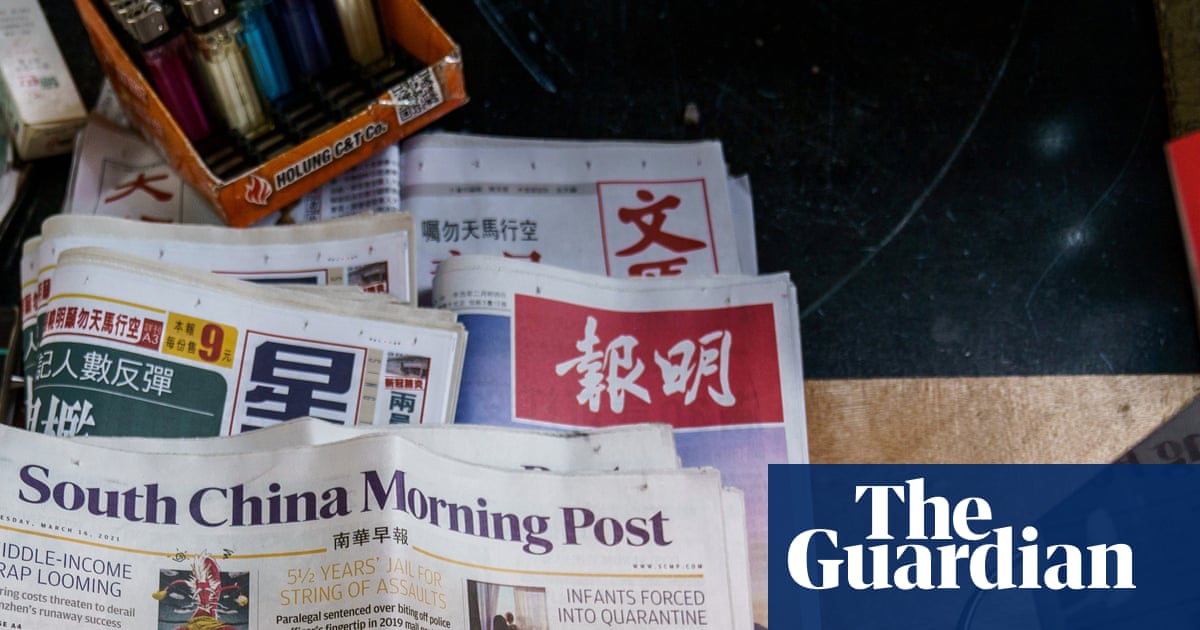
The South China Morning Post, owned by Alibaba, described Lai’s case as an affirmation of the rule of law in Hong Kong, asserting that the sentence reflects “the gravity of his crimes.”
HK01, a pro-Beijing publication, similarly endorsed the sentence, stating it signifies “the end of that politically chaotic period.”
Ta Kung Pao, a state-owned publication, asserted, “The anti-China and pro-chaos forces represented by Jimmy Lai have been forever nailed to the pillar of historical shame.”
Aleksandra Bielakowska, advocacy manager for Reporters Without Borders (RSF), stated that media organizations and journalists in Hong Kong have experienced unparalleled pressure from authorities since the introduction of the national security law. They face judicial harassment, surveillance, threats, and online abuse, while foreign reporters increasingly encounter entry restrictions. Bielakowska emphasized that the space for critical voices in Hong Kong is rapidly disappearing.
Beh Lih Yi, director for the Asia-Pacific Committee to Protect Journalists, remarked on the sustained repressive climate under Chinese and Hong Kong authorities, asserting that the vibrant free press once present in Hong Kong has been severely diminished.
Hong Kong has drastically dropped in the RSF’s press freedom index, now ranking 140th out of 180 territories assessed.
In the meantime, China’s State Council released a white paper titled, “Hong Kong: Safeguarding China’s National Security Under the Framework of One Country, Two Systems.” This document details the “unrelenting fight” for national security in Hong Kong and emphasizes the central government’s authority from Beijing.
The white paper claims that Beijing’s governance in Hong Kong “serves China’s fundamental interests, benefits the residents of Hong Kong, and meets the interests of external investors.”
The Hong Kong government has been approached for comment.
Additional research by Lillian Yang
Key Takeaways
- Jimmy Lai was sentenced to 20 years in prison under Hong Kong’s national security law.
- His conviction is widely perceived as politically motivated, aimed at curtailing dissent.
- The silence from press associations highlights the challenges faced by critical journalism in Hong Kong.
- International bodies have condemned Lai’s sentencing and advocated for his release.
- Local media outlets generally supported the sentencing, framing it as a triumph of law over chaos.
- Media freedom in Hong Kong has substantially declined since the enactment of the national security law.
- The region now ranks 140th in press freedom globally, reflecting the worsening conditions for journalists.
FAQ
What was Jimmy Lai convicted of?
Jimmy Lai was convicted of sedition and collusion with foreign forces under the national security law.
How long is Lai’s sentence?
He received a 20-year prison sentence, the harshest under the national security law.
What has been the international response?
The US, UK, EU, and UN have condemned the sentence and called for Lai’s release.
How have local media outlets reacted?
Local pro-Beijing media outlets have generally celebrated the sentencing, framing it positively.
What is the current state of press freedom in Hong Kong?
Press freedom in Hong Kong has deteriorated significantly, with the region now ranking 140th on the global index.