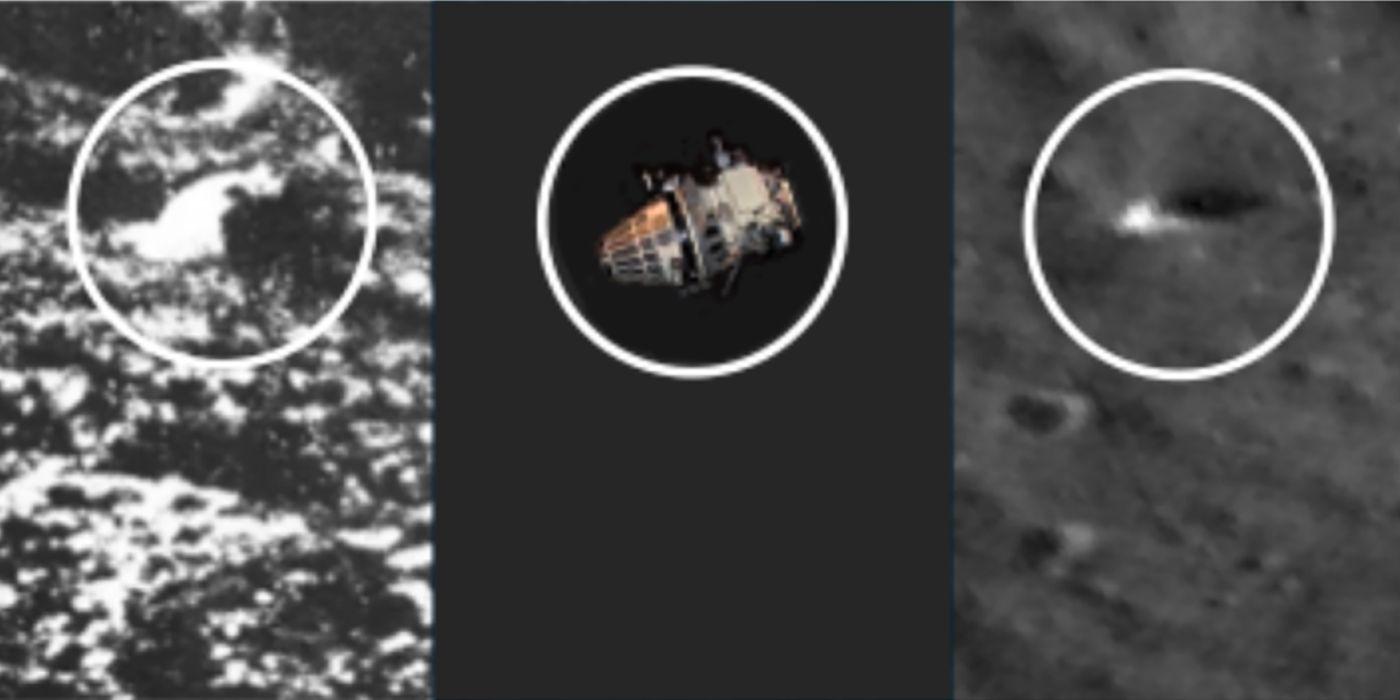
On February 3, 1966, Luna 9 made history as the first spacecraft to achieve a soft landing on the Moon, transmitting the first images of the lunar surface back to Earth. Despite this monumental success, the precise location of Luna 9’s landing had remained elusive. Recent research, however, may have finally pinpointed this historic site.
A groundbreaking study led by Lewis Pinault, a scientist affiliated with the SETI Institute, was published in npj Space Exploration. This research explores how artificial intelligence and machine learning techniques were utilized to identify a potential landing site for Luna 9. By automating the detection of faint human-made objects in extensive datasets from the NASA Lunar Reconnaissance Orbiter, the research team efficiently analyzed vast image tiles using minimal computational resources.
The researchers developed the YOLO-ETA model (You Only Look Once – Extraterrestrial Artefact), training it with images from Apollo landing sites. This model learned to identify features indicative of a spacecraft, such as shapes, shadows, and disturbed soil. The team applied this model to a 5-by-5-kilometer area surrounding the suspected landing zone of Luna 9. Impressively, the algorithm consistently detected object clusters in these images despite variations in lighting, underscoring its efficacy in recognizing artificial artifacts.
In their analysis, the researchers compared the potential site with the original surface photos taken by Luna 9, observing that the terrain and horizon appear to match the flat landscapes documented in 1966. This similarity lends credence to the hypothesis that they have identified the actual landing location.
“As robotic and human activities expand on the Moon, we lack a systematic approach to cataloging our artifacts and debris,” Pinault stated. “AI-driven computer vision and machine learning can significantly aid in the safe siting, appropriate zoning of lunar activities, and preservation of historical and scientific sites. This technology will enhance our understanding of everything from large-scale human footprint analyses to the behavior of dust-sized particles in the lunar regolith. Given the Moon’s 4 billion years of stability, it becomes a prime target for discovering artifacts—both terrestrial and potentially extraterrestrial.”
The YOLO-ETA model was specifically designed to function as a lightweight computing tool for edge cases, facilitating more mobile and autonomous orbital, fly-by, and on-site analyses of lunar regolith. This approach not only contributes to advancements in space exploration and safety protocols but also paves the way for the discovery of extraterrestrial artifacts throughout our Solar System. In this initial test, the researchers aimed to locate the elusive Luna 9, making it a remarkable achievement if their new tools indeed uncover humanity’s first artifact to land on another celestial body.
Ongoing projects will further refine the AI model, and upcoming missions, such as those by Chandrayaan-2, may soon help validate these findings. The results underscore the potential of AI-driven tools, particularly machine learning systems, in identifying and documenting space artifacts, thereby aiding in the recovery of significant chapters in space exploration history. As human activity accelerates during the Artemis era, these advancements in machine learning for documenting lunar human artifacts become increasingly vital and open new avenues in the search for extraterrestrial intelligence.