Artificial intelligence (AI) tools originally implemented for border security are now infiltrating everyday American life. What started as AI-driven immigration enforcement predominantly at the southern border is transforming into a broader scope of government surveillance in our communities.
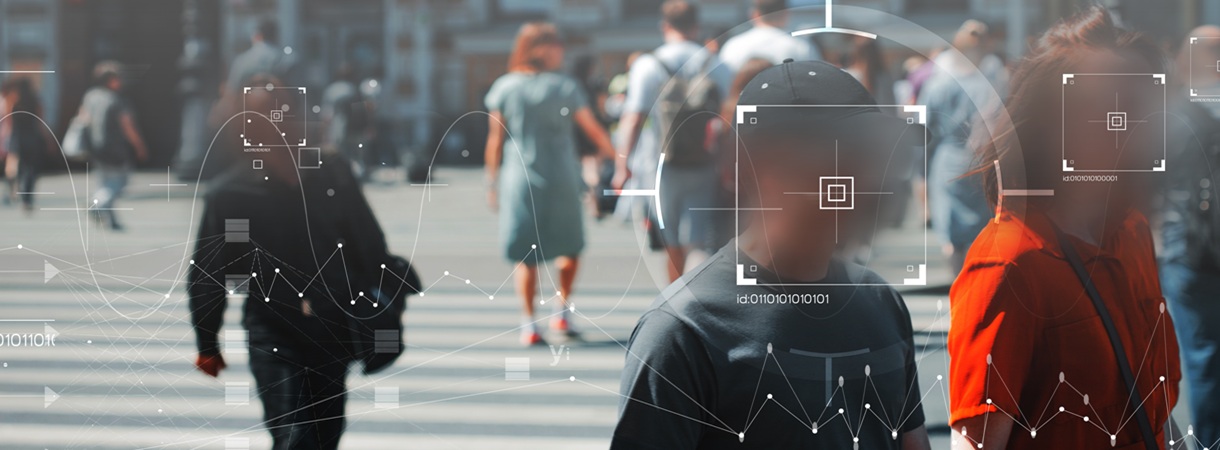
Technologies such as facial recognition, biometric scanning, and social media monitoring—initially created to track noncitizens—are now being employed to identify and investigate U.S. citizens. This phenomenon, known as mission creep, refers to a gradual expansion of objectives beyond what was originally intended. We are witnessing this progression unfold today.
The Department of Homeland Security (DHS) is ramping up its investment in artificial intelligence for U.S. Immigration and Customs Enforcement (ICE) with little public oversight. Recent procurement records disclose a significant increase in surveillance technology, including:
- $30 million allocated for Palantir’s ImmigrationOS, designed to provide “granular tracking” of immigrants, including real-time monitoring of self-deportations.
- $4.6 million invested in iris-scanning smartphones from BI2 Technologies.
- $3.75 million earmarked for a Clearview AI facial-recognition contract—ICE’s largest acquisition of this technology to date.
This issue extends beyond mere policy discussions; these technologies are actively in use on our streets. Internal footage obtained by Media 404 reveals ICE officers employing facial recognition applications to determine the citizenship status of teenagers lacking ID. One such app, Mobile Fortify, utilizes over 200 million images stored in the databases of the DHS, the FBI, and the State Department. It also has access to sophisticated query tools that aggregate data from multiple government databases, enabling deeper investigations into personal networks.
Since Media 404’s initial reporting, further investigations have confirmed that these are not isolated cases. Reports by Minnesota Public Radio and the Guardian indicate that ICE has acquired and operates AI-enabled surveillance tools that monitor U.S. citizens, extending beyond immigration enforcement. In Minnesota, ICE has implemented social media and location-tracking systems that allow agents to analyze the movements of large groups in specific events—capabilities that, according to both company materials and reports, are explicitly marketed for use during protests and gatherings protected under the First Amendment. While ICE and other agencies have not clarified their specific targets, these tools enable them to keep tabs on where people have been and to map their connections—without warrants or specific suspicions. This enhanced surveillance comes at a time when ICE agents have been directed to collect the personal information of protestors, as they did in the alarming case of Alex Pretti shortly before his tragic murder in Minneapolis.
These developments represent alarming overreaches in surveillance. Instruments designed for immigration control are now being repurposed for domestic political monitoring, drawing everyday Americans into expansive data systems that they were never made aware of.
This exemplifies mission creep, a trend fraught with danger. Technologies initially created and justified for a specific issue are quietly expanding their application, blurring the line between targeted enforcement and widespread surveillance. ICE’s Homeland Security Investigations (HSI), originally focused on cross-border threats, has begun invoking domestic terrorism concerns to monitor activities within the United States, including public protests. Coupled with powerful AI surveillance tools, ICE and other agencies now have extensive leeway to conduct surveillance on all Americans.
Critics are raising concerns. Senator Ron Wyden (D-OR) warned that ICE may “trample on the rights of Americans and anyone Trump labels as an enemy.” Maria Villegas Bravo of the Electronic Privacy Information Center (EPIC) highlighted potential violations of the First and Fourth Amendments. Oversight mechanisms have deteriorated as well; internal watchdogs have been sidelined or dismantled while the DHS continues to operate without a comprehensive biometric privacy law or mandatory audits of its AI tools. In February, Senator Ed Markey (D-MA) proposed legislation to prohibit DHS and ICE from employing facial recognition and other biometric surveillance in the U.S., underscoring the growing concern in Congress regarding the expansive deployment of these tools beyond their original immigration focus.
The DHS argues that the expanded surveillance measures are necessary for efficiency and national security. However, such rhetoric obscures a troubling reality: systems intended for tracking immigrants can easily pivot to surveil entire populations. Technologies designed for efficiency and scalability facilitate nearly effortless population-wide monitoring. Unified databases and automated analytics rapidly transform efficiency into overreach. Few companies demonstrate this transition more clearly than Palantir Technologies, a data analysis software firm with extensive government contracts.
Palantir’s ImmigrationOS is not merely an immigration tracking tool; it oversees the entire immigration lifecycle through predictive analysis, surveillance, and enforcement. The same terminology used to describe efficient deportations could equally justify the mass surveillance of any identified group.
Before this mission creep is normalized, it is essential to establish clear boundaries. This includes defining when a warrant is necessary for law enforcement to conduct biometric scans of both citizens and noncitizens, a matter that remains inconsistently resolved across different jurisdictions. Furthermore, to ensure accountability, AI surveillance tools employed in the field must adhere to public reporting requirements. Independent audits should be conducted regularly on platforms like ImmigrationOS and Mobile Fortify to address public concerns. Additionally, Congress should advance comprehensive data privacy and civil rights legislation to keep pace with the rapid advancement of AI technologies.
Without these protections, immigration enforcement risks devolving into a testing ground for extensive domestic surveillance—one where powerful technologies normalize suspicion, automate targeting, and undermine constitutional rights. The distinction between border enforcement and everyday policing is already becoming blurred. Whether this line vanishes entirely hinges on policymakers, who must take urgent action to restore transparency, accountability, and democratic oversight.