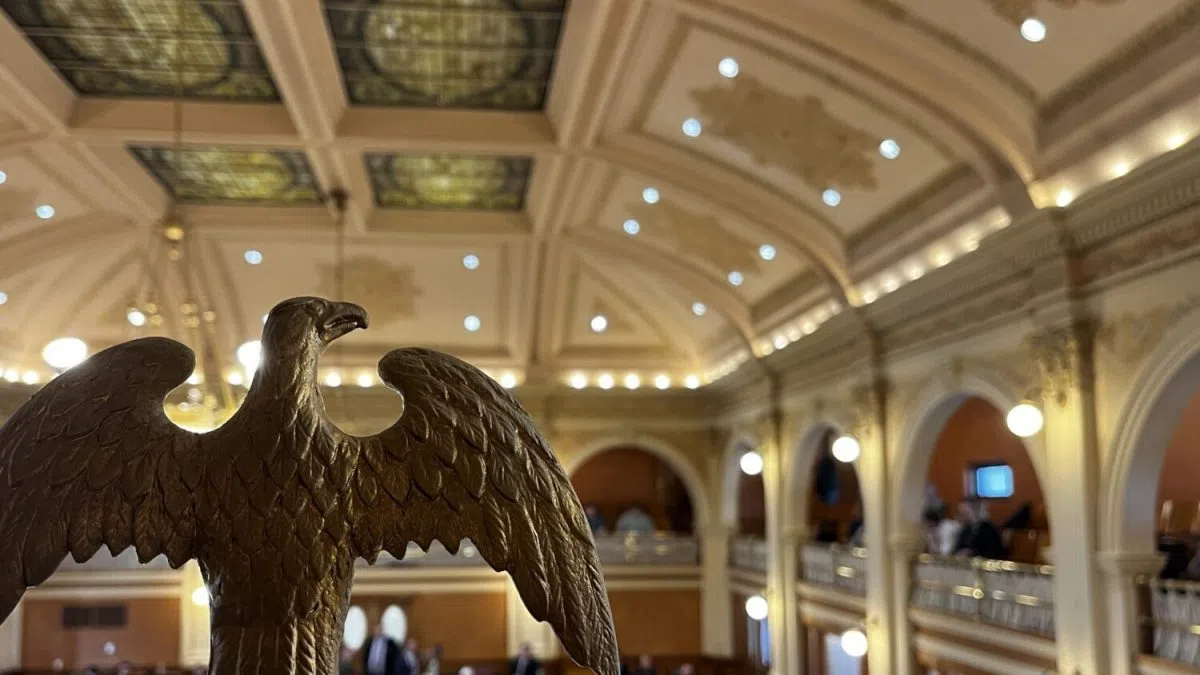
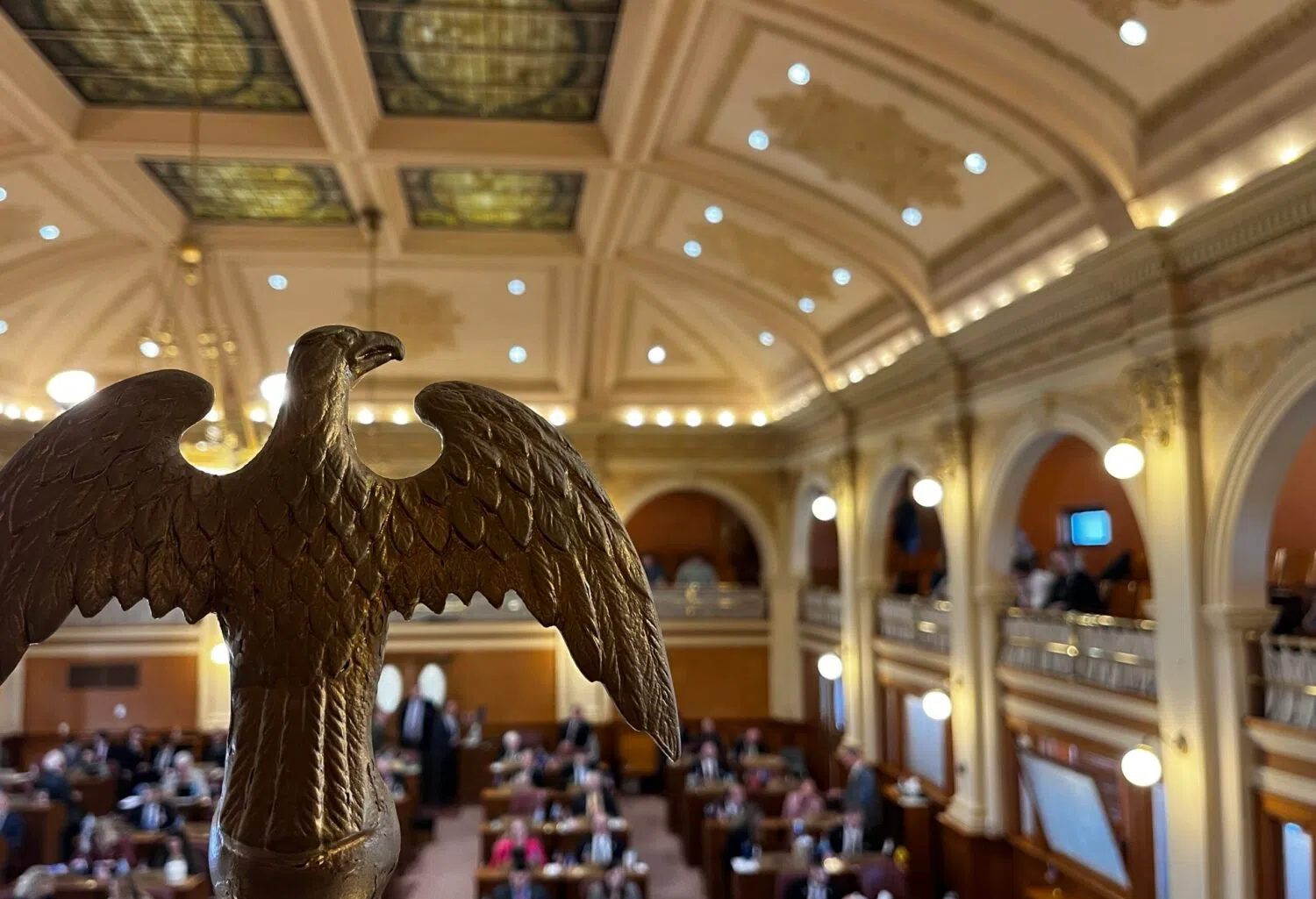
The South Dakota House of Representatives chamber at the Capitol in Pierre. (Joshua Haiar/South Dakota Searchlight)
By: Makenzie Huber
PIERRE, S.D. (South Dakota Searchlight) – In a significant move, lawmakers in the South Dakota House of Representatives approved a bill on Wednesday aimed at restricting the use of food assistance benefits for purchasing soft drinks.
The House passed House Bill 1056 with a vote of 58-11. This legislation would require the state Department of Social Services to request a federal waiver to exclude soda from the Supplemental Nutrition Assistance Program (SNAP), commonly known as food stamps.
SNAP benefits, which assist income-eligible families, can currently be used to buy nearly all food and beverage items. Gaining a waiver from the federal government would grant South Dakota the authority to limit the types of products that can be purchased with these benefits, which are distributed via cards that operate similarly to debit cards.
The U.S. Department of Agriculture reports that 18 states have received approval for SNAP waivers.
Rep. Taylor Rehfeldt, R-Sioux Falls, introduced the bill. She emphasized that it represents a “first step in aligning” SNAP with the more stringent restrictions found in the federal Women, Infants and Children (WIC) nutrition program.
“A taxpayer-funded nutrition program should promote actual nutrition,” Rehfeldt stated.
Rehfeldt pointed out that SNAP benefits are frequently used to purchase sugary sodas and sweetened beverages, which can lead to various health issues, such as heart disease, obesity, and diabetes.
Notably, over three-fourths of individuals receiving SNAP benefits in 2022 were also covered by Medicaid. Rehfeldt argued that this restriction could ultimately reduce the state’s Medicaid costs by ensuring healthier outcomes for recipients.
Opponents of the bill contend that this move does not effectively tackle food insecurity or the broader issue of poor nutrition. Rep. Liz May, R-Kyle, who owns a grocery store, stated that “banning foods or policing grocery carts” would place an unnecessary financial burden on grocery and convenience store owners as they adjust to new program requirements.
“If our goal is better nutrition, we should reward nutritious choices instead of punishing food choices,” May added.
The bill faced opposition in committee from Gov. Larry Rhoden’s office, which estimated that it would cost the state approximately $500,000 each year to hire three employees and contract services to implement the changes in program eligibility.
Next, the bill will be reviewed by a Senate committee.
Key Takeaways
- The South Dakota House of Representatives has passed a bill to ban soft drinks from SNAP purchases.
- House Bill 1056 passed with a vote of 58-11.
- If approved, the bill would require a federal waiver to enforce the restriction.
- The bill is intended to align SNAP with stricter guidelines of the WIC program.
- Opponents argue it may burden store owners and fail to address food insecurity.
- Cost implications for the state are projected to be around $500,000 annually.
FAQ
What is House Bill 1056?
House Bill 1056 is a proposed legislation that aims to prohibit the use of SNAP benefits for purchasing soft drinks.
What are SNAP benefits?
SNAP benefits, commonly referred to as food stamps, provide financial assistance for low-income households to purchase food and beverages.
Why do proponents support the bill?
Proponents argue that the bill promotes better nutrition by discouraging the purchase of unhealthy sugary drinks.
What are the concerns from opponents?
Opponents fear that the bill could worsen food insecurity and impose unnecessary burdens on grocery store owners.
What will happen next?
The bill will move to a Senate committee for further review and discussion.