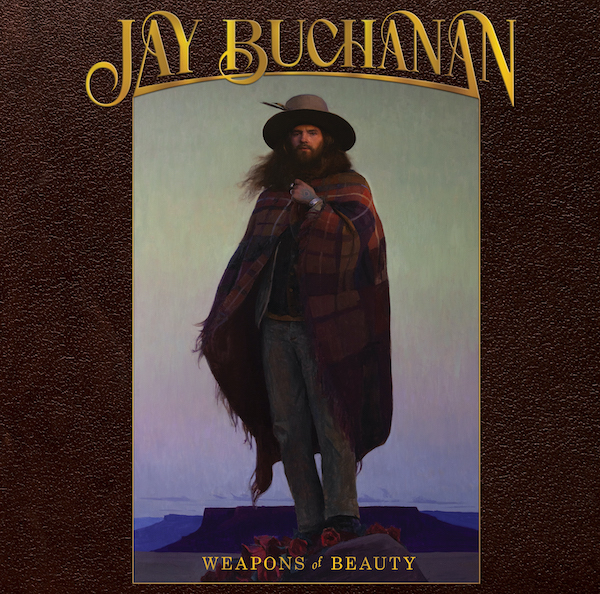
Exploring the Depths of Jay Buchanan’s *Weapons of Beauty*
Jay Buchanan, the powerhouse lead vocalist of Rival Sons, is known for his electrifying performances that embody force and energy. However, in his debut solo album, *Weapons of Beauty*, Buchanan shifts gears by offering a collection that prioritizes emotional weight over sheer volume.
This album illustrates the power of a voice that conveys deep feelings and intricate phrasing rather than relying on brute force. It captivates listeners by exploring themes of endurance, making it a strong departure from the frenetic pace of Rival Sons.
While Rival Sons are synonymous with dynamic blues-rock, Buchanan’s solo effort embraces a reflective tone. In this context, his songs emerge as meditations on grief, doubt, and the complexities of existence, rather than a fight for redemption. Even amidst uncertainty, Buchanan’s narrative is grounded in the quiet strength of perseverance, as he expresses a desire “to make it right,” showcasing his commitment to navigating the challenges life presents.
*Weapons of Beauty* places Buchanan in a league of contemporary Americana artists who emphasize emotional gravity. Artists like Gillian Welch and Neko Case similarly rely on clarity, control, and raw honesty to craft compelling narratives. This record encourages listeners to embrace the subtleties of life rather than sensationalize them, treating grief and resilience as experiences to be lived rather than mere stories to be told.
The track “Caroline” serves as a poignant emotional anchor for the album. Set to minimal instrumentation, it articulates grief as an enduring presence in daily life—a reality shaped by absence rather than resolution. Buchanan weaves a vivid picture of loss with lines such as “my hands make the shape of yours in mine / and they refuse to hold onto something new,” encapsulating love’s steadfastness without slipping into melodrama.
In contrast, “True Black” shifts the focus outward, contemplating the aftermath of mourning. This song probes themes of responsibility, questioning how grief can alter one’s sense of duty and whether healing is attainable. The exploration of grief in this context invites listeners to reflect on the lingering consequences of loss and the possibilities of renewal.
Buchanan crafted *Weapons of Beauty* during a period of intentional seclusion, primarily in an underground bunker in the Mojave Desert. This immersive environment influenced the recording process, which prioritized raw, live takes that emphasize the authenticity of emotion. Buchanan relies on articulate phrasing and unadorned expression, resulting in songs that resonate with truthfulness.
The supporting band, along with producer Dave Cobb—renowned for his work with artists like Chris Stapleton—contributes to this focused sound. Joined by talented musicians like J.D. Simo on guitar and Brian Allen on bass, the ensemble emphasizes texture over embellishment, allowing each element to serve the song’s emotional core.
His interpretation of Leonard Cohen’s “Dance Me to the End of Love” carries a profound emotional weight, underscoring love’s endurance rather than its romantic notions. The simplicity of Buchanan’s delivery transforms the song into a powerful acknowledgment of love as a persistent force.
Following this poignant cover, the title track “Weapons of Beauty” stands as a proclamation against closure. It frames artistic expression not as an escape, but as a powerful engagement with life’s struggles. “Give me the songs to sing in the fight,” Buchanan proclaims, reimagining creativity as a form of resolve rather than mere catharsis.
Ultimately, *Weapons of Beauty* thrives on focus and introspection. Rather than elevating itself to grandiosity, Buchanan pares down his sound, reserving emotional clarity and restraint as the pillars of his artistry. This nuanced approach renders the album both potent and lasting, making it a fitting introduction to his solo journey.
For more about Jay Buchanan and his music, visit his official website: https://www.weaponsofbeauty.com/
Mark Pelavin, residing joyfully in St. Michaels, MD, draws on his rich background as a writer and music enthusiast. His newsletter, *A Feather in the Wind*, can be found at https://markpelavin.substack.com/.
<p>
<h3 class="jp-relatedposts-headline"><em>Related</em></h3>
</p>
Conclusion
Jay Buchanan’s Weapons of Beauty represents a significant artistic evolution, transitioning from the high-octane energy of Rival Sons to a more contemplative solo endeavor. Through its raw emotional honesty and minimalist approach, the album invites listeners to reflect on their own experiences of grief and resilience. By embracing vulnerability while remaining grounded, Buchanan offers a reflective soundscape that resonates deeply and articulates the subtleties of human experience.