The ongoing homelessness crisis in the United States has sparked responses from various political players, yet many of these actions seem to overlook the fundamental causes of the issue. Instead of addressing the root problems, the focus has been on making homelessness appear to disappear, while private entities benefit financially from the mismanagement of the situation.
This article examines the major elements of the U.S. response to homelessness at both state and federal levels. It also highlights how these harsh policies often create opportunities for economic elites to profit from the increasing suffering of the unhoused.
Trump’s July executive order positions the homelessness crisis primarily as a result of mental illness and substance abuse, promoting easier arrests and involuntary commitments of the homeless. This approach continues a trend among American elites to redirect attention from the real causes of homelessness. A study conducted by UCSF’s Benioff Homelessness and Housing Initiative points to the precariousness faced by the working poor as the leading issue fueling homelessness.
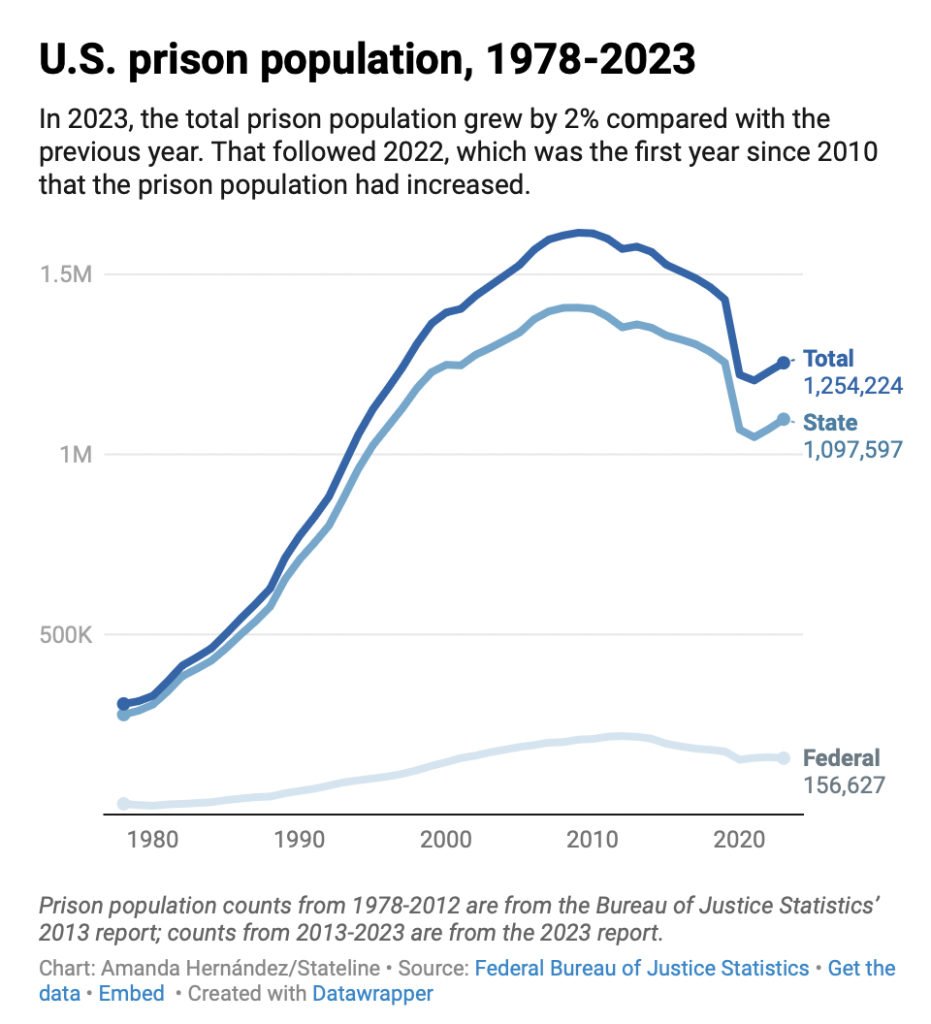
Trump’s order closely mirrors initiatives introduced by California Democratic Governor Gavin Newsom, reflecting a bipartisan consensus when dealing with poverty—particularly in criminalizing it. Unfortunately, California’s strategies have failed to reduce the number of individuals sleeping on the streets. The growing trend of criminalization across the nation could contribute to the rise in the U.S.’s uniquely high prison population.

Meanwhile, the homeless population continues to escalate, with an 18% increase to 771,480 reported during the 2024 “point in time” census—widely viewed as a significant undercount.
Efforts to criminalize homelessness have proven ineffective, as arresting individuals does not resolve the economic conditions propelling them onto the streets. For instance, one arrest can easily be offset by multiple new cases of homelessness due to stagnating wages that fail to keep pace with soaring rents (a result of corporate collusion among landlords and homebuilders!), skyrocketing vacation rental growth, an inadequate healthcare system, and meager social security payments that do not meet the rising costs of living.
Corporations benefit substantially from these conditions, but profit doesn’t end once individuals lose their homes. After eviction, opportunists are ready to exploit the situation at every turn—from extended-stay hotels and rehab facilities to mental health service providers and correctional facilities. Private equity plays a role across these sectors, owning the very apartments initiating evictions, as well as the extended stay hotels that serve as costly last-resort shelters. Here, the evicted often find themselves drained of their remaining resources before being cast back onto the streets. This sector also profits from “solutions” purportedly aimed at addressing homelessness, including mental health treatment and prison healthcare—creating a scenario of minimal oversight, a captive audience, and a reliable revenue stream.
The latest developments under “Trump 2.0” seem to be aiding corporations by implementing policies expected to increase the homeless population while perpetuating ineffective—but lucrative—state intervention, all while dismissing the “housing first” concept. This proven method has demonstrated effectiveness in stabilizing housing for homeless individuals.
Are these misguided government policies being enforced by accident, or are they serving the interests of influential benefactors?
The Criminalization of Homelessness: Cui Bono?
There is little data available regarding the number of homeless individuals arrested since the Supreme Court’s City of Grant Pass v. Johnson decision, which upheld a ban on sleeping in public places.
This ban has often culminated in law enforcement dismantling homeless encampments, confiscating belongings, and ordering individuals to leave without offering alternatives. The question remains: where can they go?
As more reasons for arrest multiply, the homelessness-incarceration complex only grows stronger. The University of Cincinnati Law Review reveals that individuals experiencing homelessness are 11 times more likely to get arrested than those with stable housing. This situation imposes further barriers regarding court appearances, bail payments, fines, and citations, heightening the likelihood of conviction.
…The system is set up to criminalize a person’s status of homelessness rather than helping to address the root causes… This involvement with the criminal justice system perpetuates a harmful cycle, complicating the chance of breaking free from it. Upon release, formerly homeless individuals often return to the streets, facing even greater obstacles in securing stable housing due to the complications arising from criminal records.
Moreover, failure to appear in court or pay minor citations related to homelessness—such as camping in public, public urination, or loitering—can “indirectly result in arrest and jail time.”
Therefore, it’s no wonder that the prison industry remains one of the major beneficiaries of the eviction-to-prison pipeline. In the U.S., these benefits trickle up to the economic elite.
According to Worth Rises’ The Prison Industry: Corporate Database, over 4,000 corporations and investors profit off mass incarceration. A glance at the list reveals many familiar names, including major Trump supporters from private prison companies and firms that exploit forced prison labor.
Healthcare for inmates also represents a significant opportunity. In the Los Angeles County jail system, which serves as the largest mental health facility in the U.S., those profiting from the police state are eager to present themselves as mental health providers. According to the Prison Policy Initiative:
Jails and prisons are frequently characterized as de facto mental health and substance abuse treatment centers, with corrections officials increasingly promoting their mission as healthcare providers. However, the reality starkly contrasts that narrative: individuals with acute health needs are often confined with inadequate healthcare and limited treatment options. Instead, punishment is predominantly used, with evidence-based healthcare often accessible only in minimal amounts.
Private equity has a major stake in the prison healthcare sector, which was valued at an estimated $9.3 billion in 2022.
The Guardian recently investigated two of the largest corporations in this industry—Wellpath and Corizon—both supported by private equity investors, and uncovered grim, yet expected issues arising from marrying private equity with captive clients, such as:
- Staff shortages.
- Delays in care.
- Severe negligence.
- Preventable deaths.
An example includes a 57-year-old woman who, after suffering a perforated stomach, was given Tylenol and left alone in a cell, ultimately leading to her death. Colleen Grogan, a professor at the University of Chicago’s School of Social Work, remarks that Wellpath and Corizon continue to operate despite scrutiny due to their significant political power: “These private equity firms have a ton of political power, and prisoners are the most vulnerable.”
This political leverage provides an additional layer of protection for profit-driven abuses:
According to Brendan Ballou, former special counsel to the Department of Justice’s anti-trust division and author of the book Plunder: Private Equity’s Plan to Pillage America, private equity firms enjoy protections from liability. Past court rulings complicate holding private contractors accountable for wrongdoing within prisons. Moreover, “corporate veil piercing law” protects private equity from consequences resulting from their investments, making it difficult for victims to seek redress against the firms behind the healthcare companies that harm them. Consequently, private equity firms remain largely untouched even when their prison health investments face liability.
Profiteers in Rehabilitation and Mental Health Services
Treatments for substance abuse and mental health might seem like a sensible approach for those experiencing homelessness. Given that drug use and mental health challenges are common within this population, it’s vital to note that such issues often develop or worsen after individuals lose their homes. The fear and stress associated with losing one’s shelter can lead many to seek solace in substances.
The UCSF study indicates that many turn to drugs as a means of managing the emotional distress of feeling discarded by society. Furthermore, it is well-documented that poverty and homelessness can exacerbate physical and mental health conditions. Evidence shows that food insecurity correlates with mental illness, while studies have demonstrated that PTSD frequently occurs following the loss of one’s home.
While rehabilitation and mental health treatments could provide assistance, the state of the American healthcare system raises concerns about whether these services are truly intended to help or merely to profit from the vulnerable.
A recent report by the Wall Street Journal highlighted how drug rehab centers lure patients to exploit their insurance, often abandoning them on the streets afterward:
Fraud has escalated into a multimillion-dollar challenge in America’s thriving rehab sector, as indicated by state officials, lawsuits from insurers and former clients, and federal indictments.
These facilities are frequently located in desirable locations like California’s beaches, where operators have discovered a profitable niche in attracting individuals with addiction challenges nationwide, billing their private insurance for exorbitant amounts while providing minimal treatment.
Once insurance coverage ends, these patients—who may find themselves far from home—are often discarded without referrals, potentially struggling with more severe substance issues than they faced previously. These individuals are then added to the ranks of the homeless.
“They’re just churned like cattle until they’re dead or homeless on the streets,” lamented Dan Kreitman, who managed special investigations at the insurance company Centene.
Other profiteers are making similar moves in the mental health sector, often employing different tactics but still complicating access to care for those in need. The Trump administration’s push for forced institutionalization aligns with the expansion of private equity in the mental healthcare space, utilizing provisions from the Affordable Care Act that mandate coverage of mental health services.
A recent ProPublica investigation uncovered that over 40% of inpatient mental health beds were run by for-profit organizations as of 2021, a significant increase from approximately 13% in 2010.
This trend often leads to a decline in service quality. ProPublica detailed that more than 90 psychiatric hospitals had violated the Emergency Medical Treatment and Labor Act over the past 15 years, with approximately 80% owned by for-profit corporations facing little to no consequences for their violations. The majority of oversight bodies, including the U.S. Centers for Medicare and Medicaid Services, tend to overlook these breaches.
Common violations include prioritizing profits by denying care to patients lacking insurance or having lower-paying forms of coverage, and the systematic refusal to treat patients with complex needs which require additional resources.
In addition, the wait times to access psychiatric services in the U.S. can be excruciatingly lengthy. According to the Vera Institute, individuals seeking mental health or substance use services often endure an average waiting period of 48 days, while many struggle to afford necessary services without insurance.
This situation highlights a fundamental flaw in the initiatives proposed by the Trump administration and certain state governments to “treat” homelessness. While they attribute issues to mental health and addiction, they avoid genuinely investing in comprehensive services. Instead, they pivot towards expensive and invasive methods without ensuring adequate funding.
For example, committing one person to a state hospital in Oregon can cost around $321,000 for just six months. Such expenditures emphasize the financial inefficiency involved.
Moreover, even if the U.S. had the means to forcibly treat individuals as outlined in Trump’s plan, studies indicate that such coerced treatment is typically ineffective—exemplified by Newsom’s “CARE Courts” in California, where judges are hesitant to mandate treatment within a flawed conservatorship system.
Forced treatment policies appear designed to fail, masking the actual agenda behind them. In contrast, funding flows generously toward prisons—a result of a bipartisan commitment to tough-on-crime strategies. This environment leads to more individuals funneled into the criminal justice system. The Vera Institute notes:
While the queues for community-based mental health support continue to grow longer, jails and prisons fill with individuals suffering from treatable mental health conditions. Nonviolent behaviors, associated with mental illness, that could be mitigated with proper support—such as loitering, disorderly conduct, and trespassing—are criminalized, ultimately resulting in the incarceration of those who need treatment, not punishment.
This entire cycle represents a profound failure, evidenced by:
- Deliberate diversion from addressing the root causes of homelessness.
- More individuals losing housing and joining the homeless population.
- An increased potential for homelessness to exacerbate addiction and mental health issues.
- Limited access to legitimate treatment options.
- Fraudulent practices making the acceptance of treatment less likely among the homeless.
- Ineffectiveness of coerced treatment, compounded by insufficient funding.
- The relentless operation of the eviction-to-prison pipeline.
This series of failures appears unending and is further entrenched. Unless a significant change occurs, there’s little hope for improvement—this reflects a shared policy across party lines.
Democrats already seem prepared with their “Abundance” initiatives for 2026 and 2028. This neoliberal rehash aims to eliminate red tape and empower Wall Street and Silicon Valley, the dominant forces shaping what passes for social policy in the U.S.
As this influence continues to consolidate, more dystopian scenarios emerge, detailed as follows:
🚨 Trump just signed an executive order allowing forced institutionalization for people with mental illness.
And at the same time? His admin is rolling out a nationwide health surveillance system with Google, Apple, Amazon, and CVS.
Your mental health, meds, vitals…all… pic.twitter.com/9DGbame4Qn
— Jesus Freakin Congress (@TheJFreakinC) August 1, 2025
Currently, the Trump administration appears intent on exacerbating the problem as evidenced by several actions:
- Cutting funding for mental health programs.
- Decimating services for individuals with developmental disabilities.
- Ending federal support for disabled Americans facing homelessness.
Can the intention be clearer than this: an attempt to increase the number of disabled individuals experiencing homelessness while simultaneously criminalizing their plight?
The situation is compounded by mass firings at the Department of Housing and Urban Development (HUD). It is suspected that the ultimate objective is to strip approximately four million individuals of their federal housing assistance. According to ProPublica’s analysis of the yet-to-be-released rules:
The proposed rules would introduce several restrictions long desired by conservatives, including time limits on residing in public housing, work requirements for many federal assistance recipients, and the withdrawal of aid from entire families if one household member is undocumented.
Should these measures proceed, it could result in roughly half of the more than eight million individuals currently receiving federal housing support losing that assistance. Who are these families? Data from HUD reveals they are predominantly elderly, disabled, or children—averaging under $20,000 annually.
The loss of assistance could precipitate homelessness for many. HUD’s own projections indicate that many public housing units could initially remain vacant due to the proposed rules.
This means potential bargains for investors eager to capitalize.
“That is an increase from 27% in the first quarter, and the highest percentage in the last five years, according to a report from CJ Patrick Co., using numbers from BatchData.”https://t.co/O8kNOsq6ma
— More Perfect Union (@MorePerfectUS) October 8, 2025
Yet, amid these challenges, we can find a glimmer of hope: we understand what strategies are effective and what causes the rise in homelessness—even if those in power choose to ignore these realities. We also know that proven methods of stabilizing individuals in housing exist, even as officials actively undermine them.
The “Housing First” model has demonstrated substantial success in recent initiatives by the HUD and the U.S. Department of Veterans Affairs, particularly in securing permanent housing for veterans. If actions could cease the eviction-to-prison pipeline, we could make significant strides in addressing the national shame of hundreds of thousands of Americans sleeping in public spaces. Regrettably, such discussions remain virtually absent from the mainstream discourse among our two dominant political parties in what is often heralded as “the greatest democracy in the history of the world.”
In response to this void, some Americans are starting to organize to take action into their own hands. We will explore those efforts in the following installment.
