Imagine a band, dressed like iconic 1970s rock stars reminiscent of groups such as Creedence Clearwater Revival. They look the part, but there’s a twist: despite millions of fans, they are purely a creation of artificial intelligence. Meet The Velvet Sundown, a group that exists solely in the digital realm.
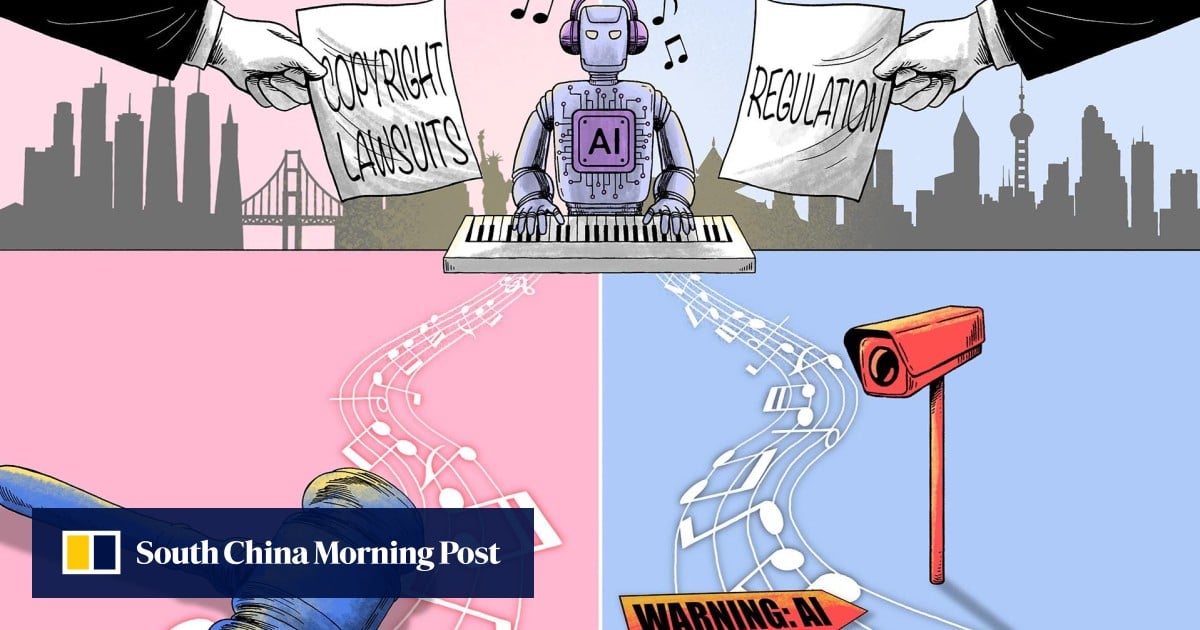
The world of AI-generated music is rapidly expanding, propelled by platforms like Suno and Udio in the United States, alongside China’s Mureka. This technology is shaking up the music industry from creation to copyright, but the ways these two nations are handling the innovation are strikingly different—and these differences could shape the future of artistic expression for years to come.
“I would describe AI music as a full-on tsunami,” remarked Josh Antonuccio, the director of the Ohio University School of Media Arts and Studies and a specialist in the AI music industry. “It’s an evolving landscape that everyone is trying to navigate as it unfolds.”
While the use of AI in the music industry is not new—evident through modern voice changers and Spotify’s DJ feature—the advent of generative platforms has empowered amateur musicians and everyday fans. This evolution is radically transforming how music is crafted, from songwriting to production.

Despite their differing methods, both the US and China face significant legal and ethical dilemmas surrounding copyright, creativity, and control in this new cultural frontier. Understanding how they navigate these challenges will be crucial as the use of AI in music continues to evolve.