 Swing voters exhibit unpredictable behavior. One election cycle they may support the Democrats, while the next, they turn to the Republicans.
This inconsistency reflects their lack of a defined ideology or political philosophy to guide their choices. They are indifferent to debates about the size of government, whether it should be small or large. Their preferences regarding the welfare or warfare state are equally noncommittal.
What truly matters to swing voters is straightforward: What have you done for me lately?
For these voters, the answer revolves around financial outcomes. If their investment accounts are flourishing, they are likely to support the incumbent party. Conversely, if those accounts are dwindling, they will lean towards the challenger.
Whether the rise in the stock market is based on deception or whether a market correction is necessary for stabilizing financial systems doesn’t concern them. Continue reading
 Throughout history, fluctuations in global trade have followed long-term trends. The Silk Road, established by the Han Dynasty in 130 BC, facilitated trade between East and West for nearly 1,600 years, serving both economic and cultural exchange among civilizations.
However, this route eventually ceased to exist. Following the fall of the Byzantine Empire to the Turks in 1453 AD, the Ottoman Empire shut down the Silk Road, reorienting geopolitical currents toward isolation.
In more contemporary times, global trade has been primarily conducted through maritime shipping. Over the past two centuries, trade cycles have expanded so significantly that entire generations come to view only the favorable half of the trend. Consequently, there is a common perception that increased global trade is a linear and perpetual phenomenon. Continue reading
 The saying, “Markets create opinions,” resonates within Wall Street circles. Essentially, when stock prices rise, many believe the economy is thriving, while a downturn prompts fears of impending economic doom.
In both scenarios, opinions vary widely. A booming NASDAQ might excite tech enthusiasts to declare we are on the brink of a new digital revolution, while declining manufacturing stocks may lead protectionists to blame trade agreements like NAFTA.
If markets indeed shape opinions, do those opinions then influence market behavior?
In the last decade, Fed indecision has birthed a new trend in market forecasting based on public sentiment. This approach interprets economic data reports to predict how they will affect Fed policy and subsequently, market trends. The relationship between economic reports and market reactions can be summarized as follows:
Good news is often perceived as bad news, and conversely, bad news is seen as good news. Continue reading
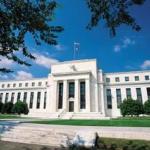 A quick glance at the financial and economic landscape—both in the U.S. and globally—reveals that we are undergoing a significant reset. What began as a subtle shift at the turn of the millennium has escalated into a stark reality that cannot be ignored. It is clear: things are not as they should be.
Debt levels are rising, while GDP stagnates. Stock prices are surging, yet corporate earnings are faltering. The majority of workers are experiencing stagnant incomes, contrasting sharply with the soaring earnings of the wealthiest 1%. Additionally, an astonishing $13 trillion of debt is currently yielding negative returns.
Against this backdrop, it becomes painfully apparent that there is little anyone can realistically do to reverse this trend. No executive order, monetary policy change, congressional stimulus, or electoral candidate can alter this trajectory.
In fact, even well-intentioned government initiatives are likely to exacerbate the inevitable decline. The chasm created is now too vast to bridge. Continue reading