
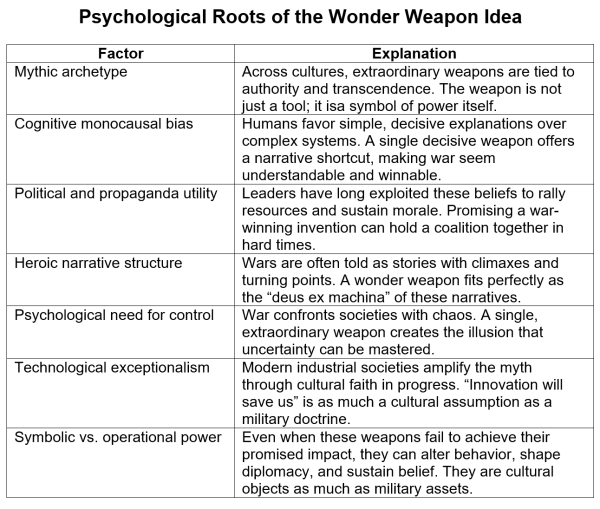
The quest for a decisive weapon has been a recurring theme in warfare throughout history. From ancient gods wielding thunderbolts to modern hypersonic missiles, the allure of “wonder weapons” remains potent. Although the nature of these technologies has evolved, the underlying belief that a singular, transformative weapon could end conflict persists. This article examines the phenomenon of wonder weapons and how it has manifested in the ongoing conflict in Ukraine.
Ancient Origins and Psychological Basis
Even before the age of modern warfare, societies shared myths about weapons of unparalleled power. Figures like Zeus with his thunderbolt, Thor brandishing his hammer, and King Arthur with Excalibur epitomized weapons that symbolized authority and divine favor. Greek fire, a notable incendiary weapon of the Byzantine Empire, was feared not just for its destructive capability but for its secretive and almost supernatural properties. Throughout history, various innovations such as siege engines and unique armor gained reputations that often outstripped their actual capabilities. The allure of invincible weapons is deeply rooted in psychology, representing condensed power—an awe-inspiring force that could be controlled.

The Rise of Gunpowder and Mechanical Superweapons
The introduction of gunpowder to medieval Europe marked the beginning of the modern narrative surrounding wonder weapons. Early cannons, dubbed “thunder weapons,” were thought to possess the divine power to destroy ancient fortifications. The Ottoman Empire’s use of massive cannons during the Fall of Constantinople in 1453 showcased both the tangible and psychological impact of these weapons, with their thunderous sounds etching themselves into legend. Leonardo da Vinci’s visionary designs for tanks and rotary guns during the Renaissance highlighted a growing belief in revolutionary military inventions, although the complexities of logistics and human adaptability remained unchanged.
The Industrial Age and the Era of Mass Destruction
The industrial revolution of the 19th century introduced ironclad ships, rapid-fire artillery, and the Maxim gun, all heralded as technologies that could either render war obsolete or lead to overwhelming victories. However, these advancements changed military tactics but did not eliminate adversaries. An illustrative case is the advent of chemical warfare during World War I, which initially terrified soldiers. Yet, the rapid development of countermeasures like gas masks diminished its effectiveness, exemplifying the clash between the myth of unstoppable technology and the adaptability of human foes.
Germany’s Wunderwaffen Cult during WWII
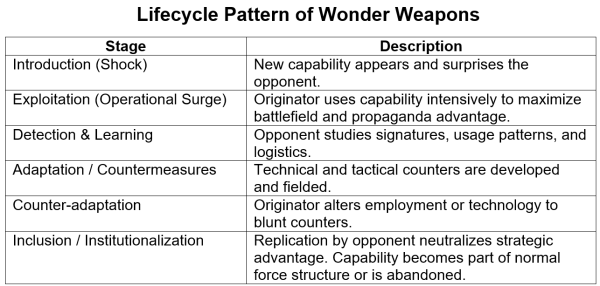
In the latter stages of World War II, Nazi Germany placed its hopes on wunderwaffen (miracle weapons), including guided missiles and jet aircraft, as potential tools to avert defeat. Though these technologies ultimately wielded little strategic impact, their propagandistic value was immense, both comforting the German populace and attempting to intimidate the Allies. The V-1 and V-2 missiles became infamous for representing significant leaps in weapon technology, albeit their influences were fleeting as countermeasures quickly evolved.
The V-1 missile, a precursor to modern cruise missiles, was designed for long-range attacks without risking bomber crews, while the V-2 was one of the first operational ballistic missiles. Initially, their deployment against London in 1944 was shocking, showcasing dramatic technological advancements.
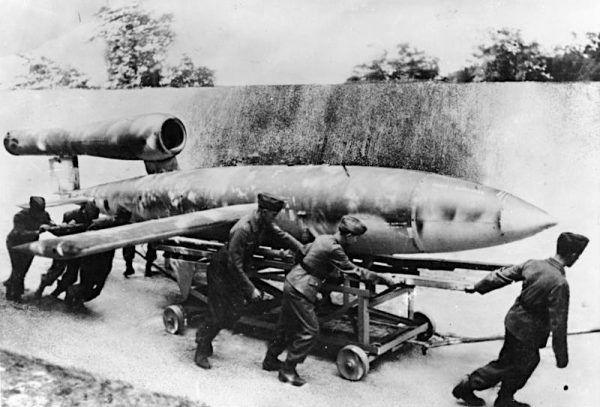
V-1 moving to launch position
German leadership believed the V-weapons could change the tide of war by delivering low-cost psychological and physical blows against Allied cities. While the V-1 inflicted notable damage, the V-2 presented an entirely new challenge, being nearly uncounterable. The Nazi regime capitalized on these weapons in propaganda, showcasing them as proof of Germany’s continued capacity to turn the conflict around.
However, the Allies quickly adapted their defenses. Techniques such as radar detection, fighter interceptions, and improved anti-aircraft measures effectively neutralized the V-1. Although the V-2 could not be directly countered, Allied forces employed strategic bombing of launch sites and misinformation to minimize its impact.
Despite their technological sophistication, the V-weapons failed to change the course of the war. Their imprecise guidance systems, small warheads, and resource-intensive production rendered them ineffective compared to conventional bombing. Ultimately, these wonder weapons illustrated that while they could instill fear, they did not produce the desired military outcomes.
Post-war, the V-2 became foundational for modern intercontinental ballistic missiles (ICBMs), reflecting how the legacy of wonder weapons can persist even after their operational failures. They entered conflicts too late, lacked the capability for decisive impact, and were met with rapid counter-defense measures—yet their technological innovations paved the way for future advancements.
The Atomic Bomb: A Genuine Wonder Weapon
The Manhattan Project produced the first weapon that truly fit the wonder weapon myth. The atomic bomb not only concluded a global conflict but also redefined international strategy. Even nuclear weapons carried significant symbolic weight apart from their destructive potential. The dynamics of nuclear deterrence, sustained by rituals and a carefully cultivated aura of power, underscored the dual nature of this wonder weapon—it fulfilled both material and psychological roles.
High-Tech Warfare in the Information Age
Since the Cold War’s end, narratives of wonder weapons have been associated with stealth technology, cyber warfare, precision-guided munitions, missile defense, and the latest developments in artificial intelligence and hypersonic systems. Aircraft like the F-117 Nighthawk and B-2 bomber have been framed not merely as weapons but as pioneers of a new type of warfare. The rhetoric surrounding “shock and awe” echoes ancient tales of victory achieved through technological dominance. Today, hypersonic missiles and autonomous weapons are often described with almost mythical terminology—unstoppable and transformative. Yet, history teaches us that no technology can maintain its leading edge indefinitely. Countermeasures are inevitable, and the complexities of warfare remain constant.
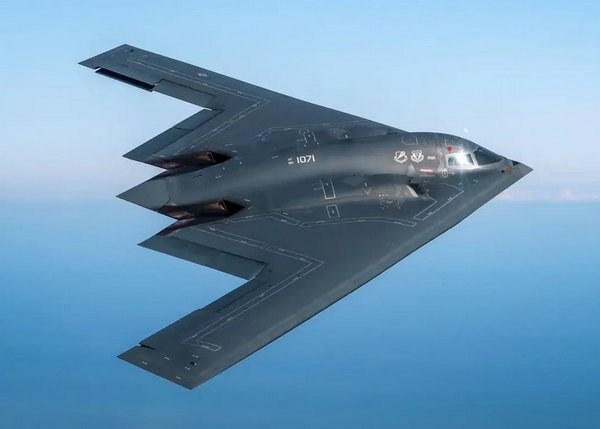
B-2 Stealth Bomber
Wonder Weapons in the Ukraine War
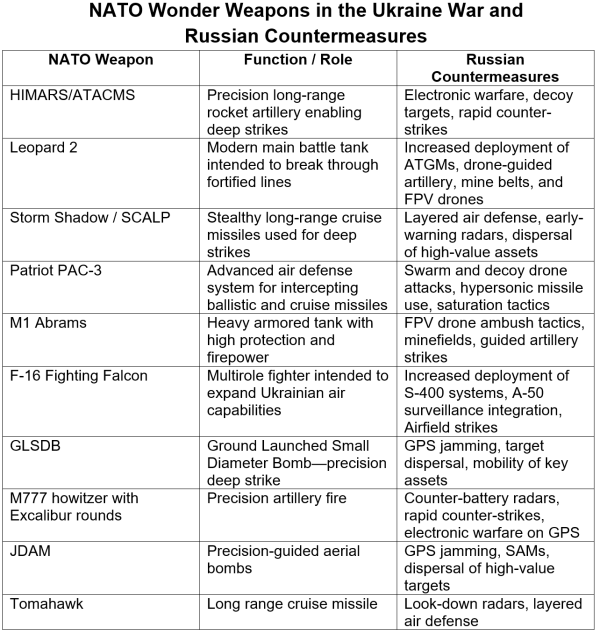
The U.S. has provided extensive support to Ukraine in its conflict with Russia, including substantial military and economic aid. Weapons delivered have often been labeled as “game changers” by advocates of military aid; however, results have frequently fallen short as Russia adapts to each new challenge. Recently, Ukraine has sought U.S. Tomahawk long-range cruise missiles, even though it remains doubtful that their deployment would significantly alter the conflict’s outcome. Nevertheless, discussions surrounding Tomahawk missiles have dominated news related to the Ukraine war, demonstrating the enduring power of the wonder weapon narrative.
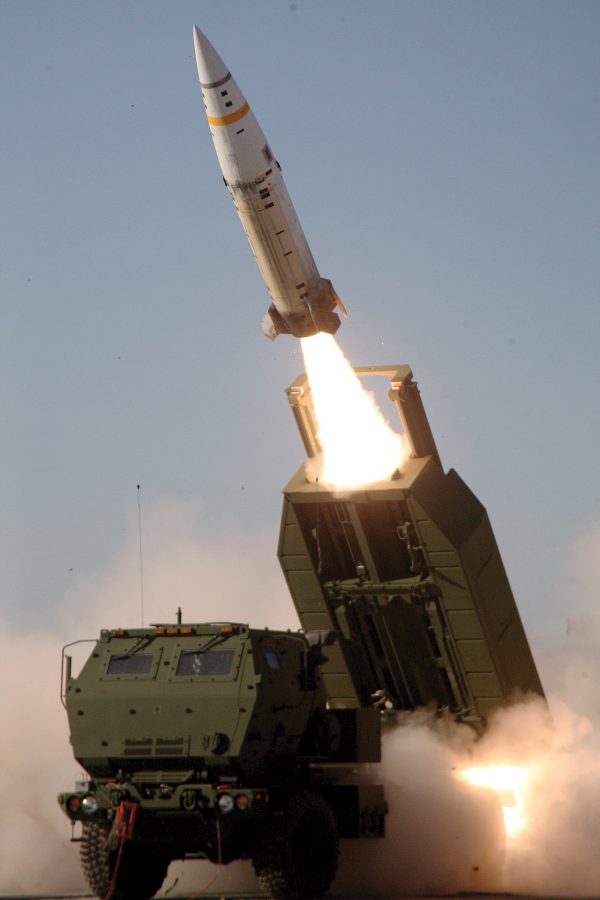
ATACMS missile launch
Conclusion
The tale of wonder weapons extends beyond mere military technology; it reflects deeply held human beliefs. We have a tendency to mythologize tools, infusing hope and fear into objects and seeking certainty amid the unpredictability of war. While strategy, logistics, morale, and adaptability will always be crucial in armed conflict, the yearning for a decisive technology persists due to its psychological and cultural resonance. As the war in Ukraine continues, the disillusionment over past failed wonder weapons may fade, yet a renewed faith in the next anticipated miracle will likely emerge. The current zeal in the U.S. for weaponized AI and advanced missile defense is a testament to the magnetic allure of wonder weapons.