The universe is incomprehensibly vast, posing a significant challenge for astronomers seeking to unravel its mysteries. The sheer amount of data they must analyze can be overwhelming, prompting a search for tools that can aid in identifying patterns among the trillions of galaxies and quadrillions of stars scattered throughout space.
These days, the term “AI” often encompasses a wide range of technologies, many of which vary in reliability. However, certain types of AI have proven to be highly beneficial for astronomers. A team of researchers at the European Space Agency recently employed a specialized AI tool to discover over a thousand previously unnoticed “anomalies” in decades-old Hubble Space Telescope images, as noted in a NASA release.
This work, detailed in a new study published in the journal Astronomy & Astrophysics, represents the first comprehensive search for astrophysical anomalies within the entire Hubble archive.
“With archival observations from the Hubble Space Telescope spanning 35 years, we have access to an extensive dataset where various astrophysical anomalies may be concealed,” explained lead author David O’Ryan, an astrophysicist at ESA, in a NASA statement.
To facilitate these discoveries, the researchers utilized their AI tool, dubbed AnomalyMatch, to analyze nearly 100 million segments of Hubble images, each only a few pixels wide. Remarkably, within three days, the neural network detected more than 1,300 anomalies, over 800 of which had never been recorded in scientific literature.
The findings showcase a stunning array of cosmic phenomena. According to NASA, the majority of these anomalies emerged from galaxies colliding in dramatic and tumultuous events known as galactic mergers.
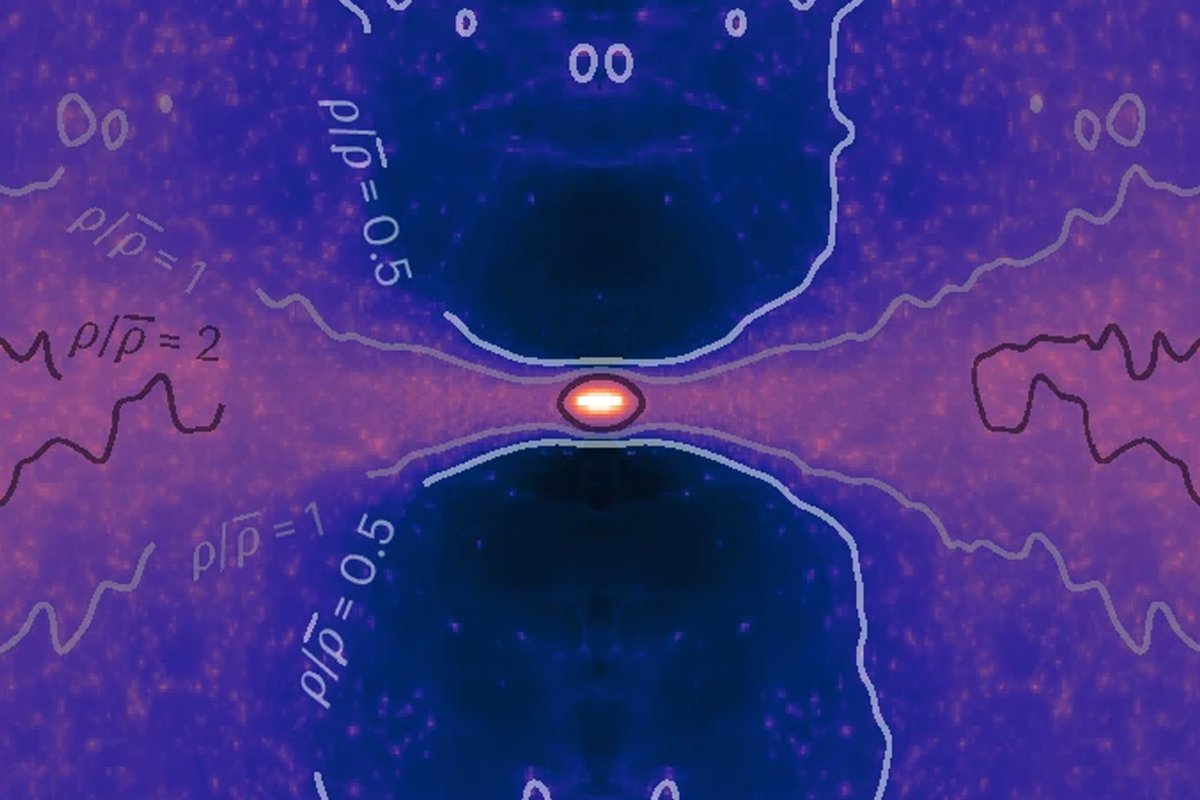
The AI tool also identified a unique type of galaxy, referred to as a jellyfish galaxy. These galaxies are characterized by their long streams of star-forming gas that appear to extend from one side of the main disk, resembling tentacles. Other peculiar findings included edge-on planet-forming disks that could be likened to hamburgers, and gravitational lenses that distort light from distant objects, effectively acting as a cosmic magnifying glass. Some of the cataloged objects even defied existing classification methods, according to NASA.
“This is a compelling demonstration of how AI can amplify the scientific yield of archival datasets,” Gómez stated. “The discovery of so many previously undocumented anomalies in Hubble data highlights the tool’s potential for future explorations.”
This innovative automated anomaly detection tool comes at a time when NASA is facing significant budget cuts under the Trump administration. Reports indicate that entire buildings are being closed at some of its most historic facilities, along with mass layoffs. In parallel, the administration has actively promoted the deployment of AI across the federal government, including government-tailored OpenAI models and an AI tool designed to expedite the approval process for drugs.
Moreover, astronomers have been exploring AI solutions for some time. Primarily utilized to analyze extensive datasets, this technology has also been employed to detect potentially habitable exoplanets and enhance images of black holes. While some seasoned professionals in the field urge caution in utilizing these tools, their usefulness is becoming increasingly apparent.
More on space: These Snapshots of the Moment a Star Exploded Will Fill You With Cosmic Dread