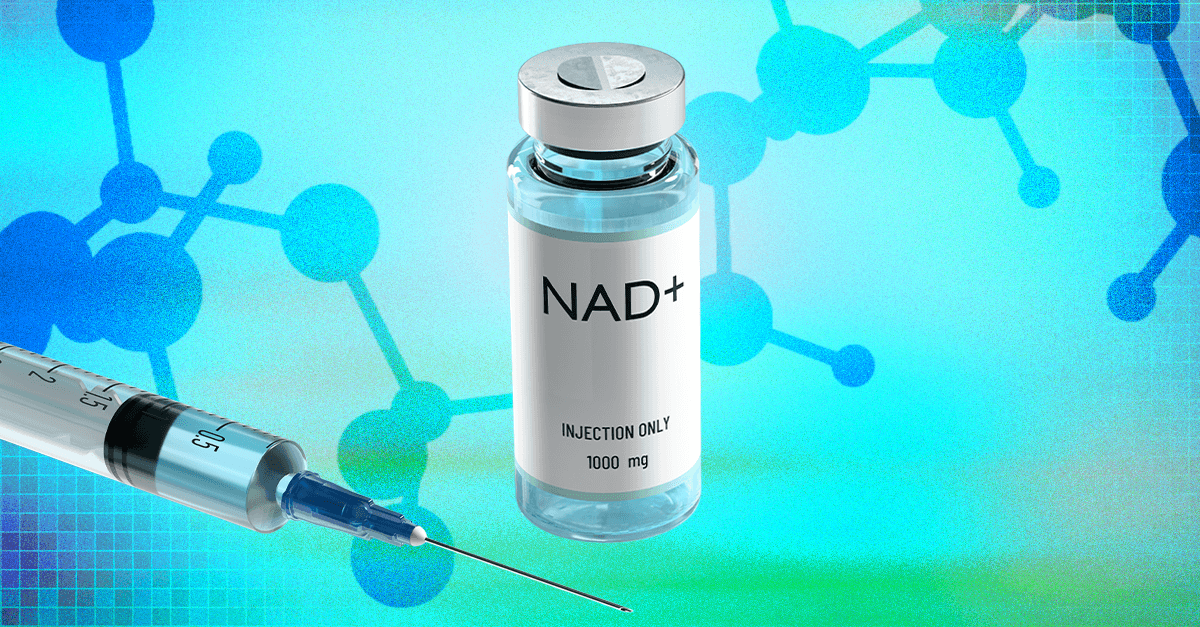
In recent years, there has been a growing interest in the potential benefits of NAD+ (Nicotinamide Adenine Dinucleotide) for various health issues, particularly among those recovering from conditions like post-COVID syndrome. Clinicians like Dr. Khan are exploring how NAD+ therapies can enhance energy levels, mental clarity, and overall recovery in physically or cognitively stressed individuals.
“Even patients in their twenties have symptoms of brain fog, fatigue, chronic inflammation, and chronic infection post-Covid,” Khan notes. In her clinical experience, many patients have reported improvements in energy, mental clarity, migraines, and disturbances in sleep-wake cycles after using NAD-related therapies, particularly during challenging periods of physical or cognitive stress.
“I have a lot of fitness enthusiasts [as patients], who recover better after an injury or an intense exercise routine,” Khan adds. “They feel like they can get more reps in, swim more laps, and their tissues aren’t as easily fatigued.”
Early research is also investigating NAD+’s involvement in neurodegenerative diseases, inflammatory pain pathways, and addiction. Though much remains preliminary, it indicates that in individuals with existing degenerative conditions — like Parkinson’s disease, sarcopenia, or Alzheimer’s disease — NAD precursors may aid in slowing down decline. However, it is still uncertain if starting supplementation can prevent disease or significantly alter the aging process.
Safety, Side Effects, and Considerations
Among NAD+ boosters, NR (Nicotinamide Riboside) supplements boast the most extensive safety data. They have been tested in doses ranging from 1,000 to 3,000 milligrams per day in healthy adults, with minimal side effects reported.
While NMN (Nicotinamide Mononucleotide) has also been widely studied, it faced regulatory challenges for years. In 2022, the US Food and Drug Administration ruled that NMN could not be sold as a supplement due to ongoing investigations as a drug. However, this decision was reversed in 2025.
Niacin, another precursor of NAD+, is effective but less popular as high doses can cause flushing, resulting in reddening and warmth of the cheeks, along with an increased heart rate due to vasodilation. Although uncomfortable, this side effect is generally not dangerous.
Animal studies have raised concerns that excessively high doses of NAD+ precursors might promote tumor growth. This caution leads clinicians to avoid NAD supplementation during active cancer treatment. Instead, it’s often considered on a case-by-case basis for patients in long-term remission, frequently in consultation with an oncologist.
Crucially, no human clinical trials have demonstrated an increased risk associated with oral NAD precursors. Some researchers even suggest that NAD may enhance genomic stability and cancer surveillance. “If you don’t show signs of malignancy or have a strong family history of genetic syndromes like BRCA and breast cancer,” Khan asserts, “I firmly believe that NAD+ is actually cancer-protective.” Nevertheless, long-term data remains scarce.
Pregnancy represents another uncertain area; most healthcare professionals advise avoiding NAD+ supplements during pregnancy due to insufficient safety data. However, according to Khan, “there is some evidence that NAD+ can support fertility leading up to pregnancy, preserving egg and sperm quality.”
NAD+ Precursors and IVs
While some products claim to deliver NAD+ directly to the body, this approach is physiologically unlikely to be effective when taken orally. NAD+ has poor bioavailability and struggles to cross the gastrointestinal tract or enter cells effectively. Consequently, most experts in longevity advocate for the use of precursors that can be absorbed, enter cells, and convert into NAD+ within the body.
IV (intravenous) and injectable NAD+ have surged in popularity, but evidence supporting their effectiveness is limited. No known transporter facilitates the movement of NAD+ from the bloodstream into cells, meaning that much of what is infused could be rapidly broken down or excreted.
As research continues, the understanding of NAD+ and its precursors will evolve. While potential benefits are being explored, it’s essential to approach NAD+ supplementation with caution and to consult healthcare professionals when considering its use, particularly for those with existing health concerns or during pregnancy.