The new Dietary Guidelines for Americans (DGAs) for 2025-2030 have sparked considerable debate, revealing a divide between supporters and critics. These guidelines challenge traditional norms, both in their presentation and the recommendations they propose.
Notably, this edition marks a significant shift: for the first time since 1980, the standard scientific protocol for creating these guidelines has been entirely disregarded.
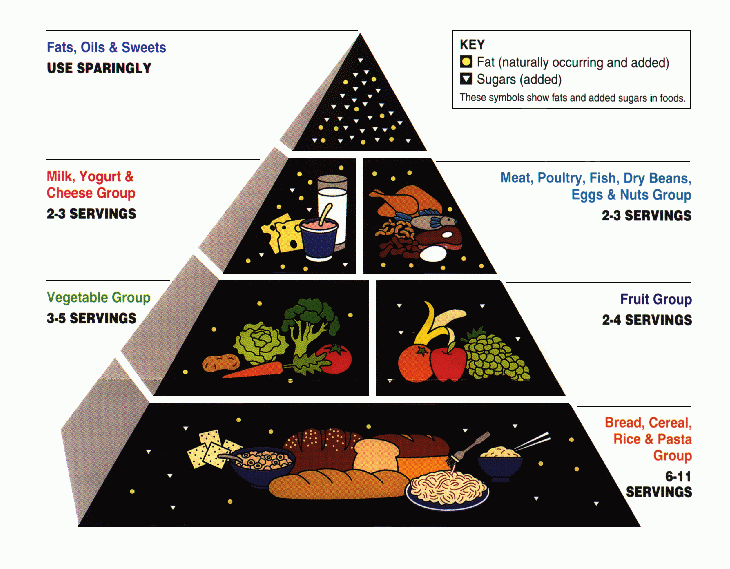
A prominent feature of the 2025-2030 DGAs is their graphic format. This design departs sharply from previous visuals like MyPlate—a pie chart-style plate used since 2010—and the classic “food pyramid”, which has been in use since 1992 and remains influential today.
The new guidelines feature an inverted pyramid design, visually prioritizing the most recommended foods at the top and the least favored at the bottom.

Dietary Guidelines For Americans
This inverted pyramid format isn’t completely novel; the Flemish Institute for Healthy Living employed a similar design in 2017. However, two key differences exist: they clarified the rationale behind the new chart and provided guidance on its interpretation, unlike the current DGAs, which present a different and somewhat contradictory approach.
Animal Protein at the Top
Content-wise, the new guidelines reveal troubling contradictions and questionable messages, particularly when scrutinized against established scientific evidence:
-
The report advises that saturated fats should not exceed 10% of total calorie intake but simultaneously promotes the regular consumption of beef, beef tallow, butter, and whole milk. This inconsistency is emphasized by the graphic representation.
-
In the pyramid, whole grains occupy the least favorable position (the bottom segment). Interestingly, the recommended servings per day for whole grains and those for the most highlighted foods are identical, ranging from 2 to 4 servings.
-
Legumes are entirely absent from the graphic, despite their importance in a balanced diet. This omission underscores the emphasis on animal protein in the new guidelines.
Flipping the Script
The DGAs undergo updates every five years, a process strictly overseen by the United States Department of Agriculture (USDA) and the Department of Health and Human Services (HHS).
Typically, this process spans two years and includes public consultations. An independent panel of 10 to 20 experts, known as the Dietary Guidelines Advisory Committee, meticulously analyzes evidence and compiles a report. This document is then forwarded to the USDA and HHS, which draft the DGAs based on the committee’s recommendations.
However, this time, the approach has shifted dramatically. When the Trump administration received the Advisory Committee’s 421-page report, an unprecedented review process was conducted in under six months to “correct deficiencies,” resulting in an alternative panel—the Scientific Foundation for the Dietary Guidelines for Americans—issuing its own report without the standard transparency and public engagement.
This alternative report, only 90 pages long, delineates concerns regarding the original document, which recommendations to accept or reject, and the “evidence” influencing the current DGAs.
A powerful illustration of this shift can be seen in the checklist featured on the opening page of the alternative report. This checklist outlines the fate of the 56 recommendations made by the original Advisory Committee: only 14 were fully accepted, 12 were partially accepted, and a hefty 30 were outright rejected.
This action signifies a definitive statement from the administration regarding its stance on the Advisory Committee’s original recommendations. It epitomizes what Spanish author Mauro Entrialgo describes as “malismo”: the intentional use of traditionally criticized ideas or behaviors to garner public support. The checklist conveys a clear message: “look what I did with your recommendations.”
Additionally, a half-page is devoted to “supporting testosterone health in men” (page 64). This inclusion appears unnecessary from a public health perspective but aligns with a particular ideological view promoting masculinity.
Moreover, the alternative report raises further concerns, as many of its authors are closely linked to the dairy and cattle industries (detailed on pages 11–18), sectors that stand to gain significantly from the new DGAs.
False Justification
The current guidelines leverage scientific language to claim that the health crisis among Americans stems from decades of previous federal recommendations. This argument represents a classic post hoc ergo propter hoc fallacy: it implies causation merely based on the sequencing of events. According to this flawed reasoning, previous DGAs led to the increased consumption of low-quality, highly processed foods that have triggered the current crisis of obesity and chronic diseases.
In reality, no prior version of the DGAs advocated for soft drinks, sugary or savory snacks, pastries, or ultra-processed foods. In fact, they have consistently warned against or discouraged these products.
Furthermore, evidence indicates that Americans have historically had low adherence rates to the guidelines. Blaming earlier editions for poor nutritional choices is, at the very least, a misleading tactic.
The 2025-2030 DGAs not only display scientific inconsistencies but also appear to be shaped by ideological influences. They represent a blend of some health-conscious recommendations interspersed with considerable doses of ideology and corporate interests.

A weekly e-mail in English featuring expertise from scholars and researchers. It provides an introduction to the diversity of research coming out of the continent and considers some of the key issues facing European countries. Get the newsletter!