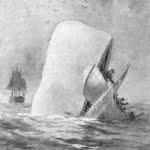
 In the annals of maritime history, few tales are as harrowing as that of Captain George Pollard Jr. Starving and adrift in the South Pacific for over two months, Pollard faced a grim choice that no human should ever have to make.
The relentless sun beat down on them, their thirst was insatiable, and diminishing food supplies had taken a severe toll. In this desperate world, Pollard made a heart-wrenching decision: he consumed his 18-year-old cousin, Owen Coffin.
This tragic act, though horrific, was determined fairly; the crew had drawn lots to decide who would be eaten after enduring weeks of starvation, subsisting on saltwater-soaked bread that only added to their dehydration. Coffin drew the short straw.
Pillaged by fate, Pollard and his crew’s difficulties had begun earlier. In November 1820, they were chasing a pod of sperm whales when disaster struck. An irate 85-foot whale collided head-on with Pollard’s ship, The Essex, sending it to the ocean’s depths. This disaster later inspired Herman Melville’s classic, Moby-Dick.
Similar to The Essex, the U.S. economy has recently been upended by a colossal whale—namely, the government lockdowns aimed at curbing COVID-19. While the effectiveness of these measures remains debatable, the economic fallout has been indisputable.
Concurrently, massive fiscal and monetary stimulus measures have propelled stock prices upwards. Yet, investors appear largely unconcerned about the future. Unfortunately, what lies ahead could be a disaster for the stock market. Here’s why:
The Horrors of Survival
What unfolded after The Essex sunk was a nightmare far worse than the shipwreck itself. It unveils a harrowing saga of the survivors’ descent into madness, starvation, and finally, cannibalism.
Once the ship sank, the surviving crew scrambled to board three small whaleboats, leaving little time to gather food or fresh water. They were entirely unaware of how dire their situation truly was.
Pollard estimated that the nearest land was the Marquesas Islands, rumored to be inhabited by cannibals. In what may stand as one of the most ironic decisions in maritime history, he opted for a longer route to Chile, thus avoiding the island cannibals, only to condemn his own men to become cannibals themselves.
Their ordeal rapidly progressed from starvation to madness, culminating in the cooking and consumption of their deceased crewmates. Here’s a bleak account of the aftermath:
“One man went mad, stood up and requested a dinner napkin and water, then succumbed to horrid convulsions before dying the next morning. ‘Humanity must shudder at the dreadful recital’ of what came next […]. The crew ‘separated limbs from his body and took all the flesh from the bones; after which, we opened the body, took out the heart, and then closed it again—sewed it up as decently as we could, and committed it to the sea.’ They then roasted the man’s organs on a flat stone and ate them.”
But human flesh offered little satisfaction; as the survivors feasted, an insatiable hunger persisted.
A Cautionary Tale: This Stock Market Will Consume You
When the American ship, Dauphin, eventually rescued Pollard and the last remaining crew member, there was no rejoicing. Instead, both men turned to the bottom of the boat and stuffed human bones into their pockets. Aboard the Dauphin, they were discovered “sucking the bones of their dead mess mates, which they were loath to part with.”
Pushing through the trauma, Pollard somehow found the courage to sail again and convinced his financial backers to fund another ship. Unfortunately, this venture lasted just over a year before disaster struck again, wrecking the ship on a coral reef. Pollard lost everything and spent the rest of his days as a night watchman.
Pollard’s story offers several valuable lessons: avoid foolishness, learn from mistakes, and heed warnings. Yet putting these lessons into practice is far more complex.
For instance, after engaging in reckless leveraged bets during the 1997 Asian financial crisis, hedge fund manager Victor Niederhoffer hung a painting of The Essex in his office—a constant reminder of the peril of reckless behavior and the fleeting nature of success.
Like Pollard, Niederhoffer was given another opportunity and managed to revive his career with the Matador Fund. In 2005, the fund’s value surged by fifty-six percent, earning him an industry accolade.
Sadly, this success was short-lived; Niederhoffer’s penchant for risk eventually led him to ruin again in 2007.
Currently, it is challenging to recall a time when the outlook for stock market returns appeared more bleak. You may choose to chase stocks like Tesla if it brings you joy, but remember: you are merely gambling. This stock market, much like the sea, can consume you when you least expect it.
Best regards,
MN Gordon
for Economic Prism
Return from This Stock Market Will Eat You to Economic Prism