As tensions rise in the U.S. due to increasing military commitments, we face a dual challenge: the erosion of social safety nets alongside the neglect of vital infrastructure. Many are aware of the alarming state of U.S. bridges, but bridges aren’t the only structures at risk. Worryingly, the condition of dams and levees also requires urgent attention. Flooding caused by the failure of water management systems often gets dismissed by politicians as mere unfortunate incidents triggered by weather events, a reality we can no longer afford to overlook.
Currently, flooding is affecting many areas, notably in places like Hat Yai, Thailand, a city that recently experienced extreme rainfall leading to a national emergency response. The damage has been so widespread that it caught the attention of global media:
Parts of Thailand are battling record floods that have led to at least 33 fatalities, with military assets being mobilized to assist in relief efforts. Across the southern provinces, the city of Hat Yai recorded its heaviest rainfall in 300 years, with 335 mm falling in just one day.
Images depict submerged homes and vehicles, while many desperate residents await rescue on rooftops.
Surrounding countries like Vietnam and Malaysia have also faced devastating floods, with death tolls rising and thousands displaced.
In Indonesia, landslides have claimed at least 19 lives, according to their National Search and Rescue Agency.
More than 2 million people in Thailand have felt the impacts of the flooding, yet only 13,000 have found refuge in shelters, leaving many stranded and without aid, as reported by Reuters. In response, the Thai military is organizing extensive relief operations, including deploying an aircraft carrier capable of serving as a floating hospital.
Flooding in low-lying areas is not uncommon, but the severity of this season raises concerns about the potential for preventable disasters. While property damage often resonates more in American discourse, the political will and resources needed to address this looming threat seem insufficient.
By Jeff Masters. Originally published at Yale Climate Connections
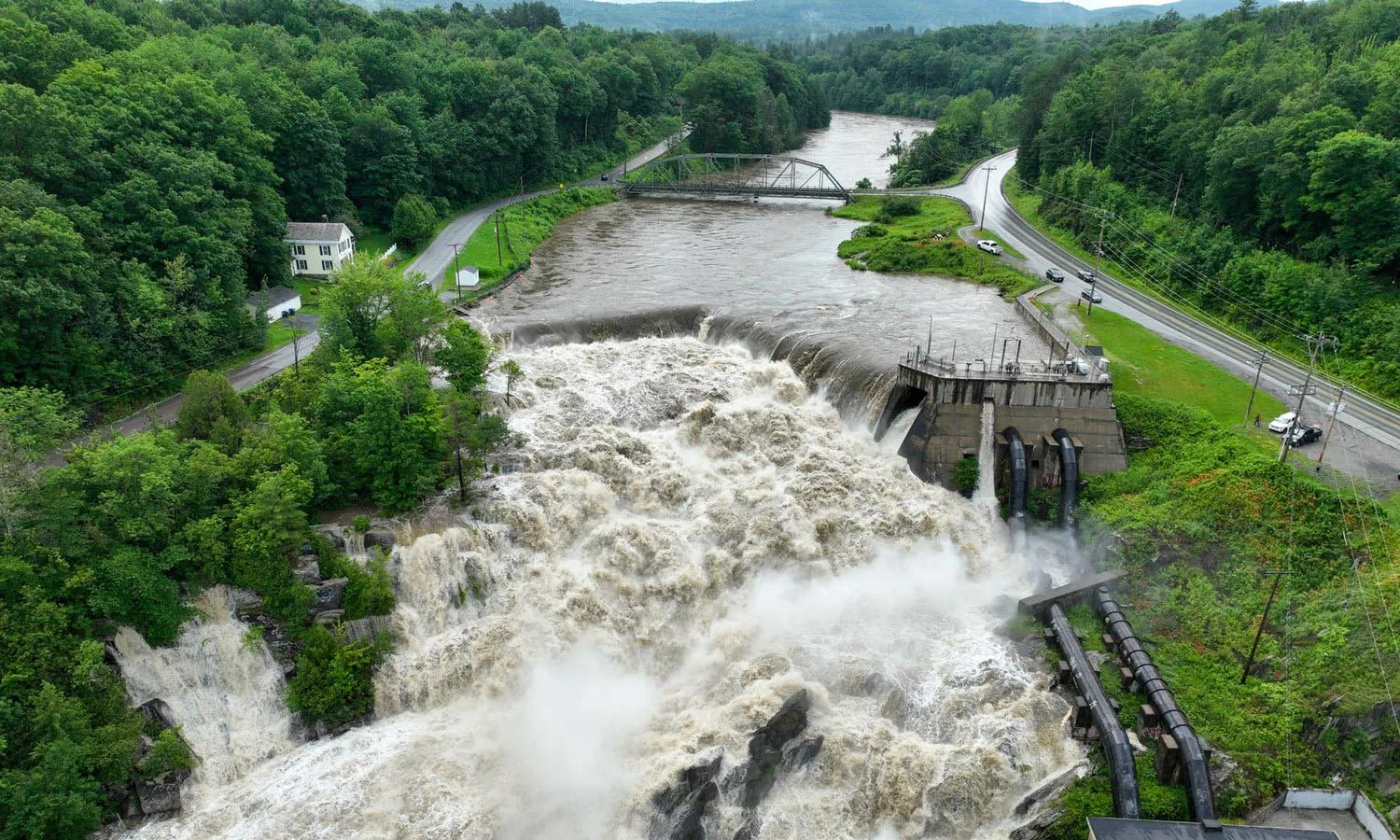
According to the 2025 Report Card for America’s Infrastructure by the American Society of Civil Engineers (ASCE), “America’s infrastructure is the foundation on which our national economy, global competitiveness, and quality of life depend.”
This report, which is released every four years, awarded U.S. infrastructure an overall grade of C—an improvement from the previous C- in 2021, largely attributed to the Bipartisan Infrastructure Law of 2021 and partnerships among federal, state, local, and private sectors. However, critical components such as dams, levees, stormwater, and wastewater systems received grades of D to D+, underscoring a harsh reality: climate change is increasingly straining these infrastructures through intensified rainfall events. Furthermore, the federal government has shown a lack of commitment to providing the necessary funding for continued upgrades.
A “D” rating indicates that infrastructure is in fair to poor condition, with many elements nearing the end of their service life. ASCE has consistently rated U.S. dams with a D or D+ since the first report was published in 1998. The society has called for investments exceeding $165 billion for dams, over $70 billion for levees, and by 2044, approximately $690 billion for wastewater and stormwater systems—totaling nearly $1 trillion.
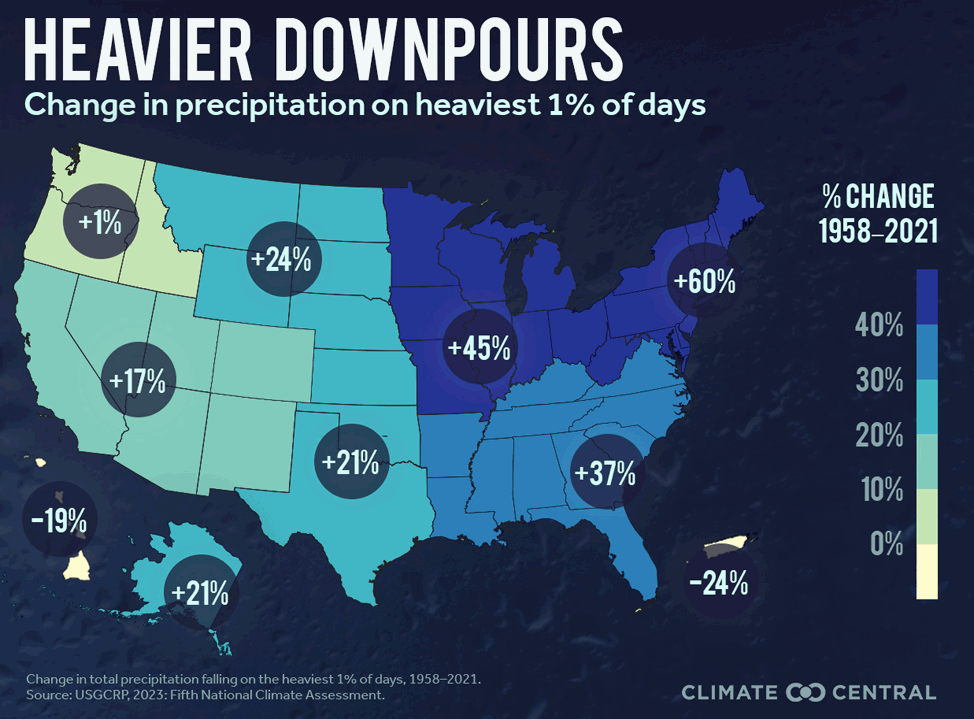
Climate Change Is Heightening Risks to Water-Related Infrastructure
Increased precipitation across the U.S. in recent years—with much of this attributed to climate change—has resulted in an annual increase of $2.5 billion in flood-related damages, as highlighted in a January 2021 study published in the Proceedings of the National Academy of Sciences. Researchers at Stanford University found that from 1988 to 2017, extreme rainfall accounted for over one-third of the damage incurred.
“There is real economic value in avoiding higher levels of global warming,” stated Noah Diffenbaugh, one of the study’s authors. “This isn’t merely a political stance; it’s a factual statement about costs. Investing in adaptation and resilience is economically beneficial, particularly in light of the climate changes we’ve already experienced.”
Aging infrastructure and intensified rainfall further stress the nation’s dams. The ASCE reports that heavy rains since 2018 have caused around 30 dam failures or near-failures in the Midwest alone. Notable incidents include:
Minnesota, June 2024: The Rapidan Dam, a 115-year-old structure in poor condition since 2023, failed, leading to the destruction of a power station and riverbank.
Michigan, May 2020: A 1-in-200-year rainstorm led to the destruction of two 96-year-old dams, resulting in $250 million in damages.
U.S. Dams Require More than $165 Billion in Upgrades
According to the latest information from the Association of State Dam Safety Officials, ASCE estimates that rehabilitating all non-federal dams—96% of over 92,000 dams in the U.S.—will cost at least $165 billion. Among these, $37 billion is necessary for high-hazard dams, which pose significant risks to life and property in case of failure.
There are 2,500 dams classed as “high-hazard,” with their numbers increasing by 20% since 2012 due to development in downstream areas.
As noted by the U.S. Army Corps of Engineers, dams are typically designed for a life span of 50 years. However, the average age of U.S. dams is 64 years, with over 70% being older than 50. This age correlates with risk, as around 75% of U.S. dam failures occurred in dams exceeding this age threshold.
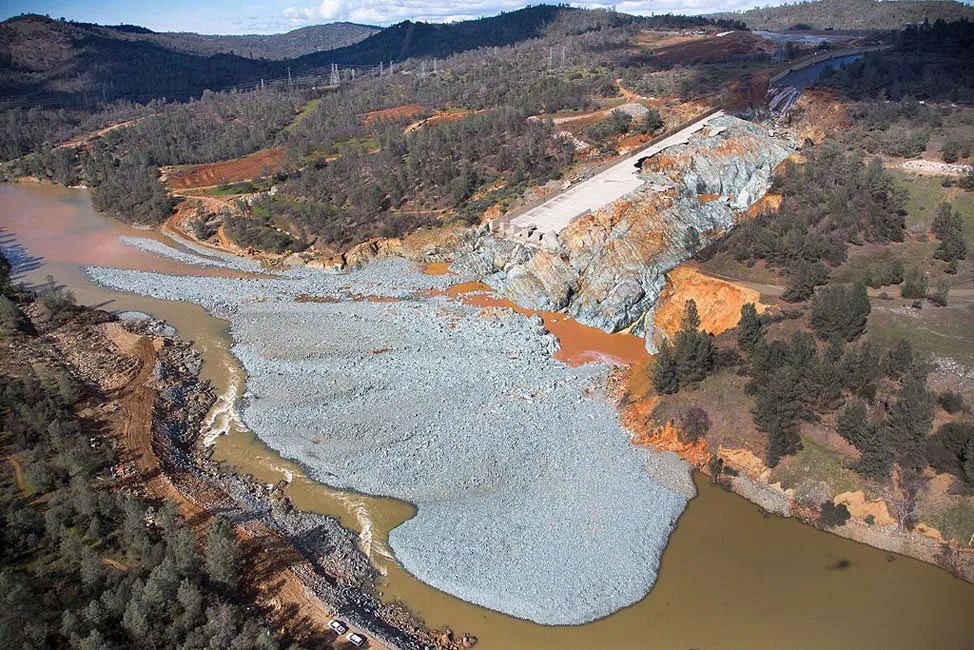
As dams age, their reservoirs fill with sediment, which reduces storage capacity and increases the risk of overtopping. This issue is worsened by climate change, as more drought and wildfire conditions lead to increased debris flow during heavy rains. Moreover, many dams, initially constructed for the flood management of the 20th century, are struggling to handle the rainfall patterns of the warming climate in the 21st century.
Vermont’s Dams Face Serious Challenges
The average age of dams in Vermont is 89 years, with many built before modern codes and standards. Following historic flooding in July 2023, inspections revealed that 57 dams were overtopped, 50 suffered notable damage, and five failed.
The National Levees Require More Investment than the Estimated $70 Billion
According to the report, “Twenty-three million Americans live and work behind levees.” The National Levee Database lists over 24,000 miles of levees across the U.S., but nearly two-thirds have not been assessed for the risks they pose to nearby communities.
This context makes the D+ grade assigned to the nation’s 40,000 miles of levees particularly alarming. The ASCE estimates that significantly more funding will be needed than the $70 billion previously projected in 2021 to secure U.S. levees.
The average age of U.S. levees is 61 years, built with standards that are often less rigorous than those currently in use. Fortunately, less than 3% of U.S. levees are rated as high or very high risk, a decrease from 4% in 2021.
Wastewater and Stormwater Systems Are Largely Underfunded
The nation’s sewer systems, valued at over $1 trillion and comprising nearly 17,500 wastewater treatment plants, are essential for public health and community welfare. Yet, the annual capital requirements for wastewater and stormwater systems amounted to $99 billion in 2024, with only 30%—or $30 billion—allocated for funding. If current funding trends continue, the gap could exceed $690 billion by 2044.
Grades of D and D+ for stormwater and wastewater infrastructure have remained unchanged since 2021, even after $46 billion from the Bipartisan Infrastructure Law and Inflation Reduction Act was injected into these sectors.
Smart Infrastructure Investments Are Crucial
While substantial investments in infrastructure are undeniably necessary, it is imperative that funds are allocated wisely. Many projects fail to account for future climate extremes. As Robert Young, a sea level rise expert, articulated in a 2022 New York Times op-ed, “Most funded projects aim to protect existing infrastructure yet do not encourage communities to improve long-term planning for disasters or avoid placing new infrastructure in vulnerable locations.”
Some projects funded under the 2021 Bipartisan Infrastructure Law raise questions about their prudence. For instance, funds were allocated to elevate 19 homes in the Florida Keys—a region at significant risk from rising sea levels. Although I cherish the Keys, a rational analysis suggests that protecting these low-lying islands may not be cost-effective. A 2020 report from the Urban Land Institute indicated that spending about $8 billion to combat sea level rise in the Keys would only prevent approximately $3 billion in future damages—a dismal return on investment. In contrast, similar investments in Miami could yield returns of over $9 for each dollar spent.
Moreover, civil engineer Chuck Marohn highlights that infrastructure spending that promotes sprawl should be avoided, as “when sprawl occurs, each new house increases the public’s maintenance obligations without a corresponding rise in tax income, leading to unsustainable ‘bad party’ situations, where each new resident consumes more than they contribute.”
Bob Henson contributed to this post.
